Buy Dream Paris on Amazon UK | Buy Dream Paris on Amazon US
Author Archives: Tony Ballantyne
Writer and Tech blogger
Dream Paris
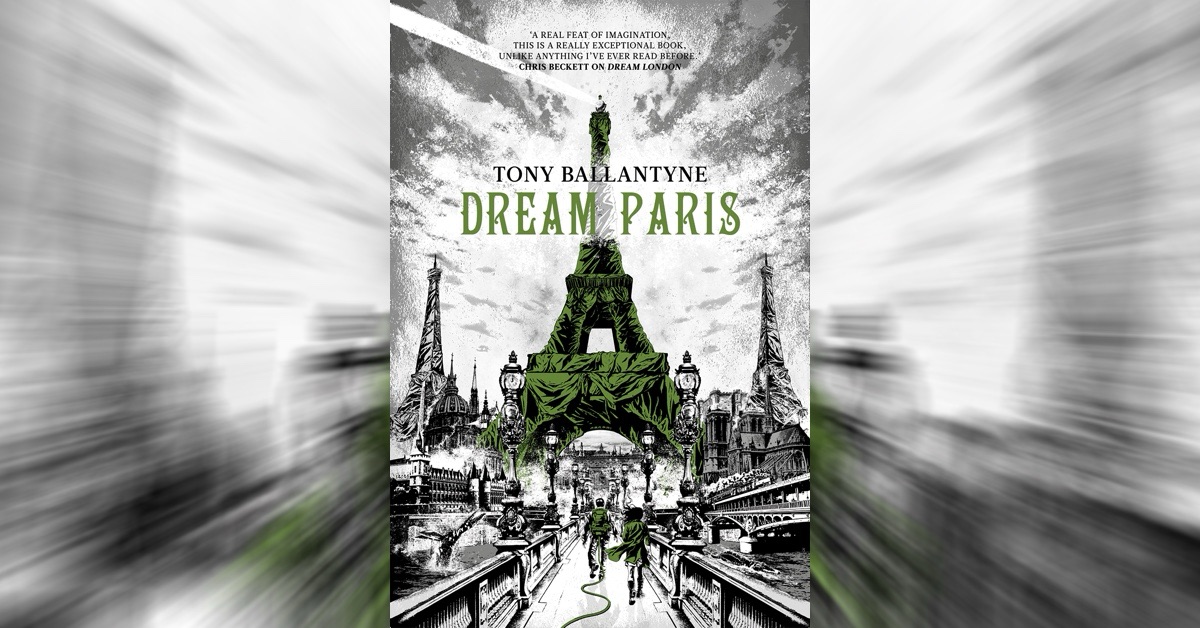
Anna Sinfield marched into the parks, when Angel Tower burned and Dream London fell. She marched to free the city, to end the madness, to find her mother and father. The day was won, but her parents – and thousands like them – are still missing, lost to the Dream World.
And now she has a chance to get them back. A man with gem like eyes has walked into her life, wearing a bespoke suit and bearing a terrible scroll. Mr Twelvetrees claims to know where the missing Londoners are; but to find them, Anna has to give up a life she’s started to rebuild and go into the Dream World itself. Into another Paris, where history has been repeating itself for two hundred years.
Vive La Révolution!
Buy on Amazon UK | Buy on Amazon US
Extract
Silver: The Social Worker
The sky was the colour of an unpolished euphonium, tuned to a dead key.
I paused. It didn’t do to let odd thoughts pass by unexamined. Dream London may have passed away months ago, I may have been living in plain old London once more, but strange thoughts still curled into the mind and tried to take root. If you wanted to stay sane, then those thoughts had to be examined, checked and classified. A dead key I thought. Exactly what colour is that?
The colour of this January evening, when there is no life to the world. When it’s cold, but not winter cold. When the air doesn’t burn the cheeks or fill the lungs with icy excitement, when the streets hold a chilly dampness that can’t commit itself to rain. That’s the colour.
I resumed my walk home. Beneath my duffel I wore a vest, a thick shirt and jumper. Hot sweaty air puffed from the neck and cuffs as I walked, but I didn’t unbutton my coat. They may have been relaying the gas pipes, but they’d yet to make it to Hayling Street and so it didn’t do to waste warmth.
The workmen had dug a service trench across the entrance to my road some weeks ago and had then, typically, forgotten about it. Yellow pipes lay curled up at the bottom, wrapped around piles of gravel, half submerged in puddles of dirty water. NothingSilver
The Social Worker unusual in that, the whole of London was being reconnected to the rest of the world, pipe by pipe, wire by wire. I used the narrow plank bridge to cross, jumping over the sickly puddle that covered one end, my heavy carrier bag banging my leg as I landed.
In Dream London, one of the many thoughts that had taken root in people’s minds and flourished was that females were incapable of looking after themselves. Many of the people living in Hayling Street no doubt still imagined I needed a man looking after me. I could see the curtains twitch as I made my way down the street. Funny that, all that concern about my moral wellbeing, whilst other neighbours were left to go hungry.
I rang Mr Hiatt’s bell.
“Corned beef,” I said, holding up the carrier bag as he opened the door. “I tried for some milk but there was none left.”
“Maybe next time,” he said, pulling out his wallet. I could hear music playing softly in the background, and I shuddered. Mr Hiatt handed across a couple of Dream London dollars, the once bright patterns faded to dull mustard.
“You’re a good girl, Anna. How’s your Mum and Dad?”
“Still missing.”
“I heard that they found another whale skeleton under Cooper Street. That makes four.”
“I heard that, too.”
The sound of violins playing on the radio wove their way through the house. Violins weren’t so bad, I told myself. Still, I felt myself trembling.
“I wonder what’s buried beneath our houses?”
“Best not to think about it, Mr Hiatt. Look, I’ve got to be off.”
“Thank you for the food. Goodbye, Anna.”
“See you, Mr Hiatt.”
He closed the door, gently. I crumpled the worthless Dream London dollars and dropped them on the pile of rubbish overflowing from the dustbin, making a mental note to take some of his waste to the communal tip down on Katherine Street.
I continued home, turning to pass beneath the dark yews guarding the garden. The house was still too tall, just like all the others in the street. Workmen had been through and erected scaffolding a few months ago, making things safe: propping up a wall here, throwing polythene sheets over the spaces where the tiles had separated on the roof there. They’d even gone to the trouble of placing braces beneath the bedrooms that had grown outwards. One of the workmen had taken a shine to me, he kept asking if I wanted to go for a coffee after I’d finished school. His gaffer had told him to leave me alone, said he wouldn’t like to think of one of his daughters living by herself. He took offence when I asked him how he’d feel if it were one of his sons, and I pointed out that there were lots of people worse off than me in London. At least I had somewhere to live.
The evening shadows made my home look as if it were dying. In the middle of this scene of unchanging stillness, the sudden movement of the woman waiting by my door made me start. She was drinking tea from a plastic cup. Something about that relaxed me a little. When she saw me, she drained the cup and quickly screwed it onto the top of a thermos flask.
“Can I help you?” I asked.
“Anna Margaret Louise Sinfield?” She pushed the flask into a large bag, speaking all the time in a broad Brummie accent. “I’m Petrina. I’ve come to check that everything’s okay.”
She fumbled in her pocket and produced a laminated card bearing her name and photograph.
“Social Services,” I read out loud. “I suppose I shouldn’t be surprised.”
Petrina was back in her bag again. That irritated me. It’s not so difficult to keep things organised. Perhaps if she’d got herself a briefcase with separators instead of that impractical handknitted ethnic bag…
“Sorry to take so long, but as you can imagine we’ve been very busy! Oh, where is that… ah, got it! You know, I haven’t had a moments rest since I was – bloody pen’s leaked everywhere – seconded here last week. Ah!”
She looked up and smiled, a pad and pen in hand. “Shall we go inside?”
“I don’t think that will be necessary. I’m perfectly okay, thank you. I don’t need any help.”
Petrina made a show of looking up at the crooked house. It was dim in the shade of the yew trees, the scaffolding further enfolding us as the January evening descended.
“I saw from that notice at the end of the road that this house isn’t back on the grid yet.”
“It will be in March. In the meantime there’s plenty of candles at the distribution centre. And we’re fortunate enough to have fireplaces and chimneys here…”
Petrina scribbled in her pad. She was going to patronise me, I just knew it.
“Anna, I don’t think anyone would say that you’ve not been doing a fantastic job of looking after yourself. You don’t need to tell me – oh, is it too much to ask for a pen that works? Ah, that’s it – tell me about how brave you’ve been. But you’re – how old, I had it written down here – sixteen, was it?”
“I’m seventeen. I’ll be eighteen in two months’ time.”
In other words, old enough to be legally responsible for myself.
Petrina pushed her pad under her arm and fumbled some more in her bag
“Seventeen!” she mumbled, pen clasped between her teeth. “Sorry, this is bloody ridiculous! They expect us to do all this extra work without bothering to update the records…”
I tried being polite. “I can see that you’re busy. Why don’t you just skip me and go on to your next client? There must be far more urgent cases than mine.”
It didn’t work. Petrina gave me that look that some adults give when they think they’re cleverer than you.
“Everyone is important, Anna.” She turned her attention back to her bag. “Now, I’ve got your school records in here somewhere. According to them, your parents are missing…”
“They got sent to the workhouse on the last day of Dream London. They were marched into the parks…”
Petrina glanced up from her search.
“Marched into the parks? You’re the third person today to say that. Is that some kind of euphemism? Are you saying that they’re dead?”
“No. I’m saying they were marched into the parks. Didn’t they brief you about how Dream London ended?”
Even if they had, it wouldn’t have mattered. If you weren’t here, if you didn’t live through the changes, if you didn’t experience how the streets moved around at night or how people’s personalities were subtly altered, if you didn’t see the casual cruelty, the cheapening of human life, the way that easy stereotypes took hold of people… If you weren’t there, you’re never going to understand what it was like.
Petrina adopted her experienced persona. Didn’t she realise it would have had more credibility if she was dressed in a suit and not a baggy tie-dyed skirt?
“I’m from Birmingham Social Services. I was seconded here to help sort out the mess. Look, this would be a lot easier if we went inside…”
I was tired of standing in the cold, and she clearly wasn’t going away. I opened my duffel coat and pulled out the heavy door key that I wore around my neck on a piece of string. Dream London had turned the door into a gothic arched portal of dark timber. There’s a knack to opening the door: pull on the handle, a half twist and then push with your shoulder as you turn the key the rest of the way.
I tumbled into the hallway.
“Wait there, while I get some light.”
Petrina wrote something on her pad as I felt for the box of matches on the shelf by the door. She really began to scribble as I struck the match and began to light the candles. Yellow pools of light sprang up one by one, illuminating a hallway that was slowly creaking its way back to its walnut-panelled glory.
Petrina followed me gingerly inside, careful where she trod. A line of orange Le Creuset pans marched down one side of the hall, ready to catch the drips from where the room above was separating from the rest of the house. Drips plip plip plipped into the pans at random, in A-flat, a quarter tone above E, a little too flat for middle C.
“It smells so damp.” Petrina wrinkled her nose.
“That’s because the house is leaking. It’s okay in the kitchen.”
I led her there. The warmth from the Rayburn smelled so good.
“I’ve always wanted one of those,” said Petrina, crossing to take a closer look at the oven.
Her face glowed orange, and I saw that she was really quite pretty when you stripped away the worry. I thought I knew her type: she’d spread her compassion wide and shallow, rather than engage on the specifics. Or maybe I was being too harsh. She was here, after all. She was trying to do the job.
“Where do you get the fuel from?” she asked.
“There’s a bunch of sheds in the back garden. I’ve been pulling them apart.”
“Why did your parents have a bunch of sheds in the back garden?”
“They didn’t. The sheds turned up when Dream London was dying. You really don’t understand what it was like, do you?”
Petrina didn’t like that. She didn’t like being told that she didn’t understand. She placed her bag on the table and took a careful look around the kitchen, noting the unopened cans arranged in a line, the clean plates on the drainer by the sink, the opened cookery book on one of the counters.
“You’re feeding yourself properly?”
“I get free lunch and dinner at school as part of the Emergency Support Grant. I also get a food ration twice a week from the distribution centre.” I didn’t mention that I shared some of it with Mr Hiatt. She was here to see me, Mr Hiatt was someone else’s problem. Actually, Mr Hiatt was no one’s problem. That was the problem.
“What about water?”
“The water still runs. The downstairs toilet is working.” The upstairs toilet had been blocked with mackerel. I’d scooped out as many of them as I could and buried them in the back garden. The section of the pipe that I couldn’t reach was now filled with rotting fish, but I didn’t feel the need to share that information.
Petrina seemed to remember something at that point. She was back in her bag, rummaging. I can’t begin to tell you how irritating that was.
“Always too many – what’s that doing there – got it!”
She pulled out an orange plastic folder and began to flick through it. I read the words on the front: London Disaster Zone Protocols, Ver 1.1
“I’m sure I saw it in here… prostitution, dog attacks, native and non-native birds… Ah! Here it is. Water supplies… I see. Thought so. It says here that not all water supplies can be trusted. Do you know if yours has been verified?”
“I always boil the water before drinking.”
“It might be better if you were to get your water from somewhere else.” She paused to suck her bottom lip, to look concerned. “To be honest, Anna, I’m not that happy with you living here on your own. What if someone were to break in?”
“Did you see the door? I’m safer in here than I would be in most places in London.”
“What happens if you get ill? What if you need help?”
“My boyfriend’s family makes sure I’m alright. I go round there sometimes.”
Petrina perked up at that. I could almost see her thoughts, her excitement at the thought of teenage sex.
“And does your boyfriend ever stay the night?”
“No, his parents won’t allow it.”
“But you’d like him to?” she prompted, a little too eagerly.
“What? So I can have unprotected sex in a damp house followed by the possibility of pregnancy and a delivery at what used to be Dream London Hospital? Yeah, now you mention it, that would be a far better choice than studying Physics at university. Thank you Petrina, I think I’ll give him a call right now and get him round here.”
Petrina smiled.
“I can see you’re a sensible young woman.”
“Don’t patronise me.”
“I’m sorry… but you say this is a damp house?”
“Of course it’s damp! All the houses in London are damp. The buildings are slowly shifting back to their normal form and now nothing fits properly. This house is as dry as anywhere else.”
She shook her head.
“It isn’t, Anna. There are places that have been fixed up.” She was looking thoughtful now. She was solving a problem. I felt my stomach tighten. “To be honest, Anna, you shouldn’t be living here on your own. I think you’d be happier in a teen hostel amongst people of your own age.”
“I can look after myself.”
“Even so, that’s what I’m going to recommend.”
“Why?” I was struggling to remain calm. Start shouting and she’d mark me down as a hysterical little girl. I had to remain calm. “Why? I’ve managed on my own for nine months. I’ll be eighteen in March; in eight months’ time I’ll be at University. Don’t you have more deserving clients to visit?”
Petrina’s mouth became a hard line. She wasn’t listening. I ploughed on.
“But I suppose they don’t have such nice houses. I’m sure you’d rather be sitting here in this kitchen than in one of those flats on the Broomfield estate with the druggies downstairs and two drunk parents spoiling for a fight in the room with you.”
“Anna, I think…”
“You don’t want me to be able to look after myself, Petrina. You’d rather that you could help me, because that’s how you validate yourself. Well, I’ll tell you when I needed help: back when Dream London ended. Tell me, where were you then? Back home in Birmingham, no doubt. You know where I was? Marching into the parks! Whilst people like you just sat at home, I was marching into the parks!”
I could see by Petrina’s face that she didn’t understand what I was talking about, but it didn’t matter, I was angry now. Angry at Petrina, angry at all the people like her…
“You’re all here now, all the people who were nowhere to be seen at the end. You weren’t there when we were fighting in Snakes and Ladders Square. But you’re here now, and guess what? You all know what to do! You’re all here with your advice about how we should have done things! All the politicians, all the bankers, all the parasites. All the people who allowed Dream London to happen in the first place and then ran off to hide when it was spiralling out of control. It’s always the same, isn’t it?”
“Anna, I think you’re getting a little emotional. I’m only here to help.”
“But you don’t get it, because you weren’t here! And if you were, I know where you would have been. You wouldn’t have been marching, you’d have been getting pissed or fucking or fighting, or writing letters to the Dream London newspapers. Well, I was out there trying to make a difference. I saw half my band killed. I walked in another world. Then I came back here only to see the same old people taking control again. It makes me sick!”
I was shouting now. I was red in the face. I couldn’t help it. You hold in the anger as long as you can, and then suddenly it all comes spilling out.
“You saw people killed?” said Petrina, flicking through her folder once more. “… Trauma, trauma… here it is…”
She read the passage, nodding as she did so. “I realise it isn’t nice to get so angry, Anna. I realise that later on you’ll feel bad for shouting at me like that, and I want you to know that I don’t blame you. No, I don’t blame you. It’s just a reaction to the stress that you’ve been under. Perfectly normal, nothing to be ashamed of. But you need help, Anna. That’s why I must insist that you go to live in a hostel. Somewhere you can be looked after properly.”
I folded my arms.
“No. I don’t see how you can, anyway. I’m over sixteen.”
“That was before the Emergency Act. Anyone under eighteen living alone is our responsibility.”
“Of course they are,” I scoffed. “And what happens to the properties they vacate? Who takes control of them?”
“That’s nothing to do with me, Anna.”
“I bet it isn’t. They wouldn’t let do-gooders like you know what’s really going on. You’ll go home thinking you’ve done a good job and meanwhile some shyster will have taken control of my house.”
She became indignant.
“No, Anna, it’s not like that…”
“Are you going to drag me away?”
“I could return here with someone to escort you…”
“I don’t think that will be necessary.”
We both jumped at that. Neither of us had noticed the tall, dark stranger who had slipped into the house. The stranger who now stood in the doorway to the kitchen. Not looking at us.
Petrina’s eyes widened in terror as she gazed at the intruder. Petrina hadn’t been in London for very long, after all. No wonder she found him so… unusual.
Hiroshima
The picture shows the Peace Dome in Hiroshima. The bomb exploded almost directly above the building, it was the only structure left standing in the area afterwards.
It’s very quiet around the dome, nobody has a lot to say. They all look to a point above the building and imagine.
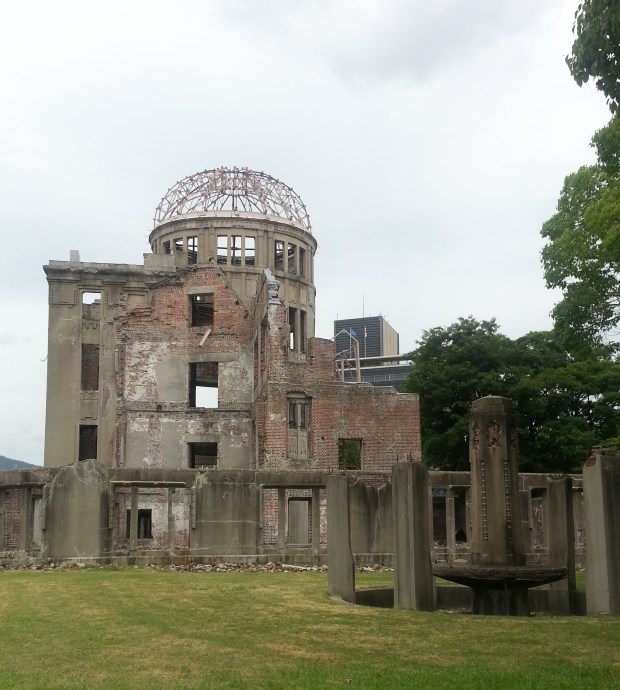
I took the picture below in the Peace Museum, just around the corner from the dome. The red ball hangs over the map: it represents the point of detonation. There is a model of the dome beneath the ball.
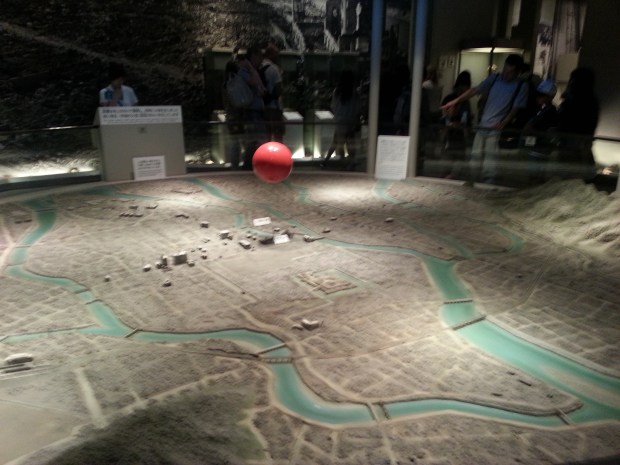
The picture in the Peace Museum that upset me the most was of two children playing with kittens. Despite the fact they were in the middle of a war, despite the fact rations were tight and they expected to be firebombed at any time, the children were laughing and smiling. They looked just like any kids anywhere, anytime.
The picture was taken three days before the bomb.
Hiroshima
The picture shows the Peace Dome in Hiroshima. The bomb exploded almost directly above the building, it was the only structure left standing in the area afterwards.
It’s very quiet around the dome, nobody has a lot to say. They all look to a point above the building and imagine.
I took the picture below in the Peace Museum, just around the corner from the dome. The red ball hangs over the map: it represents the point of detonation. There is a model of the dome beneath the ball.

The picture in the Peace Museum that upset me the most was of two children playing with kittens. Despite the fact they were in the middle of a war, despite the fact rations were tight and they expected to be firebombed at any time, the children were laughing and smiling. They looked just like any kids anywhere, anytime.
The picture was taken three days before the bomb.
Plane Crash
I saw a plane crash yesterday. The pilot was killed.
Actually, I didn’t see the crash itself. The two planes had been crossing the sky repeatedly, performing stunts. I’d been trying to get a photograph of the pair of them as they crossed: the camera on my phone wasn’t quick enough to capture the actual moment.
At the moment of the crash I’d been having a conversation with a soldier who was giving a demonstration of army equipment. He was showing me the smoke grenade apparatus on the front of a vehicle, and I was making notes for a possible story. We both noticed the black smoke rising from the trees. We both looked up and noticed there was now only one plane, circling, looking for its partner.
"Ah," said the solider. "That’s an issue." He’d talked about his time in Afghanistan. I guess he’d seen this before.
A military band had been setting up nearby. They sat with their instruments in their hands, looking at the smoke over the trees. I heard the conductor say that they didn’t have anything appropriate in their pads to play. The band packed up in good order and left.
Shortly afterwards, two helicopters turned up and hovered over the scene. The festival went on. Music resumed on the main stages.
Later that night, I ate a lamb rogan josh and pilau rice whilst watching Seasick Steve.
Never Lose Your Work Again!
A very well known writer recently tweeted about how he’d accidentally overtyped a whole morning’s work. I think every writer would feel his pain – not only is there the frustration of having to retype everything, but there’s also the thought that it will never be as good the second time. Things written in the flight of creativity are never as good as things slavishly repeated. (That’s why I think good ideas/scenes/dialogue should be captured live, but that’s another post)
There’s no reason that any writer should have to lose any work, however. All you need is a little planning. It all comes down to backups and version control.
Backups
If you’re not backing up your work already you’re a fool. Sorry to be blunt, but that’s just the way it is. If you haven’t got a backup routine, stop what reading this and go and get one. Here’s some links:
- Windows users: http://windows.microsoft.com/en-gb/windows/back-up-files
- Apple users: https://www.apple.com/uk/support/backup/
- If you’re a Linux user, you’ll already have a back up routine. Take a moment to feel smug.
I’m assuming if you’ve got this far you have a backup routine in place.
So, have you ever actually checked your backups? It’s surprisingly common for people to set up regular backups without checking that files are being backed up properly. If not, go and see if you can restore a file.
Okay, let’s assume you have a backup strategy and you’ve taken a look at what’s being backed up. What we’re interested in, for the purposes of this post, is what is called incremental backups. Suppose you have ten files on your computer, you edit two of them and then perform a backup. With an incremental backup you’d end up with 12 files: the original 10 and the 2 new edited ones.
Actually, incremental backups are cleverer than that, but the above will do as an example. The point is, with incremental backups you’ll have a series of “snapshots” of your hard drive, each snapshot showing your machine’s state at a certain date. Look at a snapshot, and the backup software will rather cleverly put together a selection of files showing you what was on your machine on a particular day.
Just realised that the file you want is the one you deleted two months ago? The one you thought you’d never need it again? No problem, just go to that snapshot in your Backups
Incremental backups mean that you will never lose more than a days worth of work.
All this talk about saving extra files might make you concerned about disc space. There’s no need for worry. Your Word documents are tiny, especially when compared to sound and video files. I’ve just checked, and my life’s work is comfortably less than 1Gb. That wouldn’t be a problem to anyone with a machine built in the last 10 years. You’ll have more than enough space.
Version Control
Daily backups mean you can always restore yesterday’s work – you never lose more than a day’s work. But what about losing this morning’s work? For that you need version control.
The excellent How To Geek site has an overview of version control for Word Users: http://www.howtogeek.com/school/microsoft-word-for-teams/lesson5/all/
Have I mentioned I use Emacs to write? Here’s a simple solution for Emacs users.
It will take you about half an hour to set up the above. Half an hour now and you’ll sleep more soundly in future. And half an hour now is much better than retyping a morning’s work…
How Writers Write: Stephen Palmer
How Writers Write is monthly series of guest posts where established writers invite you into their workspaces, reveal their work habits and share their experience.
Follow this link for a full list of previous posts
This month, Stephen Palmer tells us how it’s done…
How Would You Describe Yourself?
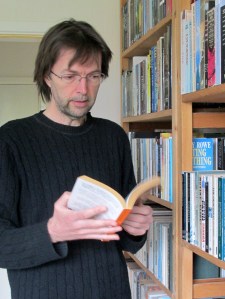
A creator of genre novels who got lucky in 1994, being plucked off the Orbit slush pile to have his first SF novel, Memory Seed, published in 1996. Since then though it’s been a bit of a rollercoaster ride…
I recently had a lengthy phone conversation with a certain lady who knows me very well, and I was trying to get across how my creativity works. She described me as “driven,” but for some reason that word didn’t seem to have the right connotation to me, so we had an interesting discussion, during which I returned to my Earth Sciences analogy: “I’ve never suffered from writer’s block, but I do suffer from writer’s volcano.” A driven person to me is somebody who in pushed, either by internal needs or by external circumstances – but the metaphor is one of pushing. My creativity is like pressure building up inside a volcano.
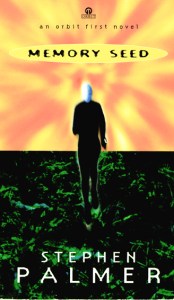
My themes and interests are varied, but generally they revolve around green and environmental issues, evolution and the nature of the human condition, and how we relate as individuals and as societies to the planet we live on. I’m best known for very far future work – Memory Seed, Glass, Flowercrash and in particular Urbis Morpheos are all set way into the future – but I also do near-future novels, and often they are set in or around Africa, a continent that has long interested me. I’ve also done a few fantasy works, for example the monochrome The Rat & The Serpent (‘Imagine a film shot in black-and-white. Now imagine a novel written in black-and-white…’).
I’m lucky (or unlucky – so hard to decide) that I’m not known for any particular sub-genre, and I’ve found over the years that people either don’t like my work at all or like it a lot. What my readers can always expect however is novels the like of which they won’t have read before. I do like to try different things; and to experiment a little.
What Do You Use To Write?
I use Word on a Mac. I’m a Mac evangelist. I have a G5, and a MacBook for the internet, and for making films with Final Cut Pro. I love Macs, me.
How & When Do You Write?
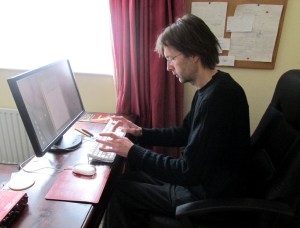
Twenty five to thirty years ago, when I began to write, I would work in the evenings and at weekends, but now I’m into my fifties I find that a bit of a push. I have a term-time job to pay the rent, buy food, and service my addiction to purchasing ethnic musical instruments, so these days I always begin a novel at the start of a long holiday – for example the two week Christmas holiday, or during summer.
I’ve always been a fast writer, and in the old days I would let it all splurge out, then edit extensively, do completely new versions, etc. The first draft of Memory Seed was written in 1988, but then, four years later, something about the setting and the characters drew me back, and I wrote a much better version. That was sent around to various editors, and I even got a little positive feedback. However, by the time Tim Holman made his offer I had done another top-to-toe rewrite, which was the version he edited into the published novel. I was naïve about everything in those days, and knew little about craft or technique – I did it all intuitively, using my imagination to power it all.
In recent years however I’ve realised that what works best for me is to immerse myself without distractions for as long as possible when writing a first draft; this allows me to concentrate on the novel alone. I live it and nothing else for those days. The winter holiday is perfect – I can do fifteen chapters of twenty in that time (taking a day off to see my family on Christmas Day). By the time I return to the day job at the beginning of January the momentum of that first draft is unstoppable, and I know what’s going to happen, how, why and when. After a while I return to manuscripts written like this to do editing, polishing, etc.
My goal is to get that first draft as right as possible. To convey the excitement and wonder I feel, I find it’s best for me to communicate excitement and wonder in the moment: first time, and often – usually, in fact – not knowing the exact details of plot and character. A second draft of a novel for me is never quite what a first draft is. Of course, this method doesn’t always work. I’ve got a few unpublished novels on my computer that will never see the light of day.
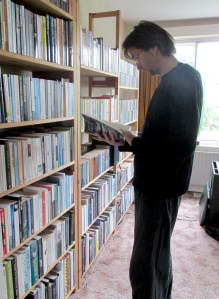
I’m lucky too that my editor at Infinity Plus is Keith Brooke, who points out the inconsistencies, nonsense and mistakes where they occur, but is sympathetic to my idiosyncracies. I think he does have a tricky task sometimes, as one thing I do like to do is use unusual language and prose styles. For example, in Hairy London (published by Infinity Plus in 2014) the words I used were sometimes completely made-up, intended to evoke rather than to describe. For example, an Archimedean floating machinora with heatorix was a hot-air balloon. That use of fancy prose was seen by a few readers as off-putting, but most people “got” that it was part of the wild, absurdist setting, and I genuinely think it contributed to the experience of reading the novel. Keith said that he thought only I could possibly have written it, which was very flattering. But I was lucky I had Keith editing the book, as I suspect other people might have been baffled by it.
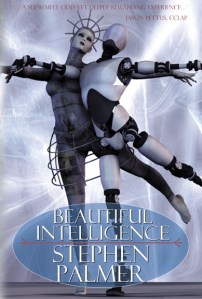
Hairy London was enormous fun to write. It was inspired by a short story that I wrote for an anthology edited by Allen Ashley. I wrote the novel with virtually no plan, except for the main theme, the main characters and the setting. I let my imagination go completely into overdrive, with almost no self-editing. That’s why it comes across as vibrantly bonkers: Alice In Wonderland meets Monty Python one reviewer said. But I used some of those word and prose techniques in my new novel Beautiful Intelligence, which, as a book, is diametrically opposed to Hairy London, being a novel about artificial intelligence. I wanted to use something of that surreal style to get across the atmosphere of Africa and the Mediterranean in 2092.
Where Do You Write?
In my studio. I live in a bungalow tucked away at the edge of a small town in Shropshire. There’s lots of open countryside nearby, and often, if I’m stuck on a point of plot or narrative, or just need a few extra ideas and images, I’ll go for a long walk. By the time I’ve returned I have without fail sorted out my difficulties. I’m very much a country man. I could never live the urban life, the noise and commotion would drive me crazy.
Questions Of Style…
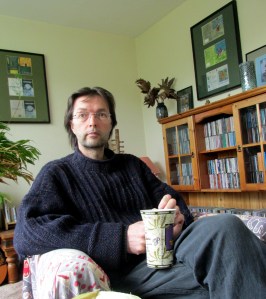
As I’ve mentioned above, I like to use language and a prose style to fit a novel. As a result of that some of my work comes across as too mannered, a criticism that I think could be levelled at The Rat & The Serpent and Urbis Morpheos. I’m also keen on my readers doing a lot of the work themselves as they read. The novels that have stayed with me the longest are those where a lot (or most of in the case of Gene Wolfe) of the meaning is hidden, and you have to work it out yourself. That’s certainly the case with Urbis Morpheos, and it applies to the Memory Seed trio also.
I think however that my “mysterious, dense narrative” phase is over now. My most recently completed work is a trilogy – well, one long novel split into three books – which, in terms of character and plot anyway, is I think the most straightforward and readable work I’ve ever done. It’s set in an alternate 1910-1911, and has a strong steampunk vibe, with automata being the central theme. The main character is a fourteen year old mulatto girl with a split identity: The Girl With Two Souls.
I’ve flirted with the first person viewpoint, but I prefer a close third person one. I’ve found that writing in the present tense can bring immediacy to a narrative, and I have used it, but generally I stick to past tense. Most often I’ll have a single main viewpoint, or two, or three. I don’t like multiple viewpoint novels, which personally I find confusing. I like to sit on the main character’s shoulder and follow them about…
What Are You Working On At The Moment?
I have a feeling that The Girl With Two Souls/The Girl With One Friend/The Girl With No Soul could be an important point in my development as an author. I can’t remember the last time something so fully formed exploded out of my imagination. I think my new direction is going to be for less mysterious, dense novels – more straightforward, airy, with an emphasis on a kind of “soap-opera” use of emotional dilemma, plot and character. All the characters in this trilogy are as vivid as any I’ve ever written, I think. The main work is complete, but there is a fourth and final novel, separate from the others, which follows one of the two main characters, Erasmus Darwin, into World War 1. I hope to write that next winter.
After that, I have plans for a work about the fate of life on Earth, set about 800 million years into the future, when carbon dioxide in the atmosphere is almost gone, and as a consequence plant life, and therefore animal life, is at its end.
My new novel Beautiful Intelligence will have a novella following it, which Infinity Plus Books will electronically publish as the year progresses. It is called No Grave For A Fox, and it follows up some of the events of Beautiful Intelligence twenty years further on.
Contacts
http://stephenpalmersf.wordpress.com
http://www.vimeo.com/stephenpalmer
@libermorpheos
Stephen Palmer forum at SFF Chronicles
Pages on Facebook, Goodreads and at amazon.
How Writers Write: Jaine Fenn
How Writers Write is monthly series of guest posts where established writers invite you into their workspaces, reveal their work habits and share their experience.
The series started with Keith Brooke and Neil Williamson, last month was Ruth EJ Booth’s turn. This month features Jaine Fenn…
How would you describe yourself?
A writer, obviously. I’ve done loads of other things – some fun, some lucrative, some embarrassing – but none of them matter as much as telling stories.
Pretty much all the stories I’ve ever told have a speculative element. If asked to pick a sub-genre I’m most comfortable writing in it would be either space opera or science fantasy.
What do you use to write?
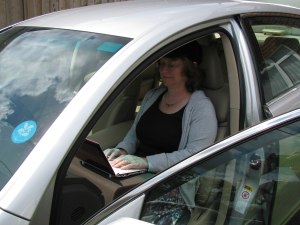
I write in Word, because I’m lazy. I don’t love it, I’m just used to it. I bought a copy of Scrivener, and did the tutorial, and decided it was a Good Thing, but somehow I haven’t got round to actually writing anything in it yet.
Like most writers I also write on paper. Any piece of paper, whatever’s to hand, because if I don’t write this idea down right now I won’t remember it. This leads to notebooks being stashed all around the place, and I still end up writing on things I shouldn’t. The original notes on the mechanics of shiftspace were written on the back of a menu from the Star Castle Hotel on the Scilly Isles; I think I still have it somewhere.
Stephen Palmer When in my garret, I use an ancient desktop PC with NO INTERNET CONNECTION. When out and about, I use an equally ancient netbook, so ancient that some of the keys no longer have letters on them.
When do you write?
Ideally during the day, for six to about eight hours (including cloud-staring time and plot walks – see below). In practice, because my life has a lot non-writing stuff in it right now, whenever I can.
Although I’m not a morning person, morning can be my most productive time, provided it starts with mild hynopompic hallucinations. My best* first drafts are produced after I’ve already written them in my head whilst half asleep; when this happens I need to go straight from bed to garret as soon as full consciousness returns, and empty the contents of my head onto (virtual) paper.
If my subconscious doesn’t deliver the goods then I need to ease into my writing day, which means reading in bed, then up for some faffing of the sort that could easily become writing avoidance if not got out the way early, and up to the garret when guilt drives me there, normally about 10am.
(*where best = doesn’t require too much rewriting)
Where do you write?
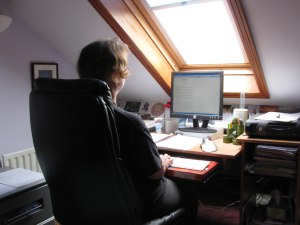
Ideally, in my garret. It’s actually a loft conversion, but it’s all mine. I’m really lucky to have a personal space devoted to writing. The fact that it’s only accessible by a wooden ladder and has NO INTERNET ACCESS does wonders for my productivity. I can’t just get up and wander off or check Facebook for cat pictures, though I have been known to distract myself when the words aren’t coming by pretending I’m a gymnast and walking along the beam that runs along the middle of the floor. Also, my desk is directly below the skylite, and you can get a lot of inspiration from clouds.
Deadlines mean I don’t always have the luxury of writing at home, so I’ve learnt to write when out and about, a task made easier by my lap-resty-thingie. If necessary I can write at friends’ houses, in hotel rooms, in gardens, even in the car (though not whilst driving).
I can write in public places, but only by tuning out everything around me, at which point my subconscious assumes I’m alone. This can be a problem in coffee shops and libraries, where behaviour like air-punching, making ‘hah!’ noises and growling can get you thrown out.
How do you write?
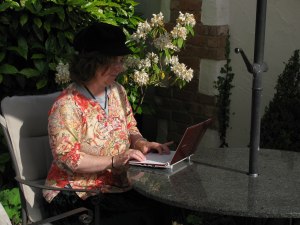
With music on, if possible. Especially for first drafts. The musical style will depend on what I’m writing, but it can’t have intrusive lyrics. By default it’s dub or ambient for the slow bits and trance or rock for the fast bits.
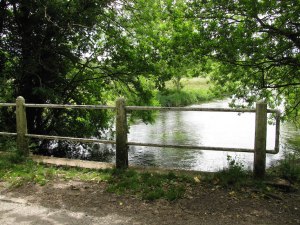
Plot walks are good for working out where the story needs to go next. I live on the edge of a national park, so there are lots of great local walks, though my default is ‘the standard river walk’. This has some excellent bridges to lean on whilst thinking.
Then there’s the plot pizza, where I take my partner out for dinner at the local Pizza Express (other pizza restaurants are available, though not if you live in a small town like I do), and in return he helps me sort out current plot issues. I’d like to find some way of making plot pizzas a tax-deductible business expense, but I doubt it’d wash with HMRC.
Questions of style
Like a lot of writers, my default setting is third person viewpoint, past tense. This is mainly because that’s what editors expect, rather than a conscious preference, and I’d like to experiment more. I’m currently working on a piece for an anthology which is present tense and mixture of first and second person; that’s what felt right for this particular story, and because it’s a commissioned piece, I don’t have to stick to convention.
Process-wise, I’m both panster and plotter. Being lazy thing means I tend towards panster (and it’s more fun), but the necessity of spending more time rewriting than the original first draft took is teaching me, book by book, to get off my arse and plan properly in advance.
When the first draft is done
I hate first drafts. Mostly. The times I don’t are when it all flows like magic, like those excellent morning sessions I mentioned above. The rest of the time writing first draft is hard work at best. Sometimes it’s like shitting a melon whilst trying to nail jelly to the ceiling.
I belong to a writing group called Tripod (so named because three of us founded it, in Woking near where the Martians landed), and they’ve been ritually disembowelling my first drafts for over a decade and a half now. Once they’ve pointed out the errors of my ways it’s on to rewriting, which is the part I love. In rewrites I get to pick the pearls out of the dross, and find out what the story really is.
Lastly, self promotion:
Once I’ve finished the short story for Maelstrom’s Edge I’ll be back to the current novel, which is volume one of a science fantasy duology called Shadowlands. My Hidden Empire sequence of space opera novels is published by Gollancz there’s also a Hidden Empire novella, The Ships of Aleph, and short story collection Downside Girls, both published as ebooks by Tower of Chaos press. Having said it’s all space opera and science fantasy, the next thing I’ve got out is an alt. history short story set in an sixteenth century Peru, in the fabulously named Mammoth Book of Tales from the Vatican Vaults.
More Information
Jaine Fenn’s Website: http://www.jainefenn.com/
Six Little Masterpieces of Economy
Armistead Maupin has been described as the master of coincidence. He’s also a master of economy. Look how captures the essence of his characters in a just a few words in the following chapter openers…
- ‘Well,’ boomed Arnold Littlefield, dousing his scrambled eggs with ketchup, ‘the hubby stood you up, huh?’
-
MANUEL THE GARDENER was grumpy, so DeDe didn’t have the nerve to ask him to clean the yucky things out of the swimming pool at Halcyon Hill.
-
MONA WAS WASHING dishes with a vengeance when Mrs Madrigal walked into the kitchen.
- BURKE, OF COURSE, was the hardest one to convince.
- MARY ANN SPENT her lunch hour at Hastings, picking out just the right tie for Norman.
- THE DISCOTHEQUE WAS called Dance Your Ass Off. Mary Ann thought that was gross, but didn’t tell Connie so
See Also
- Six Lessons from Music…
- Six Tips on Writing Speech
- Six Reasons why Maintaining a Blog will make You a Better Writer
- Six Little Masterpieces of Economy
- Six Useful Websites for Writers
- Six Ways to Stay Sane as a Writer
- Six Ways that Being Published Won’t Change Your Life
- Six Things to do When You’ve Finished a Story
- Six Tips on Writing First Drafts
- Six Tips on Narrative Voice
- Six Books Every Writer Should Read
- Six Tips on Submitting a Story
- Six Tips on Beating Writer’s Block
- Six Tips on Showing not Telling
- Six tips for Writing Character
How Writers Write: Ruth EJ Booth
How Writers Write is monthly series of guest posts where established writers invite you into their workspaces, reveal their work habits and share their experience.
The series started with Keith Brooke. last time featured Neil Williamson. This month it’s BSFA Award winner Ruth Booth’s turn…
How would you describe yourself?
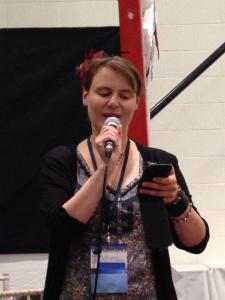
Well, I’m an award-winning fiction writer and a poet, usually of speculative sort. From time to time, I’m a critic/reviewer – of music (alternative) and, recently, books too.
But writing isn’t all I do. I’m a live gig photographer. I sing, I’m told, though I need a new outlet for it. I’m teaching myself to play the ukulele, since a piano’s out of reach right now. There’s more besides. So how would I describe myself? Not nearly busy enough, quite frankly.
What do you use to write?
Right now I’m typing this in Word, on my old refurb’d 17” laptop – and this is a rare case of typing up before I’ve made any handwritten notes. Mostly, ideas start out on paper first – I’m not sure what it is, but I find I think more clearly when I handwrite, rather than typing straight onto a screen. Nearly all my review/opinion pieces start life on paper – git big swirling threads of thought running all over my A4 notepad (in the margins and everything!), clauses knotted in gaps between the lines of ten-year-old’s scrawl, later trimmed and woven into something more coherent for the screen. Fiction, it depends on the project, but you can guarantee at some point, I’ll hit that sticky wall*, and I’ll have to handwrite myself free of it.
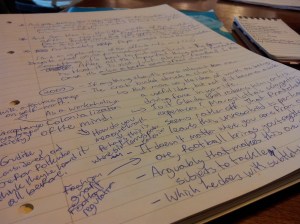
There are at least two notebooks on the go at any one time – the little one for when I’m out and about (which also doubles for my to-do lists), and the A4 workbook for general Work-Things-Out projects. I’ve learned that where I have a notebook FOR ONE THING AND ONE THING ONLY, that’s a guarantee I’ll never use it. So fiction tends to vie for space with public lecture notes, review plans, career stuff, poetry and geometric doodles of stars and weird spiky things. It’s hell to archive, but it works for me.
On my laptop, I generally work in Word, with occasional bits and pieces in Notepad if I’m experimenting with a section of something. Poetry is nearly always written in Notepad first. Aside from that, there’s the memo function on my phone, a netbook in my parents’ study, but… honestly? I’ve been known to write notes on bar receipts if I’ve nothing else to hand.
When do you write?
On an ideal week, I’ll have two hours writing time a day. Times vary. Generally it’s a free hour before work, and at least one after, but I run or cycle three to four times a week, so that shifts it up to the evening. It’s not that I can’t necessarily do both first thing – oddly, I can usually solve a story problem within the first ten to fifteen minutes of a run. Still, the aim’s for two sit down hours a day every day – more, if I can manage it, on a weekend. That’s 16 – 18 hours a week, if I’m lucky.
Where do you write?
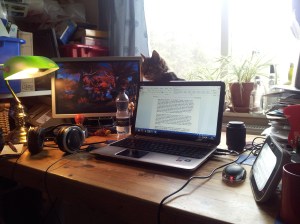
Most days I’ll pick one of three or four places to write. There are two cafés in town with mains power where I get most of the grunt work done – one for morning jaunts, one for evenings. When I’m at home, I like to use The Library at the back of the house, which is just a quiet and cosy space to work in. There’s also the box study with my lovely giant table and big flatscreen monitor, but I prefer that for non-fiction and photo editing work.
My main consideration is where’s going to have the right kind of quiet at any one time – and these days I need my comfort tea if I’m going to get some proper work done. The extent to which music’s a distraction or white noise really depends on the tunes. There are a handful of go-to bands/composers I use when the café soundtrack’s not doing the trick. More important is how I think of where I’m working – it can’t be somewhere for playing games or watching TV. If it’s not a neutral space – if it’s not somewhere where any distractions or background noise can be dismissed as not-for-me – then forget it. Work’s not going to happen.
How do you write?
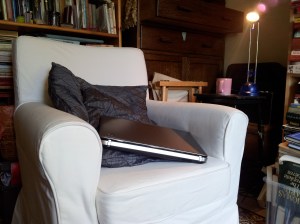
Word counts don’t work as well for me as time limits do. I’ve been using the Pomidoro method in the last few months (25 minutes on, 5 minutes off, in two hour bursts). It’s worked particularly well with this found documents story I’m working on, constructed from a series of archival pieces and audio transcripts. This way, I’ve a set period to focus on one bit, with no temptation to polish each one until I’m sick of it.
As for planning or pantsing, it’s really a question of what I’m working on. With criticism, I like to have a clear idea of my argument before I write it up, but fiction’s not so prescribed. There’s always a notebook beside me as I type – that’s more for working things out in my head than writing to plan. Unless the word count’s particularly tight, plotting’s usually something that comes along after the first draft, to work out what’s missing, where an extra beat might be needed, that sort of thing. Not so much planning, then, as restructuring.
A caveat: Since I’ve mostly written short stories so far, this might all change once I start working on novel length fiction. On the other hand, the longest thing I’ve worked on so far just poured out of me one day and didn’t stop until 18,000 words later, so we’ll see.
Questions of style. First Person, Third person, present tense, past?
Most of the time I’m writing in third person limited or first person, past or present tense – but that’s not to say I won’t one day come across a story that demands to be done in, say, second person omniscient. I’ve got to confess, I had to really think about this question, which may suggest I’m not that conscious of making those choices, at least beyond the extent to which they come with the story. Trite as it sounds, generally, there’s a voice that leads – and I follow that.
How many redrafts? – How many readers? – How easy is it to let go?
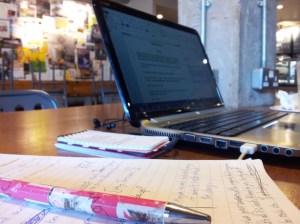
Redrafting’s a tricky thing to put a number on. Occasionally, it’s taken a complete draft of an entirely different story to get to the crux of what I find interesting about it – so the finished result ends up quite different to what I first imagined.
Easier to pinpoint is how many rounds of readers a story gets – and if all goes well, that’s generally two. Sadly, I don’t have the advantage of being part of a writers group, but I’m lucky to have a number of writer friends, who I can rely on within reason.
I’ve not been writing that long, so knowing when to let go is a discipline I’m still developing. As I mentioned earlier, I’ve two contradictory impulses when editing. The first is riddled with perfectionist zeal – but if I’ve worked on something too long, the other goes “OUT THE F**KIN WINDOW” and promptly chucks it in a huff (aka The Defenestration of Blargh method). I’m slowly working the both of them out of my system, not least for my own sanity. You’re always going to see the flaws in a finished story. But, arguably, if you did reach some mythic, mist-shrouded pinnacle of artistic perfection, wouldn’t that be a reason to stop?
What are you working on at the moment?
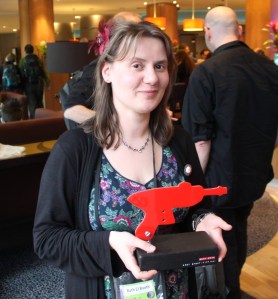
Let’s see… There’s the story about mining and music that’s told through a collection of audio transcripts and archival documents. There’s one about robots and rose gardens and what we leave behind. There’s another about what happens to the fictional worlds we create as children. That’s just for starters.
Recently, I’ve been writing more stories set around where I grew up in the North-East England – such as ‘Good Boy’, in January’s Far Horizons. Poetry’s been the biggest creative surprise of the last six months, which started as a whim, and grew a will of its own. Whether any of this will make it to print, we’ll see, but it’s been immense fun exploring a new way to write.
In the meantime, Fox Spirit’s Fox Pockets: The Evil Genius Guide will include a story of mine about a rather unusual college graduation. There’s also another project that I’m really excited about, one that’s quite different from anything I’ve been involved in before… but I can’t talk about that right now.
In short – everything up in the air and all to play for. Then, I wouldn’t have it any other way. That’s why writing keeps me hooked.
- Am pretty sure the writing wall is covered in treacle. Certainly feels like you’re wading through that on the tricky days, anyhow.
More Information
Ruth Booth’s website: http://www.ruthbooth.com/

