But…

Imagine our protagonist has invited a date for dinner.

They take a shower, get dressed, check their appearance in the mirror.

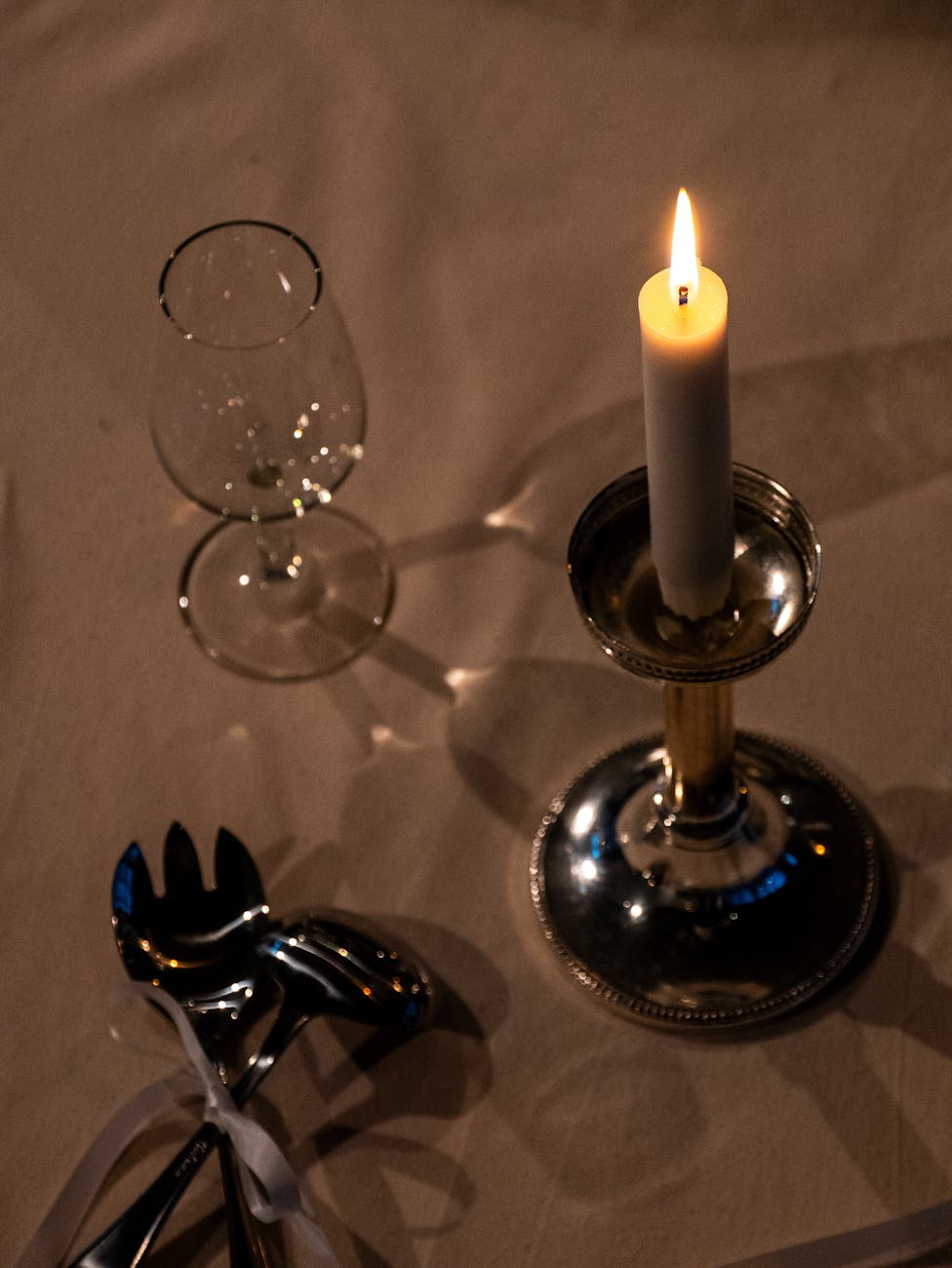
The smell of cooking fills their home. They open a bottle of wine and leave it to breathe next to two glasses, they choose some music to play softly in the background.

They straighten the cutlery on the table and check their watch.

There is a knock at the door.

Now what?

What happens next is the difference between a story and real life.

In real life the protagonist will open the door. Their date will be standing there, they’ll invite them in and they’ll have a meal together. Maybe they will enjoy each other’s company, maybe they’ll find the experience a little dull.

Either way, this isn’t a story, just a sequence of events. The person showers and they get dressed and they cook a meal and they open a bottle of wine. To make this into a story we need a but.

There is a knock at the door…

but there is a police officer standing there
but their date’s partner is standing there
but their date is standing there in tears
but their date says “We need to talk”

If the writer has just spent two pages setting the scene and building anticipation of the knock on the door, the reader will be very disappointed if the person standing there smiling is just the protagonist’s date.

Writing this, it seems so obvious. You might wonder who would make such a mistake. Well, I for one. Sometimes I’m so taken up by the loveliness of the world I’m describing I forget to add a story. And it was definitely a fault of mine when I first began writing.

Howard Suber said it much better then I can…

What Do All Great Stories Have In Common?

The word “but”. Which is to say inexperienced or poor storytellers structure their material with the words “and” or “then”. So “They did this, and then they did that, and then they did this, and then they did that,” which produces an episodic structure that doesn’t build on anything, and there’s no relationship between what came before and what came after.

Spaceship Turnover

Here’s something to think about on Inspiration Thursday

There are number of SF stories set on ships travelling between the stars.

Such stories should be quite different to those that take place on Earth. This is not because the action takes place on a spaceship. A good story will deal with the interaction of the characters within the ship. The fact that there is nothing outside but vacuum is irrelevant. If it’s an isolated environment the writer is after, then they could have set the tale in a hut in the middle of the Antarctic or on board an ocean going ship.

What makes such story SF is the physics. On Earth a vehicle that isn’t being powered will come to a halt. There are exceptions, you can roll a car down a hill, but as a general rule, if you take your foot off the accelerator the vehicle will coast to a halt. If the engines on your aeroplane cut out you better hope that the pilot can glide to a runway before friction robs the plane of momentum.

It’s different in space. Turn off the engines and a ship will continue to coast almost indefinitely. A journey between the stars would involve accelerating for the first half of the journey and then turning the ship around to decelerate for the second half. Make the turnover too late and you won’t stop in time, you’ll shoot past your destination.

This is counter intuitive, it’s not the way things work on Earth. Give your spaceship a hyperdrive (something I’ve done myself) and you don’t have to think about such things, you can look at other stories.

But just imagine you were on a spaceship that took ten years to reach its destination. Five years speeding up, five years slowing down. Just imagine the characters you could have on that ship. Actually, you don’t have to imagine. Al Reynolds did a great job with this scenario in his Revelation Space series.

I find these journeys a metaphor for life, I wrote about just that in Midway.

Some people spend the first half of their life accelerating up to speed and then slow to a graceful halt in the second half. Some people never learn to stop: they see their destination pass them by as they struggle to change direction and try and catch hold of it. And some people barely start at all.

Something for you to think about on Inspiration Thursday

Lip Salve

The tin of lip salve in the picture has sat there by the crossing for a few days now.

How did it get there? That’s the sort of question we like to ask on Inspiration Thursday.

The most likely explanation is that someone dropped it, then someone else found it and placed it on the box so that the owner might see it and retrieve it.

Of course, it could be a spy sending a signal to another spy, or an advanced monitoring device placed there by aliens. That could make for an exciting story, I suppose, but I don’t think that’s as interesting as thinking about what’s really going on here.

The crossing is just outside a local shop. I go there four or five times a week to buy bread and milk and so on, and I imagine that the owner of the lip salve does the same. They must have seen it by now, so why haven’t they taken it back?

Examining motives always makes for a better story. Why would they take it back? It’s lip salve. It’s been sitting out in the bad weather. Kids might have done something to it. Would you want to put suspect salve on your lips? Really, if the owner has seen the tin, they should have taken it and thrown it in the bin.

And what about the person who put it there? What did they expect to happen? Did they think through their actions? Did they believe they were doing someone a good turn, or were they just going through the motions, like in the bag of food waste? If they really wanted to be helpful they should have thrown the lip salve in the nearby bin. Or maybe they couldn’t be bothered to walk that far.

Or perhaps I’m just overthinking it. It was just a helpful act. Whatever, it’s the sort of thing to think about when writing a story.

The Queen’s Gambit

Mitchell and Webb once did a Medical Drama sketch, where two fictional screenwriters explained that the emphasis in their new series was on drama and not medicine, as “you can get bogged down too much on the so called research.”

This resulted in a show with doctors shouting such things as “This patient is poorly! Bring me the medicine! No, you fool, that’s the wrong medicine!”

I was reminded of this sketch whilst watching The Queen’s Gambit recently. If you haven’t seen it, it’s a series about a female chess prodigy who goes on to become World Champion in the 1960’s. Apparently the matches played on screen were meticulously researched, and reflected real games played back then.

But that doesn’t matter. I don’t think most people watching would follow the play – I certainly couldn’t – but that doesn’t matter because what made the show so watchable was the way the drama of the games was communicated.

I was gripped by the ebb and flow of the matches, by the pace of the game: the way players would make a series of moves quickly and then spend ages pondering the next one. There was drama in the expression on their faces, even in the way they moved the pieces…

But that was just the games themselves. Painstakingly recreated they might have been, but they weren’t the story.

David Hepworth, the music writer, gave this advice – Don’t write about the music, write about all the things around it.

I think that’s true of all writing.

Would the Queen’s Gambit have been as good if it had been about draughts or backgammon? I don’t think so. Maybe you could have made the tournament scenes themselves as exciting, but the drama was heightened through the 60s setting, the Cold War tension and the single minded devotion of the characters in studying past games. The story wasn’t about the chess.

It’s often said that the essence of drama is conflict. Many beginner writers misunderstand what this means. A fight doesn’t make a story exciting. Why the people are fighting, that’s what’s interesting.


On a separate note, I saw Hamnet last night. That was two hours of my life I’ll never get back. The only bit I enjoyed was the last ten minutes, and that was because it was a scene from Hamlet.

But there was a bit where Shakespeare was sharpening his quills whilst awaiting for inspiration to strike. I felt happy when I saw that. That was the Elizabethan equivalent of me messing around with my emacs config file on my computer rather than getting down to work.


Finally, it’s getting harder and harder to share these posts. The algorithms on social media sites favour internal content, not external blogs like this. If you’ve been relying on say Facebook to send you to this site then you’ve probably not being seeing many posts recently.

If you don’t want to miss anything, enter your email below to subscribe to this blog and receive posts by email.

It’s the dishonesty I can’t stand

I don’t know if you’ve ever used the Vivaldi browser, but take a look at this announcement for their latest update:

We’re launching Vivaldi 7.8 today, and honestly, this one’s different. While every major browser is racing to cram AI assistants into their products, Vivaldi is dropping a middle finger to that entire approach.

Good for them. Dell have realised that users don’t care about AI too. You can read about that here.

Pages used to be a rather nice little word processor that I occasionally used on my iPhone. Apple have just updated it to try and make me take out a subscription to their Creator suite. Two things:

1) I don’t want to use Apple Intelligence when I’m being creative. The pleasure is in the act of creativity, not in the output. You might as well pay someone to have sex for you.

2) Apple say that Pages will continue to have a free tier. No it won’t. Pages was never free, any more than iOS is free. You pay for them as part of the cost of the device. It’s the dishonesty I can’t stand.

If you want to use AI, fine. Personally, I don’t want AI anywhere near my computer. My thoughts are my own, I don’t want my thoughts rewritten by AI. It’s not what the markets want, either. Here’s what Analog says about AI

Statement on the Use of “AI” writing tools such as ChatGPT

We will not consider any submissions written, developed, or assisted by these tools. Attempting to submit these works may result in being banned from submitting works in the future.

Most other publications say something similar. So if you’re marketing a word processor, don’t pretend that it’s going to help me write saleable stories. It’s quite the opposite.


Finally, it’s getting harder and harder to share these posts. The algorithms on social media sites favour internal content, not external blogs like this. If you’ve been relying on say Facebook to send you to this site then you’ve probably not being seeing many posts recently.

If you don’t want to miss anything, enter your email below to subscribe to this blog and receive posts by email.

Inspiration Thursday!

I just spent a week in Marrakesh, hence this post.

The picture shows the Jemaa El-Fnaa Square in the centre of the Medina. You can see the Koutoubia or Kutubiyya Mosque in the background. There are far better photographs of the mosque online – I just looked back over my camera roll and this was the best I had. But hey, you don’t look at this blog for the pictures.

According to Wikipedia, construction on the mosque begin sometime in the 12th Century. The name Koutobia derives from the Arabic word meaning booksellers, as this was main activity of the vendors in the square at the base of the mosque. The three golden spheres at the top of the minaret represent Islam, Christianity and Judaism and are intended to show that all religions are welcome in the city.

While in Marrakesh I happened to pass the mausoleum of Sidi Abou Fariz Abdelaziz Tebbaa. According to the notes written outside, he ranked high among his contemporaries in science, knowledge and honesty. I was impressed that this was how they measured his worth.

I’ve been thinking for a while about doing a series of posts on an “Inspiration Thursday” theme. I don’t know if this could be the first.

Write a story set in a world where people are respected for their knowledge and their honesty. Where books are valued and different religions are tolerated.


Granted, such a world seems pretty far fetched at the moment, but apparently it was not always the case. We are talking SF and Fantasy after all.


It’s beginning to look a lot like…


… Bad Christmas Movies

My family love bad Christmas movies.

I don’t mean bad Christmas movies like Love Actually where they have the time and budget to allow the cast to do their thing and then to edit the thing properly at the end. (Many things irritate me about this film, but I love the scene where Rowan Atkinson takes forever to wrap a Christmas present.)

Nor am I talking about bad bad Christmas movies where cast and crew are are just going through the motions.

No, I’m talking about good bad Christmas movies. The sort of movie which has all the ingredients, they just don’t have time and budget to put them together properly. The sort of film where the script talks about the evil Bolton Brothers who run an evil business, but the budget only runs to one of them showing up on screen.

What I love about these films is that they understand what the audience wants and they try to deliver it.

There’s a female lead who hasn’t had a relationship for some time.

She has a best friend who tells her to put herself out there and so she heads off to a small town (possibly her home town, possibly a town in New England or Scotland, occasionally a village near a castle in a small Kingdom in Europe)

The clock starts ticking, counting down to Christmas day.

The lead meets a Prince, a Lord or a Duke in disguise. If none are available she’ll settle for a handsome carpenter who is good with kids.

For some reason there will be a baking competition.

On Christmas Eve, it will start to snow.

And then she will realise she has met her man.

I have no problem with films that follow a structure. The first stories I placed were romances, sold to UK women’s magazines.

I learned a lot by writing them: if two people are going to fall in love in a romance, you have to make them attractive both to the reader and each other. Beginner writers, when confronted by something difficult (and getting your characters right is difficult) have a habit of dodging this by changing the structure.

Changing the structure can be fantastic, but not in this case.

I saw a film called Hot Frosty recently.

In it, a lonely woman builds a snowman who comes to life. He’s a good looking guy, totally ripped with great abs. The other women are jealous of this Hot Frosty.

And all I could think was, why don’t they build their own snowman? What if they did, and the town was suddenly filled with hot snowmen? What would the regular men do?

But this wasn’t a bad SF film. It was a bad Christmas movie. People watching this film (and I include myself in this) didn’t want internal logic. If they did they wouldn’t be watching a film where a snowman came to life.

If you’re looking for some ideas on what to write over the coming weeks, then I would recommend the following: write a straight love story. Or given the time of year, write a Christmas love story. Learn the structure and follow it. It’s excellent practice.

How we used to write: part two

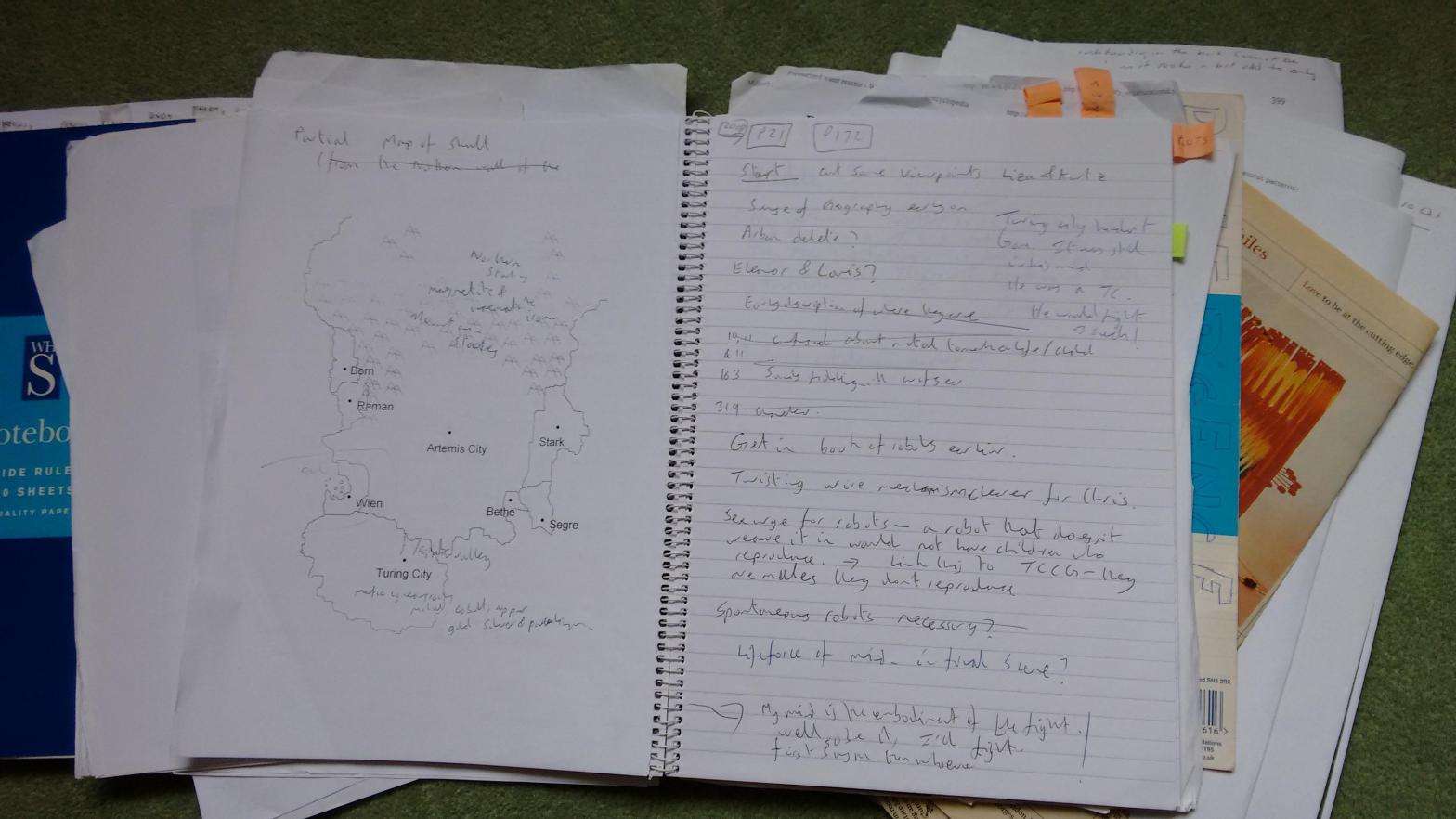
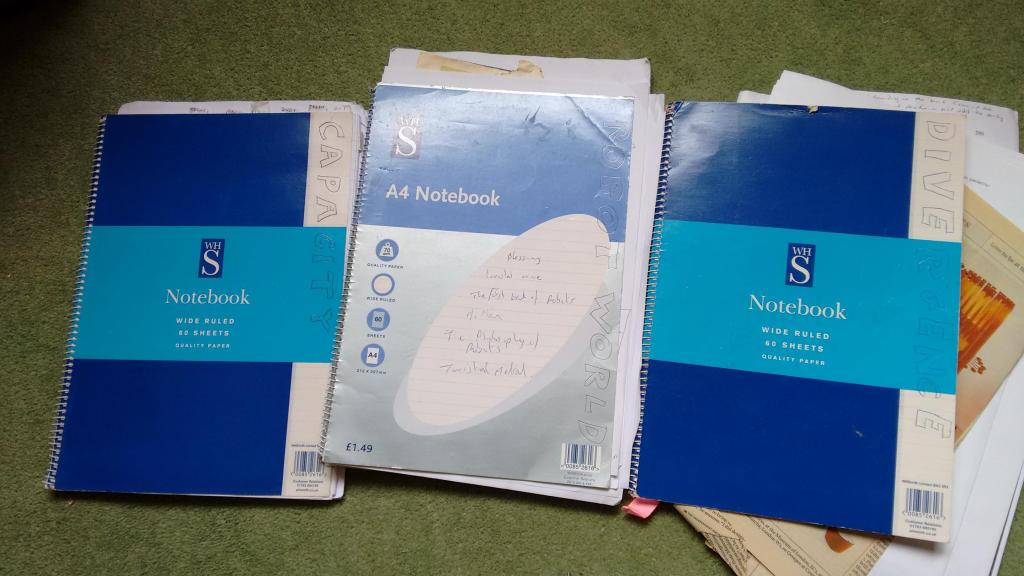
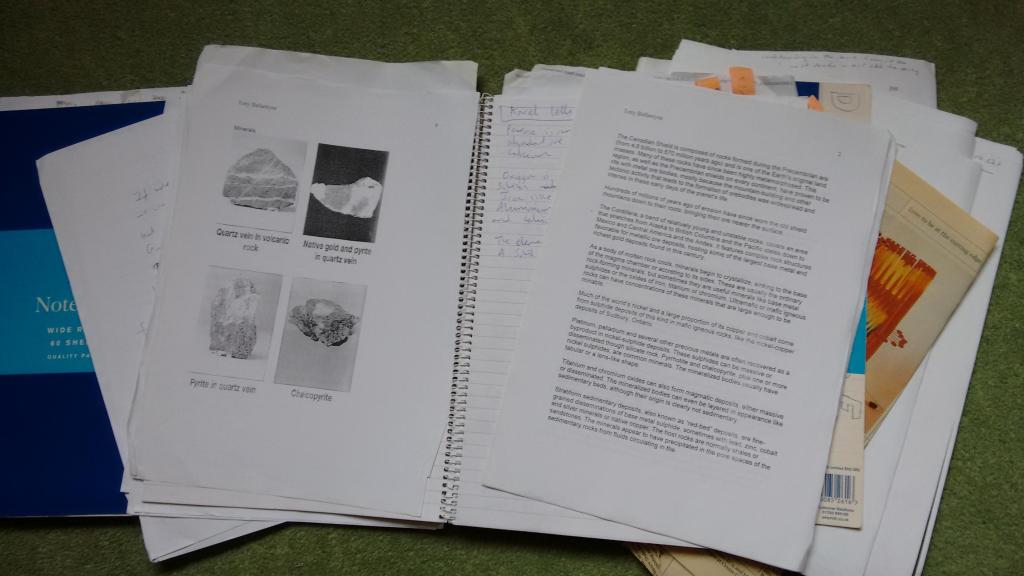
The image attached to this post is of the notebook I used to plan Twisted Metal. You can see the map of Shull I made to keep track of where everything was, as well as some of my reminders from when I was editing the first draft. Sticking out of the book are notes I printed out from the internet about mineral composition and some old newspaper articles.

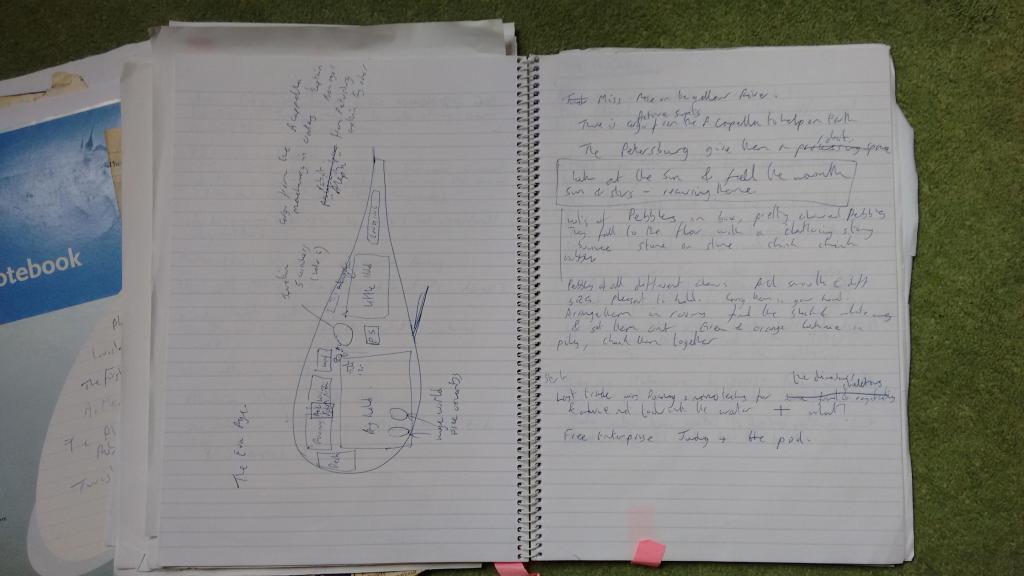
I’ve included some other images below. One of them contains the original sketch of a teardrop ship that features in The Recursion Series and the Fair Exchange series.

I don’t use handwritten notebooks any more, everything is collected electronically and stored on Obsidian. It’s a lot more convenient, it allows me to place links between different parts of my worlds. Having everything stored in the cloud means I can browse my ideas on my phone, I put links directly to sources rather and I can work on prose and copy and paste it straight into the MS when its ready.

But even so, there is something special about a handwritten notebook. The book records the passage of time in a way that is more interesting than simple date stamps. The different inks, the stains, the coffee rings, the crumbs caught in the pages, the dog ears. The fact that you started at the beginning and worked through to the end (sort of…)

I still like notebooks now, but I’ve weaned myself off them. I have an artist friend: her notebooks are wonderful to look at. But she draws beautiful illustrations and has wonderful handwriting. Looking back now, I can barely read my own notes.

Why Loving Unfashionable Art Can Lead to Success

I rather like Andrew Lloyd Webber’s work.

On the rare occasions I mention this most people feel the need to tell me they don’t like his music. There are two possible subtexts to their comments, either they’re telling me that I’m wrong in liking his stuff, or they’re telling me that they have better taste than I do. 

Anyway, I recently read and enjoyed Unmasked, his autobiography. It gave me something to think about.

Near the beginning of the book, Lloyd Webber describes how he was always uncool.  He liked musicals when they were out of fashion and, in particular, he liked Rogers and Hammerstein when the critics were slating their work. (I love Richard Rogers’ music even now). As a child, Lloyd Webber’s other interests were Victorian Art and Medieval architecture, both also desperately uncool at the time. At one point he describes the moment he first heard the Beatles and he realises that his street cred had just gone into negative.

Even so, he still loved musicals. You’ve got to really love something to keep pushing yourself on whilst everyone else is turning their nose up at what you’re doing.  If you’re just doing something because you think it’s cool  you’re never going to be more than half-hearted about it at best.

That thought led me to wonder if people who like unfashionable stuff are more likely to succeed.  Not because what they like is unfashionable, but rather because the fact that it’s unfashionable doesn’t bother them. 

I love SF and have done as far back as I remember. My mother was a fan, and she introduced me to Ray Bradbury and Isaac Asimov, as well as Star Trek and The Day the Earth Stood Still.

I can’t say my friends ever laughed at me about it when I was a kid, but it wasn’t a popular topic of conversation back then.  I was an SF fan long before I was a writer.

But I think I realised while reading his book that I’ve never loved SF as much as Lloyd Webber loves musicals.

He always loved musicals, he always wanted to write musicals and so he set out to do just that. True, he had the family and connections to help him succeed, but he was single minded in that pursuit.

Good for him.

P.S. The image attached to this post came from Pexels free photos. I searched for cool and stylish and that’s what came up. I don’t want the model thinking I’m calling them uncool. Far from it. That’s their thing. Let them do it.

And through the wire…

A few years ago I bought myself an expensive phone, a change from the cheap ones I’d always used until then.

I would have been delighted with it apart from one thing: it frequently failed to charge.

Searching online, I found lots of other people having the same issue. Naturally, there were lots of opinions on where the fault lay. The OS, the manufacturer, the fact people hadn’t updated their phone. But in the middle of all the complaints one message kept patiently popping up: it’s all down to a faulty bunch of cables. Replace the USB cable and everything will be fine. I tried everything else before taking this advice, and guess what…

I had a similar experience when I replaced my 12 year old PC. I was having trouble burning DVDs (don’t ask) and I thought that maybe I’d pushed the old hardware as far as it could go. I bought a new PC and everything was fine. Problem solved.

It wasn’t until someone asked for a kettle lead to plug into the PA at a gig I was playing. I lent them my old PC lead. We turned on the PA and heard nothing but crackling. It turned out that, like with the phone, it wasn’t the device that was faulty, but the lead.

I was reminded of this at recent writer’s group meeting when critting a story. The world building was excellent, the plotting tight, the characters interesting. But the story wasn’t working.

The trouble in this case wasn’t anything to do with the story itself, it was the sentences themselves. Reading the story out loud (an old trick) revealed just how convoluted they had become. The writer was so intent on delivering all the ideas they had developed they had lost sight of the actual words they were using.

Stories like this remind me of playing the cornet. As they say in brass bands, it doesn’t matter how great your technique is when you’re blowing on your instrument, if you’re not making a pleasant noise, no one wants to hear.

When things aren’t working, whether with machinery, or stories, or indeed life itself, we have a tendency to blame the big obvious things and to forget about all those other less glamorous mechanisms that keep things running. Quite often we lose sight of the really simple changes that can be made in order to improve things.

Have I mentioned going for a walk recently?