Six Little Masterpieces of Economy

Armistead Maupin has been described as the master of coincidence.  He’s also a master of economy.  Look how captures the essence of his characters in a just a few words in the following chapter openers…
  • ‘Well,’ boomed Arnold Littlefield, dousing his scrambled eggs with ketchup, ‘the hubby stood you up, huh?’
  • MANUEL THE GARDENER was grumpy, so DeDe didn’t have the nerve to ask him to clean the yucky things out of the swimming pool at Halcyon Hill.
  • MONA WAS WASHING dishes with a vengeance when Mrs Madrigal walked into the kitchen.
  • BURKE, OF COURSE, was the hardest one to convince.
  • MARY ANN SPENT her lunch hour at Hastings, picking out just the right tie for Norman.
  • THE DISCOTHEQUE WAS called Dance Your Ass Off. Mary Ann thought that was gross, but didn’t tell Connie so

See Also

Six Useful Websites for Writers

1) Etomyonline – Etymological Dictionary

See the origin of words and the way in which their meanings have changed throughout history. Keep your language of its time with this site and the next:

2) Google ngrams – frequencies of short sentences found in sources printed between 1800 and 2012

3) Behind the name – etymology of first names

Very useful when used in conjunction with the next site:

4) Fake Name Generator – not just names but biographies

Ideal when you’re stuck for background characters. Characters like

Amanda Castro Carvalho. Born and raised in Switzerland of Brazillian parents. She was born on October 19, 1987, making her 27 years old and a Libra

5) Inflation Calculator

Was £20 a week a good wage back in 1960? How much would Mr Darcy’s 10000 a year be in today’s money? The Bank’s Inflation Calculator shows how the cost of goods and services changes over time as prices change. You can check the effect of price changes over any period from 1750 to 2013.

6) Wolfram Alpha

Unlike search engines, which merely return documents, Wolfram Alpha tries to work out answers from questions. To get an idea of how Wolfram Alpha differs from Google, say, try asking them both how far away the moon is, then compare the answers.

See Also

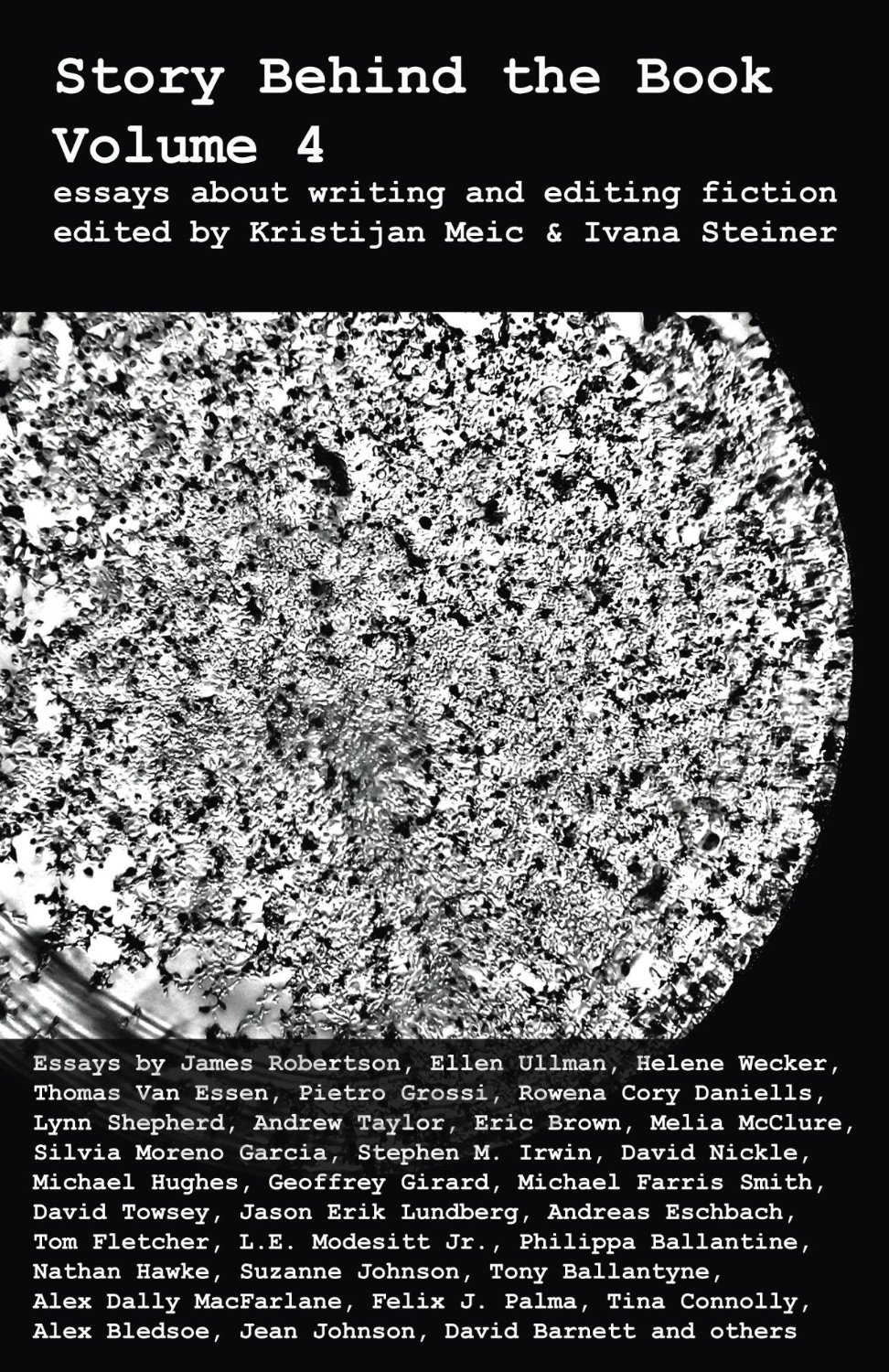
Story Behind the Book Volume 4

Volume 4 of the “Story Behind the Book” series of charity anthologies, edited by Kristijan Meic and Ivana Steiner is out now.  It features a brief essay by me about the story behind Dream London.

As always, all proceeds go to Epilepsy Action, UK registered charity, so spread the word

Similarly to previous instalments, the cover image was taken by Ivana Steiner in her genetics lab while working hard on finding the cure for lung cancer. This time it’s an image of Transfected HEK-293 cells.

Currently the book is available as e-book and print on demand paperback on Amazon. In the next few days it will appear elsewhere…

Links are:
Amazon.com
E-book:
http://www.amazon.com/dp/B00VPK1WBA
Paperback:
http://www.amazon.com/dp/1511602473/

Amazon.co.uk
E-book:
http://www.amazon.co.uk/dp/B00VPK1WBA/
Paperback:
http://www.amazon.co.uk/dp/1511602473

How Long does it Take to Write a Novel?

The answer? Fifteen days, twenty hours and fifty five minutes.

I know that because I finished Dream Paris yesterday and I’ve been clocking the time I spent working on the novel.

The time includes the writing of the first draft of the novel and three redrafts: first redraft, the second following feedback from my wife and a third following feedback from other readers. The novel is now with my editor awaiting his feedback and will probably undergo at least two further redrafts.

I’ve not counted time spent planning the novel or the notes I made prior to embarking on the writing. As some of the ideas, scenes and dialog that appear in the novel have been collected over several years, it was difficult to measure this.

Some statistics you might find interesting:

I started on the 18th February, 2014 at 9:58am
I finished on the 20th February, 2015 at 3:00pm exactly

If I’d been writing an 8 hour day the novel would have taken around 48 days to complete.

The book is almost exactly 100 000 words as it stands, given that it took just short of 381 hours to write that gives an average word rate of a rather pitiful 262 words an hour. Given that the first draft took around half the total time to complete, that makes the word rate a more respectable 524 words an hour. As I normally average around 850 words an hour, the missing words are partially accounted for by the fact that I cut around 60 000 words from the novel due to mistakes, changing my mind or no good reason.

If you’re interested how I collected this data, well, have I mentioned Emacs? I recorded the time taken using org-mode. You can find out more by reading this post on My Emacs Writing Setup.

​10 Books I Couldn’t Put Down

I don’t know what my favourite book is, but the following are books I read at various times of my life that, at the time, I couldn’t put down. Most of them I finished in maybe one sitting – definitely no more than two or three – perhaps whilst lying ill in bed or on holiday.

Some of them I’ve read over and over again, two of them I’ve only read once (one of those because it’s not yet available on Kindle and I don’t buy paper books any more)

Most of them are expertly crafted, one of them is appallingly written. All but two have very good stories, half of them are strongly plotted, three of them are character driven, three of them made me laugh out loud, three of them made me smile, four of them had me on the edge of my seat, none of them made me cry. Maybe three of them would get into my top ten books ever.

In no particular order…

  • Rachel’s Holiday by Marian Keys
  • The Bonfire of the Vanities by Tom Wolfe
  • The Hitch Hiker’s Guide to the Galaxy by Douglas Adams
  • The Secret Diary of Adrian Mole aged 13 3/4 by Sue Townsend
  • The Mote in God’s Eye by Larry Niven and Jerry Pournelle
  • Complicity by Iain Banks
  • A Tale of Two Cities Charles Dickens
  • The Rainmaker by John Grisham
  • Harry Potter and the Deathly Hallows by JK Rowling
  • The Da Vinci Code by Dan Brown

Six Ways to Stay Sane as a Writer

  1. Don’t place too high a value on your reviews (there’ll always be good and bad ones).
  2. Don’t place too high a value on your Amazon Sales Position (no matter how high it is, it will go down eventually).
  3. When it comes to you writing, the only people whose opinions really matter are your editor and those you’ve chosen to be your alpha and beta readers. (And you should really listen to them!)
  4. Remember that you got into this to be a writer. If you’re writing, you’re doing what you wanted to do (and what you have to do).
  5. Always be working on your next story (that way you won’t feel so bad if the last one is rejected).
  6. Remember that being a writer is only part of who you are. You’re also a wife/husband/partner/mother/father/son/daughter/friend/colleague…  (in fact, you spend more of your time being those things).

See Also

Why the Last Series of Dr Who was Badly Written, and Why it Matters

It’s not often that a TV show makes me angry, but the last series of Doctor Who did. It made me really angry.

Why? Because it was badly written. Very badly written. I’ve read many articles to the contrary and, somewhat confusingly, I agree with them. How can that be?

Because I do agree that the writing for the series was superb, but I also think that some of the episodes with the best writing in them were also the worst written overall.

So where’s the contradiction? It lies in the writers’ almost total disregard for the science in the Science Fiction.

Does it matter? After all, this is a show that features a character who can travel in time. Time travel is impossible, surely that shows a complete disregard for science. Well, yes, but that’s not the problem. In Science Fiction you can have one impossible thing, you can maybe have two or three impossible things that you build your story around. That’s the nature of the genre, but there’s a caveat: you have to maintain internal consistency. If you accept your two or three impossible things and then continue to go trampling over the science just for the sake of the plot, then that’s just bad writing. Full stop. And that’s what happened in the last series of Dr Who.

Does it matter?

If you want to write SF, yes it does. If you care about SF, it does. Because this sort of bad writing cheapens what the rest of us SF writers are trying to do. It falls in with the received wisdom of the Literary Establishment that these things don’t really matter, that ignorance of Maths and Science is nothing to be ashamed of.

No one would dream of writing a detective show without consulting basic police procedure. I read somewhere that the BBC is always careful to make sure that the steam engines it includes in period dramas are correct because so many people write in to complain when they get it wrong. So why is it okay to ignore bad science? A dragon hatching and laying an egg straight away? Trees suddenly appearing to save us from a solar flare? These were well written episodes with bad explanations just tacked on. They could have been much better. Are the writers really going to claim failure of the imagination?

Yes, it’s nice that the BBC include this sort of drama in their mainstream schedules, it’s great that they throw money and actors at it to produce a quality product. But if they ignore the science, then they’re saying that it doesn’t matter, that when in it comes down to it, the S in SF doesn’t matter. It’s the only the F that counts.

Well, I think they’re wrong, and unlike some of the other reviewers, I’m not going to pretend otherwise.

Sometimes I Have No Opinion

Who says that Weetos are just for breakfast?

I have no idea. I’ve never heard anyone express an opinion on the right time to eat Weetos, one way or the other.

But advertisers love these sort of statements. They appeal to the rebel in people (hey, no one tells me when to eat my breakfast)!. More than that though, they make you part of the debate. Advertisers validate the thing they are trying to sell by tricking you into having an opinion on it one way or another; because once you have an opinion on something it becomes important. That’s why the adverts want you to believe that you have to either love or hate Marmite, they want you to believe that indifference is not an option.

Well, yes it is. Indifference can be a great thing. I have no opinion on many things. I haven’t got time to have an opinion on everything, because if I were to try it would stop me concentrating on the things that are really important.

This is the politician’s trick. Concentrate on the fact that it’s important to vote and you validate the people you are voting for, the politicians themselves. Keep telling people that they have to vote or the wrong party will get in, and they’ll forget to check if the right party has anything going for it.

The Internet is full of people with opinions, many of them keen to get you involved in their debates. That’s how they validate themselves. That’s how they promote themselves. They want to drag you into the argument, they’ll tell you that you have to be involved, that if you’re not part of the solution then you’re part of the problem.

Well, no. You’ll just have to excuse my indifference.

Leave it to the Experts

You may have noticed that I’ve separated the blog from this website. As I maintain two static content websites (this one and my tech site: tech.tonyballantyne.com) it seemed appropriate to have a separate, dedicated blog. I’ve been looking at Ghost blogging, and I liked the philosophy behind it. I also like to support to open source, so I thought I’d give it a go.

I’ve only just resisted the temptation to write a theme for Ghost. I’ve looked at the documentation, I’ve downloaded a couple of themes and had a look around inside, but I’ve managed to summon the self control to say “no”.

It was difficult. I hand coded the first websites I published, I dabbled in Dreamweaver, I wrote my own WordPress themes… I’m really tempted to get under the bonnet of Ghost, but over the years I’ve come to realise that whatever I do will never be as good as something done by a proper designer – by which I mean someone with a flair for design. I’m a writer first and foremost. I like Ghost because it allows me to concentrate on what I’m good at. It’s the mark of the amateur to think they can do everything. It’s the Dunning-Kruger effect: the less you know, the more you think you know.

So, I’m sticking to writing for the moment, and I’m keeping the Ghost blog on the basic Casper theme. No comments, no menus – nothing but blogging and a real sense of freedom. I’ll wait for someone else to make it look good.

You can find out more about Ghost here: http://ghost.org

You can find my blog here: http://blog.tonyballantyne.com

It’s Time to Think Big Again: How to Develop as an Artist

There’s a tendency nowadays to view simple as good, to regard the stripped down as authentic. In music we’re still seeing a reaction to the 1970’s, to the overblown theatricals of prog rock, to the tendency to “big” sound in classical orchestras. Well, that was forty years ago today, and things have gone too far.

This was illustrated in an article I read today about the singer songwriter Ed Sheeran.

Last week, IoW boss John Giddings caused controversy when he said that the industry wasn’t nurturing enough newer acts to rise to the role of headliner, and that the pool of more established legacy acts that could be called on to top the bill was forever diminishing – adding that Ed Sheeran was ‘boring’ and that if he’s the future, ‘we’re all screwed’.

If I read the article correctly, John Giddings problem was Ed Sheeran’s habit of playing solo concerts, just him and a guitar.

I don’t know enough about Ed Sheeran to have an opinion on whether he’s boring or not, but John Giddings may have a point about the solos. I’m getting tired of hearing minimalistic sets on acoustic instruments. To my mind, stripped down instrumentation all too often reveals a failure of the imagination. Why? Because arranging is difficult. Writing many parts is harder than just writing for voice and guitar. Thinking of something original to do with a larger sound palette is hard, full stop. Yes, all too often a bigher band can also be used to hide a lack of content, but that’s not an excuse to try something new.

You might disagree with the above. I’m sure some of you have your fingers poised on the keys, ready to type what about JS Bach? What about Chopin? Well, good point. And if Ed Sheeran’s playing in his live act involves him adding to the range of guitar techniques due to his extended arpeggiations, if he is using the instrument to provide a counterpoint that highlights the inner harmonies of his music in unusual fashions, if what he’s doing is pushing back the boundaries then fair enough. Actually, better than fair enough. Hats off to the artist, we can all learn something from him.

But if he’s just singing along to the chords, then, no, that’s not enough, not anymore. I’ve heard enough of those sort of acts, I want something different. (I should add at this point I listened to Ed Sheeran whilst typing this. I was rather impressed, and I didn’t think him boring. I haven’t heard his live act, though.)

That doesn’t detract from my main point, though. If you want to develop as an artist., yes. keep it simple to start with. But there has to come a time when you do something more exciting, when you try to work on a larger scale. You’ve got to take the journey before you can return to your roots.

You’ve got to get out into the world and experiment before you bring it all back home.