
What do they teach these kids?

There used to be a question asked of trainee teachers: why do we teach Shakespeare and not Pinball?

It’s the sort of question that got a certain sort of politician angrily demanding that the lefties be kicked out from the teacher training colleges. The question annoyed me too when I first heard it (although when I was asked the question they said video games, not pinball).

But when I began to think about it, I realised that it was an excellent question. Possibly the most important question in education. It wasn’t so much about Shakespeare v Pinball, but rather about the value we place on different skills and knowledge. Why do we have the curriculum that we have?

The realistic answer, of course, is to make people employable.

One hundred years ago we taught people to add up columns of numbers. We were preparing clerks to work with ledgers. Nowadays students are taught how to use calculators or spreadsheets to solve problems. Different jobs, different education.

When I was at school the girls learned cooking and sewing, the boys woodwork and metalwork. Later on, girls could opt for what was called office skills: how to take shorthand and use a typewriter. My wife, studying 200 miles away in Wales, bucked the trend by taking A level physics and chemistry.

To put this in context, I was 9 when the Equal Pay Act came into force, meaning that women were paid the same as men for the same work. 15 years later, when I started teaching, it was taken for granted that girls and boys studied the same subjects.

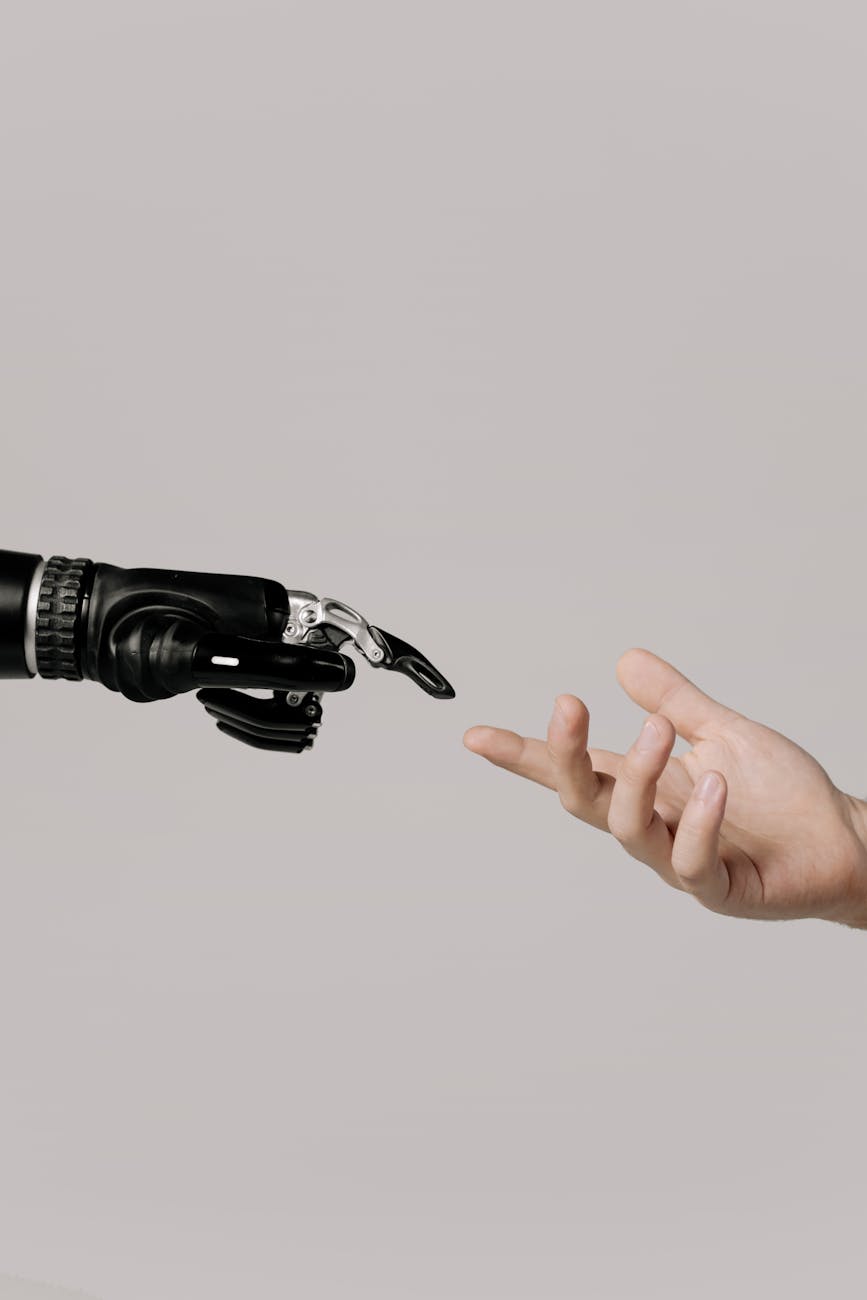
When I started reading SF, just about the time of the Equal Pay act, I was led to believe that machines would do all the jobs in the future. SF promised humans a life of leisure. That prediction seems to have been half right. Nowadays, it seems, machines are indeed doing more and more jobs, but we humans seem to be working longer hours for less reward.

Which brings me to the news of the UK government’s curriculum review, announced yesterday.

The media made much of the fact that students would learn more about AI in the future. That makes sense.

But there was one rather heartening announcement that wasn’t really mentioned in the news reports: that changes to league tables will mean arts GCSEs “will be given equal status to humanities and languages, recognising their value in boosting confidence and broadening skills for a competitive job market.

Note that phrase, competitive job market. Like I said, education is all about making people employable.

But who cares? The arts have been slowly ground out of state schools over the past ten years. I think it’s a good thing that students will have the chance to start writing, painting and composing again. If the AIs are going to be doing all the jobs in the future, then at least students will have something interesting to fill their lives.

Maybe we can start to realise the second half of that 1970s vision of SF. Because I’m not sure it’s going to be that pleasant a future if we don’t…

Reflections on 37 Years of Teaching and Retirement

This summer I’m retiring as a teacher after 37 years. As my wife points out, I’m only retiring from teaching, I will still be employed as a musician and a writer (which should be good news for Penrose fans).

I’m proud to have been a teacher. The following is an extract from my leaving speech.

I was reading in the paper about the crisis in British schools. It might surprise you to learn that there is a shortage of teachers, that schools are underfunded, that buildings are crumbling and class sizes are growing. It might also surprise you to know that the article I’m talking about was one that I read back in 1988, the year I started teaching. Things have always been bad.

Back then I was given a £1250 bursary to train as a Maths teacher (I think I spent it on a keyboard and a pair of walking boots)

That wasn’t why I did it, though. I’d spent two summers in the US teaching fencing on a children’s camp and it was there that I realised two things:

First, teaching was great fun

Second, teaching is probably the most important job in the world. Helping people to grow into responsible adults capable of listening to both sides of the story, teaching them how to control their emotions and to learn to forgive and forget is always going to make a bigger difference to the world than any book or song.

Which is why I’m so proud to have been a teacher. It was an incredibly hard job when I started, it’s much much harder now.

And yet this what we have chosen to do. And looking around the staff in this room right now I think you were right to make that choice, because when I think of all the things happening in the world right now I genuinely believe you are the only people between these kids and chaos. I’m convinced of that now more than ever.

So well done all of you

And good luck!

AI Made me Redundant

Yesterday, a student asked me to help him with a program he was writing in his own time. It was an impressive project, but it wasn’t working properly.

I quickly spotted what the problem was, but finding exactly where the error lay in the code was a lot more difficult. This is typical in this sort of beginner project: there will be several hundred lines of badly laid out code as the student is still learning their craft.

After about half an hour I went to get a cup off coffee while I gave my mind a chance to reset. When I came back, the student said he’d found the problem. I congratulated him and asked him how he’d found it. He told me, and that’s when I realised I was now obsolete.

The student hadn’t, in fact, found the error himself. Rather he’d put the code into AI and got that to spot the mistake.

AI had just rendered me redundant. If I had a particular skill as a teacher of coding, it was in knowing what mistakes a student would typically make, the sort of mistakes that aren’t obvious to an experienced coder. A big part of teaching is knowing the misconceptions that students are going to have, and I’ve been teaching programming for nearly 30 years. I like to think few others have the same facility as I do for spotting those sort of mistakes.

Well, no more.

A lot of writers have posted about having their work ripped off by LLMs, me included. This is annoying, I know, and I’m as irritated as everyone else by this. Maybe not as irritated by those editors who are having to wade through a slew of AI generated stories, but still annoyed.

But annoyed as I am, I’ve yet to see a decent book created by AI. I like to think I still have some worth as writer.

But as a teacher, and not just a glorified childminder there’s now one less reason to pay my wages. It’s a sobering thought.

My first novels were about a benevolent AI. I hope this is the future I wrote about.

How I was fooled by Student Loans

I must admit, the government had me completely fooled over student loans.

Yes, I was annoyed that my children are still going to be saddled with massive debts, despite my wife and I saving up for them to go to college since they were born.

Yes, I was annoyed that people who had enjoyed free education voted to make their children pay for the same privilege just so they could pay a little less tax. (To be fair, some people did vote Liberal in the mistaken belief that they were opposing loans)

And yes, It didn’t surprise me in the slightest that terms and conditions have been  changed so that the interest rate charged is now higher than the rate for regular loans

No, I was sufficiently cynical to have foreseen all this.

What astonishes me was how gullible I was in swallowing the government’s reason for imposing the loans.  I really thought it was because more people were going to college.  I seem to remember that was the line trotted out by Brown, Osborne, Clegg et al.    

How stupid can you be.  No, it was another accounting dodge.  Of course it was.  You can read it about in this article on the BBC News Website.

The full article is well worth a read, but the following quotation sums it up

Under the current arrangements, money lent to students for tuition fees and living costs does not show up as a negative in the public finances.

Ah! And now it all makes sense.

I’m pleased to see that I wasn’t the only one fooled.  Committee chairman and former Conservative minister Lord Forsyth was also shocked.

“I had not understood that by moving to a system of funding through loans, because of the accounting methods of the Treasury, it was possible for George Osborne [then chancellor] to appear to increase funding for higher education by £3bn but at the same time cut his deficit by £3.8bn.”

And that’s not the worst part:

Outstanding student loan debts are £118bn and rising – but when it comes to the public finances and the deficit, the cost of student loans is invisible.

In terms of the government’s reporting of its finances, the cost is kicked down the road and won’t appear until debts begin to be written off after 30 years.

So not only are we sending our young people into debt – my children among them – but just about the time they’ve finished paying it off  they get saddled with this cost as well?

I  tell you what, someone in government really hates kids.

I think this post is important.  Please share it.

The Great Exam Misdirection

GCSE results are out today in England and Wales, they include the new tougher examinations in English and Maths. There is a new 9 to 1 grading system for these exams, chosen so that more detail can be given about the highest achieving candidates.

A similar discussion was played out last week when the A level results were announced. That’s because politicians love to talk about identifying the "very best" students.

Don’t be taken in, it’s a misdirection. Here’s why.

There are two ways that of grading exams: criterion referencing and norm referencing.

The driving test is a good example of a criterion referenced examination. To pass the driving test you have to show you can do certain things: reverse into a parking space, drive through traffic lights and so on. If you can satisfy all the criteria, you pass. No one complains that too many people are passing the driving test. If you’re good enough, you get your driving licence.

Many professional examinations are criterion referenced. Gas Safe registration is a good example. If an engineer has shown they have the necessary skill, they’re registered.

In norm referenced examinations, all the exams are marked and then put into order. The top 10% say are given the highest grade, the next 10% the next highest grade and so on. This way, so the argument goes, you can find the best students. This is deemed appropriate when there are limited resources. If there are only 10 places available for a university course, they should go to the 10 best students.

That seems fair.

Or is it?

Why not say "this number of students have the necessary skills, let’s make extra university places available for them"? That’s not as unreasonable as it sounds. Most British universities are opening up centres around the world.

One of my jobs is helping potential Oxbridge students apply to Oxford and Cambridge. I’m regularly told by the colleges they have five times the number of capable applicants as they have places, and I believe them. So why not make the universities bigger? The population is increasing, so why not build new colleges at the same rate to accommodate the increasing number of the most able?

Talking about identifying the very best through examinations is a distraction. It allows politicians to ignore the students who would have been able to secure a place at a top college or university 20 years ago but can’t today because the supply of places isn’t keeping up with demand.

It’s in the nature of elites to restrict the number of people who can enter their ranks. Educational elites are no different. Keeping the discussion focused on the very best is a distraction from the fact that there are proportionally less places available today.

Don’t fall for it.

Microbits. Really?

The BBC likes to think it single handedly ignited the 80’s UK programming boom thanks to its BBC B micro. Well, maybe so. If you were the sort of kid who’s parents could afford one. Most of us learned our chops on cheaper machines like Spectrums, Vic 20s and even Dragon 32s. (Remember them?) – and were grateful for the opportunity.

Well, now the BBC is back to save the world (or at least that part of it that concerned with educating British children) with the Microbit. Another spectacular example of Auntie knows best.

Now don’t get me wrong. The Microbit is a lovely piece of kit. It’s cheap, it’s flexible, it comes with a well thought out website to help program it. Boxes of the things are being sent out, free of charge, to schools up and down the country.

The thing is, I never asked for them. Are Microbits the best way to teach kids programming? I’m a teacher and I don’t remember being asked for my opinion. The trouble with this sort of thing is that they’re always proposed and built by tech-heads; by people who are very good at IT. They get it, they enjoy it. They always found it easy.

… exactly the wrong sort of person to understand what the average 12 year old non techy finds interesting or difficult. I’m not saying that you can’t motivate kids to learn computing. That’s my day job. But you don’t do it this way. I’m sure that Microbits are going to be featuring in the pages of most local newspapers over the next few months. Expect to see lots of photographs of smiling school children talking about how they’re learning to program. You can’t argue with that. Except the lessons won’t stick, there’ll be no progress for the majority and in a year’s time the Microbits will be sitting in the bin next to the video conferencing kits, the control equipment and the ghosts of the Learning Grids.

No doubt a group of manufacturers are currently sitting round, patting each other on the back as they congratulate each other on doing their bit for education. Frankly, I’d rather the money had been spent giving me a bit more preparation and marking time.

There’s a teacher shortage in this country, there are too many people saying what needs to be done and precious few actually prepared to get their hands dusty at the chalkface. You want to help, get in the classroom and get teaching. Otherwise, shut up, and stop wasting my time.

The Myth of Digital Natives

There’s a myth that children are digital natives, at ease with IT, whilst adults are digital immigrants, at sea in a world of new developments. It’s a myth reinforced by the cliched stories of adults unable to program their video recorder (who has a video recorder nowadays, anyway?) or of mothers and fathers asking their children to enable the parental control on the latest piece of technology.

It’s an easy joke for a TV comedy, a piece of stock footage for a news report and another way for someone to make a name for themselves with a half-baked piece of research.

As anyone who has spent any time teaching children IT or programming will tell you, it’s not true.

Children may like to use devices, they may be "always on" the computer, but they rarely use them properly. I sat through a meeting recently were it was suggested that students should give staff in service training on how to use software. Great idea if the software in question is Tumblr or Snapchat, not such a good idea if we want people to use a word processor properly (I still despair at the number of people who don’t know how to use styles).

There may have been some reason to believe the Digital Natives myth fifteen or twenty years ago. Back when adults didn’t use IT that much, when computers were still making their way into the home and workplace. Back then, when children were the only ones to have experience of IT – maybe through gaming or exposure at school – it was easy to believe they were a race apart. But not any more.

Children are enthusiastic about many things: horses, football, fashion, music, cars… They often amass a great deal of information about their interests and can appear very knowledgeable, but knowing all the players in the premier division doesn’t make you a professional footballer, and knowing how to find the Easter Eggs in the latest computer game doesn’t make you an IT professional.

Apple, Microsoft, Google and the like have made great strides in making IT intuitive. This is a great thing, it means everyone shares in the benefits that computers bring. But that doesn’t mean everyone uses computers properly. Ask a Digital Native how to use PowerPoint and they’ll show you how to add images, music, animations and slide transitions. They won’t show you how to produce a consistent set of slides that support a spoken presentation.

That’s the sort of thing a Digital Immigrant is more likely to know about.