On Sunday I’m going to my writing group. There are number of authors there, some well established, some newer. All of them provide valuable feedback. As I’ve written elsewhere, the advice I’d give my younger self as a writer would be to join a writing group much sooner.
Anyway, one of the stories I’m currently critting has caught my attention. It’s by a new member: it’s a great story and is very well written apart from one thing. I think the rest of the group will already know what I’m going to say when I talk about this one…
I don’t like made up words.
R’hellono. Zhve-lenga. iSto(click)xxz.
I just made those up. They’re supposed to sound exotic, they’re supposed to evoke an otherworldly atmosphere and I suppose they do providing you don’t drench the MS in them. You can just about get away with that sort of thing in fantasy when you have humans speaking.
But it has no place in SF.
The chances of an alien being able to communicate with us directly are small. The chances that they would actually use sounds in the human range – rather than using radio waves; or making light flicker or even just moving their ears like a dog are infinitesimal. Why would a crystalline alien race who communicate by changing the ionic balance in chemical solutions be called the V’llorr? The aliens wouldn’t be able to make those sounds, so why would humans call them that? Surely they’d give them nicknames, scientific names, or name them after their place of origin.
I dwelt on this in my Penrose series. The robots came from another planet, everything they said was translated into English (or the language of the edition). Read A Note from the Author in Stories from the Northern Road for more details.
If you were to be friends with an alien, you might as well call it Hilary. You’re not insulting it, it can’t understand the sounds you’re making. And it’s probably calling you a similar name in its own language.
There’s online debate at the moment about this advice traditionally given to writers. A lot of people are saying it’s over rated, that there are many times when trying to show not tell ends up getting in the way of the story. Sometimes a quick information dump is best.
They’re right. But they’re missing the point.
As Sol Stein said, story telling is all about communicating emotion. And as every romance reader and writer (and I used to be one of them) knows, it’s not enough to tell someone you love them, you have to show them.
How can a writer convince the reader that two people are in love?
It’s not enough to say that someone is attractive. In a traditional romance the man is nearly always tall and dark and handsome. Does this make him desirable? Maybe, if that’s your type, but it’s not enough. Maybe he’s good with his hands, maybe he’s thoughtful and compassionate. Better, but this is still really just telling.
How do you show that two people are attracted to each other? They blink, they blush, they get tongue tied, they laugh too long at each other’s jokes, they touch each other on the arm… They do things for each other.
Romance is a big emotion, it drives a plot. In some ways it’s an easier thing to write. How do you show that two people simply like each other, that they get along?
Learning how to do this is part of the craft writing, it comes with practice. It’s great to see it done well. Here’s a good example.
My mother would play songs such as The Sounds of Christmas, It’s Beginning to Look A Lot Like Christmas and Christmas is a Feeling in Your Heart as we decorated the Christmas tree. His singing makes me think of bowls of satsumas on the sideboard, Terry’s Chocolate Oranges and soaking wet gloves from throwing snowballs.
Looking at those songs now, it occurs to me that – just like the advice given to beginning writers – the lyricists were trying to engage the senses with regards to Christmas. They’ve covered three of them.
But what about the others? I’m not just talking about the taste and smell of Christmas. It’s reckoned there are between 9 and 21 senses (Google it if you don’t believe me.)
So why not write a songs about an exteroceptive sense like flavour, a sense put together by the brain from taste and smell? It should be quite easy to write about the Flavours of Christmas.
It might be harder to write about interoceptive senses such as feeling your stomach gurgling. Harder, but not impossible.
Here’s a Christmas Challenge for my song writer friends.
Write The Proprioception of Christmas.
Proprioception refers to the way you can tell the position of your body. It’s proprioception that allows you to touch your nose with your eyes closed. If that doesn’t say Christmas I don’t know what does.
I remember being pushed aside by one of Mohamed Al-Fayed’s goons as I walked through Harrods in the 1990s. They were clearing a path for their boss; I was heading to meet my wife who worked there at the time. She told me stories of Al-Fayed’s behaviour that I won’t repeat here.
I see a lot of people are saying that the Crown isn’t an accurate portrayal of events. I never thought it was. Nor do I care, the Royal Family have the money and power to get their point of view across.
Accurate or not, the Crown S5 E3 has some of the best writing I’ve seen on TV in a long time.
This episode showed a racist, social climbing bully and an entitled princess find something in common. I don’t know if the story is true. I don’t care, to be honest. As far as this post goes I’m only concerned with the fact that two very different people were shown by the end of the episode to form a connection, to like each other.
I started my writing career with romantic short stories. It’s there that I learned it’s not enough to say two people love each other, you have to show it. This episode showed humanity in unlikeable character, (the Crown has done this before: it’s the only show that ever made me feel sorry for Thatcher), it laid down enough emotional connectors for the final scene between Al-Fayed and Princess Diana to be completely believable.
Don’t be distracted by the veracity, the costumes, even by the superb acting: this was a masterclass in writing.
Richard Feynman coined the term Cargo Cult Science: something that copies the form of science whilst ignoring the underlying rigour.
Watching some old episodes recently I realised that Alan Partridge is a Cargo Cult TV presenter.
He understands the chat show form perfectly. He knows that, to be a presenter, you need to dress in a certain way, you need to ask questions and to listen, to tell jokes and to be serious.
He embodies the form, so much so that he repeatedly manages to get himself onto TV.
But he doesn’t understand the underlying mechanism. His jokes come at the wrong time or are inappropriate, he’s full of bathos. All of this is what makes him such a great comic character.
Rings of Power is a Cargo Cult television show. It has the form of a fantasy, the elves and dwarves and orcs, it has battles and rivalries and fellowships and the best scenery of any TV show I’ve seen. It has everything that Middle Earth should have.
Apart from any sense of connection. People fall out because the plot arc demands it. Dwarves and Elves distrust each other because that’s what dwarves and elves do. People ride to battle and then ride back home again. Nobody likes the orcs.
Tolkien built distrust out of little things. A steward who would be king. A father who favoured one son over the other.
These things take up as much space on the page as the battles do, they’re what make you believe in one side over the other. A list of kings isn’t enough to give a story a sense of history. An epic battle needs to have people at the heart of it, and they need to have real emotions, not just a cut and paste back story.
I really wanted to like Rings of Power. Sadly, this is what happens when you throw too much money at something.
It’s not the big things that make something an epic, it’s the little things.
I was teaching object-oriented programming the other day (don’t worry this isn’t a post about computers… ) when I came to the part where I say that instantiating an object is like Harry Potter casting a spell (computer part over) and I realised by the blank looks given that the wizarding world is no longer a big deal amongst students.
I’ve seen this many times over my teaching career: a cultural reference point passing.
I remember when Monty Python lost their appeal to sixth formers. Back in the 90s, a student danced before me with two plastic fish in his hands, much to the delight of the class. Come the noughties and students learning the Python programming language didn’t care it was named after a flying circus.
Was Monty Python really that good? Part of the problem is that the comedy they introduced has become mainstream. But there’s something else: people usually refer back to things they enjoyed in their childhood and just because you like something doesn’t make it good. Or to put it another way, when people talk about having good taste what they usually mean is that they have tastes in common with their audience.
Does it matter if a TV program or book is objectively good?
If you enjoy it then that’s enough. Why spoil the pleasure by analysing the life out of it?
But if you want to improve as an artist then be prepared to critically evaluate what you find. I’m looking at you, Doctor Who
To slightly misquote Kate Sanborn, writing is 1% inspiration and 99% hard work.
When inspiration strikes, the world pauses, and the sky lights up. Everything about your story becomes clear, and you walk with a spring in your step for the rest of the day. You don’t need to capture inspiration; it fills your world.
This post isn’t about that 1%. It’s about other 99%, capturing all those little scraps that make up a novel. It’s about preparing the ground in which inspiration can take root.
Capture emotion, not just description
Every writer carries a notebook with them for recording scraps. I still do, but most of my captures nowadays are via the Evernote app on my phone. Why my phone? Because I nearly always have it with me, and because it has a camera.
There’s something about capturing a scene live. Sol Stein said that writing is about communicating emotion. Good writers don’t just describe what scenes look like, they capture the emotions inherent in those scenes. That’s why when I see something interesting, I don’t just describe what it looks like, I describe how it makes me feel.
This is a picture of a tree near my house. I didn’t take the picture because it looked nice, but rather because something about the light and dark made me think of how the seasons were changing and time was passing.
I used Evernote to capture the image. Why? Because pictures just get lost on my camera roll, while saving them as notes means I can write comments beneath the picture itself.
Remember: When making notes, you’re adding emotion, not just description.
Take a walk
For me, the best way to get ideas—the best way to cure writer’s block, for that matter—is to take a walk. I can’t stress enough the importance of taking walks. I’ve written about that here. And here. I’m not the only person to think so, by the way.
Go for a walk and look around. Don’t listen to music; let your mind wander. The ideas will come. Start capturing your ideas—and don’t forget to capture the emotions that come with them.
Using the quick notes widget on Android, I can end up with 40 or 50 notes which I then merge when I get home. Of course, you could add all the ideas to the same note if you prefer.
Walking isn’t only about capturing ideas, it’s a distraction that allows your mind to stop consciously trying to put together the pieces of the puzzle. Instead, those pieces are left to float free, to be jiggled into place by the subconscious. Writing is about getting to a place where the subconscious can take over. Letting your mind wander free is essential, and walking helps you to do it.
A good walk can produce a lot of notes. Not all of them will relate to the current work in process—these need to be retained and revisited later. Systems such as Zettelkasten are a great way to do this, and you can replicate this to a certain extent by using tags in Evernote.
My writing process
Tags are one of Evernote’s most powerful features. Using tags, I can find all my characters, for example, no matter which story they are a part of. You can read more about my tagging system here.
Every so often, I go through my notes. I tag them by story (for example, #threebears) and by things such as character, beat, and worldbuilding. Once you have all your notes neatly tagged, it’s time to sit down and write that story.
Here’s how Evernote will write your book for you.
It won’t.
Of course, it won’t. Evernote is a productivity app, not a literary bot. No system is going to write your book for you, and that’s a good thing because if there were such a system, then writing would be no fun.
Here’s my real writing process:
I sit down and start writing. I allow the words to flow onto the page while I wait for my subconscious to take over.
My process is all about getting myself to a place where my subconscious can do its own thing. I believe that you should trust in your characters and listen to what they have to say. If you’re following your characters and letting them be themselves, then the story will unfold—maybe not how you want it, but in the way that it wants to go. The trouble comes when you try and force your characters to be what they’re not, when you twist them and make them act in arbitrary fashions to satisfy your initial plot. That’s when the contradictions build up, and the story crashes. If you can see that happening, it’s time to go out for a walk…
Stuck for ideas with NaNoWriMo approaching? Then don’t just sit there. Get out and capture some emotions!
The trouble with writing anything set in a consistent universe is the weight of what has gone on before.
I’m experiencing this with my Recursion universe. There are so many things established in previous stories that could be used in the next. Explaining them to new readers becomes a drag on the action. This is why the real world is often easier to write than the SF world: there’s no need to explain what a microwave oven is, the protagonist can just go ahead and use one.
Which is not to excuse the final episode of the thirteenth Doctor Who: The Power of the Doctor.
You might have enjoyed it, and there’s nothing wrong with that. There’s a pleasure in watching all the ends of series coming together. I really enjoyed seeing the old companions, particularly spotting Ian Chesterton at the end.
But don’t pretend that was a well written episode. It was atrocious.
Not because it was a mosaic made up of fragments stolen from other stories (if I know anything about spaceship repair it’s that you take a pipe out of one socket and plug it into another socket).
It was bad writing because it was a mess. It definitely wasn’t SF. Good SF is taking an idea and extrapolating. Exploring how that idea will touch peoples lives, the big and the small things. Examining that idea from all sides and bringing forth something new, something perhaps quite unexpected but when you look at it you say, yes, that’s right.
What was the idea behind this story?
Well first it had the Doctor, who uses her time machine to help people. It also had the Daleks. The Cybermen came along for the ride, invading a space train to kidnap a powerful child. The Master was there too. He was stealing paintings. And kidnapping seismologists, which he then shrank for some reason. There were two planets fighting each other at one point. I think this was after Moriarty got himself arrested and put in Hannibal Lecter’s prison so he could then escape and trap the Doctor in a Dalek suit so she could be converted into the Master or possibly another Cyberman, just like the head of UNIT.
There was also an exploding volcano with Daleks flying out of it. I think this was in 1916, but it might have been the present day. I do know the stolen paintings turned up in the present day with beards drawn on them, because the Master was Rasputin.
If you’ve not seen the episode you might think I’m making this up. I’m not.
The point is, just one of those ideas should be enough for an exciting story. If the Daleks aren’t enough for a writer then it’s a real failure of their imagination. Don’t excuse what you saw, you’re doing the program a disservice if you do. It can and should be better than this.
Apparently some people used to be upset by the fact that Doctor Who was a woman. I can only assume the writer was one of them. This was Jodie Whittaker being put on a glass cliff and pushed.
This was the worst thing I’ve ever seen, and I’ve seen the Rings of Power.
Edit: I’ve just got my daughter to confirm that this was all in the show and I didn’t just dream it. She also pointed out that the all powerful child was actually sentient energy in the form of a laser squid.
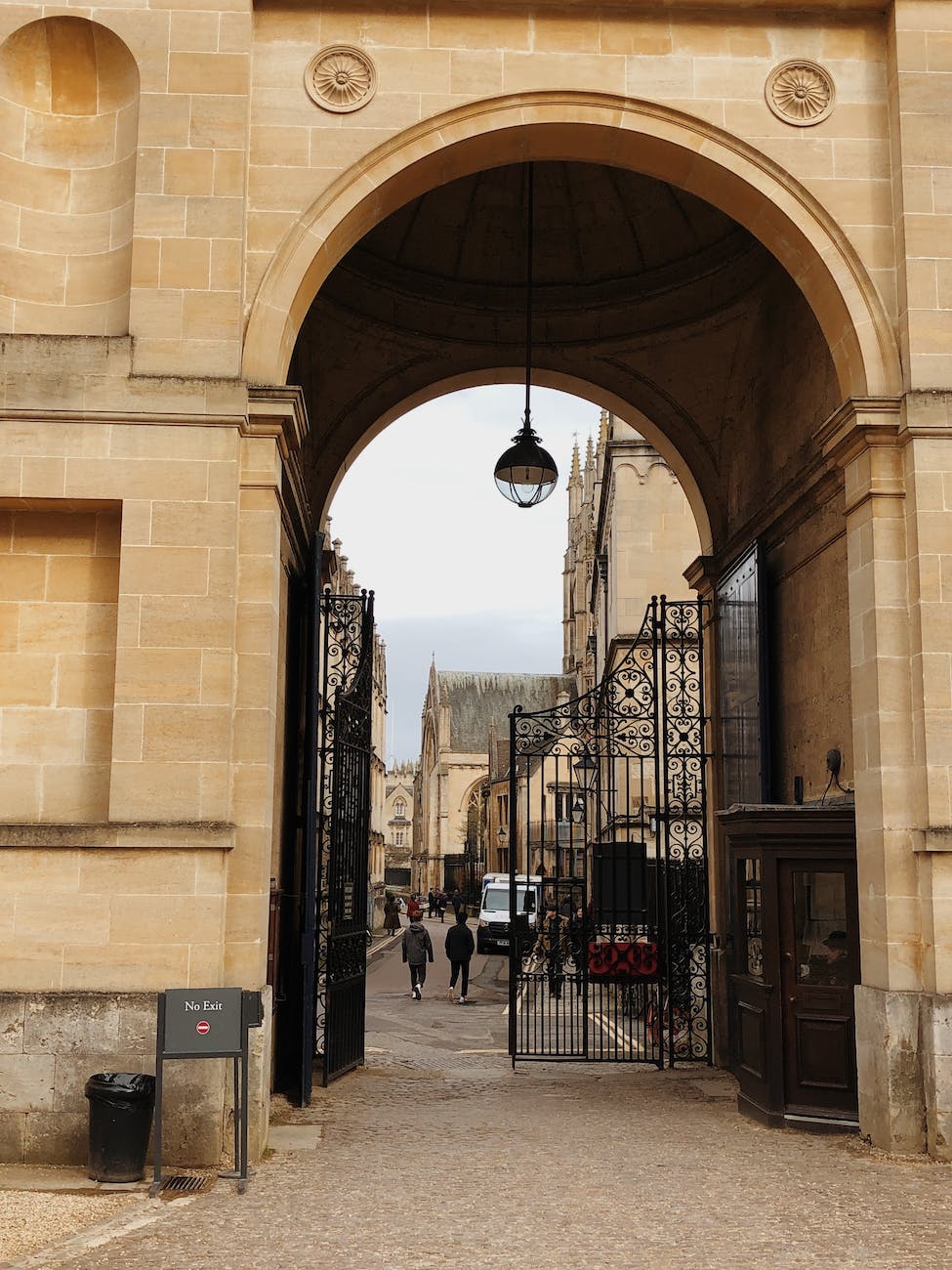
Part of my day job is preparing students for Oxbridge applications. Once they have researched their courses and written their personal statements I arrange practice interviews.
One of the questions I always ask is “Why have you chosen this subject? Why do you want to study English or History or Computer Science?”
The answer is nearly always the same: that theirs is the most important subject, it’s the only one reflected in all the different disciplines, and it’s the only subject that can explain everything. They all believe it to be true, I can see it in their faces.
And the thing is, they’re all sort of correct. This is the subject that they love, this is how they see the world, they look at everything through the lens of Maths or Politics: that’s how they understand the world.
Many adults are the same. They think that their job or their interests touch all of life (I’ve heard both writers and teachers say the same thing, and I suppose I believe it myself.)
It’s the same with stories. Stories inevitably describe the world through one point of view: that of the author.
In the golden age of SF, science was seen as the cause or solution to all problems.
In the 60s and and 70s they wrote about society and the environment.
I’ve written about robots and AIs, I’ve described the world in terms of information.
I think it interesting that in the 40s and 50s Lex Luthor, Superman’s arch enemy was an evil scientist. Later on, he became an evil businessman.
It isn’t an original thought to state that points of view tend to reflect the current times. This isn’t a problem. You can always read a range of books from different authors.
I’m going to end this post on a rare political note: I write this as the pound is crashing. I can’t help thinking our current problems are down to people who see the world solely in terms of money. They really need to read a more diverse range of books.







 Tony Ballantyne