Stevie Wonder

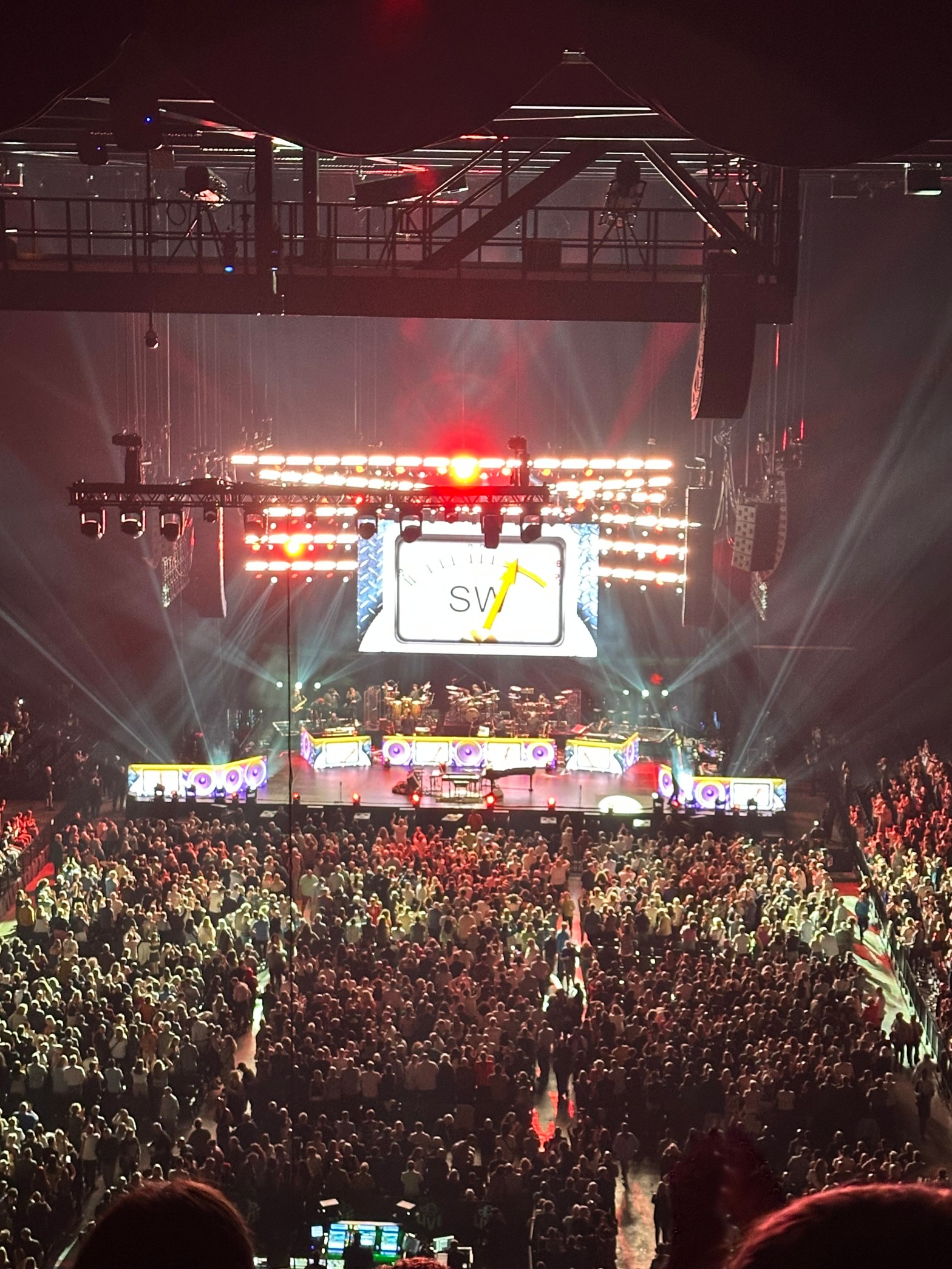
Last weekend I saw Stevie Wonder at the Co-op live arena in Manchester. A fantastic gig at no doubt the worst venue I’ve ever been to.

I was going to blog about Stevie Wonder, but there’s nothing much to say. After a shaky start his voice was still very strong, the band was, naturally, excellent, the hits kept on coming. I think he’s one of the major songwriters of the twentieth century and I’m not alone. One of the singers began his solo set by repeatedly saying “Mr Stevie Wonder. The Legend”. I understood what he meant. I was slightly awestruck to be in the same building as him. This man was sharing the same stage.

But this isn’t a piece of music criticism. It’s more an observation of the changing world. There was a great variety of people there that night, young and old. I myself went with my children who are big Stevie fans. There were undoubtedly a lot of music fans. But I don’t think that music is important to people nowadays as it was in the past.

That’s not to say that there aren’t lots of young people really into music nowadays. I regularly play in bands with young people whose musicianship far higher than I remember when I was younger. Teenagers nowadays have access to a far wider range of music through things like Spotify than was available to me as a child, and as result of this they have far more eclectic tastes.

But music doesn’t form such a big part of most teenagers identity as it once did. When I was at secondary school you liked Pop, or Northern Soul or Heavy Rock. It was a question you always asked when you met someone. What sort of music do you like? It was understood that it was part of your identity. I remember how one girl in my form would always be late to afternoon registration as she’d stayed home to listen for the number one record on the Thursday charts. I remember the excitement or disappointment when we heard that Duran Duran or Adam and the Ants had reached the top spot.

I don’t see that same level of tribal loyalty now, at least for music. That’s not a good or bad thing. That’s just the way it is.

I saw it at the Stevie Wonder concert. Many of the audience members spent most of their time shuttling between their seats, the bar and the toilet. That’s partly the result of the modern practice of seeing an audience as an opportunity to maximise its revenue stream, something the Co-op live has taken to an extreme (Did I mention how much I hated the place and the contempt they showed their customers?).

But it’s not just that. I’ve been to lots of gigs where I’ve left before the last song. But not for an artist I really cared about.

You have to wonder at the number of people who got up and left as the last song began on Saturday night. This was a gig where the tickets cost a minimum of £100. It was likely the first and last time people were going to see this artist, a legend in many people’s eyes.

Music is, of course, very personal. A song that some love can leave others cold. But this was the last song of a gig. It was Stevie Wonder playing Superstition. What on earth did they expect to see? Were they surprised? Were they disappointed. Or would they rather just get off early so they could have another drink?

Like Milhouse said: “You’ve changed man, it used to be all about the music.”
AI Made me Redundant

Yesterday, a student asked me to help him with a program he was writing in his own time. It was an impressive project, but it wasn’t working properly.

I quickly spotted what the problem was, but finding exactly where the error lay in the code was a lot more difficult. This is typical in this sort of beginner project: there will be several hundred lines of badly laid out code as the student is still learning their craft.

After about half an hour I went to get a cup off coffee while I gave my mind a chance to reset. When I came back, the student said he’d found the problem. I congratulated him and asked him how he’d found it. He told me, and that’s when I realised I was now obsolete.

The student hadn’t, in fact, found the error himself. Rather he’d put the code into AI and got that to spot the mistake.

AI had just rendered me redundant. If I had a particular skill as a teacher of coding, it was in knowing what mistakes a student would typically make, the sort of mistakes that aren’t obvious to an experienced coder. A big part of teaching is knowing the misconceptions that students are going to have, and I’ve been teaching programming for nearly 30 years. I like to think few others have the same facility as I do for spotting those sort of mistakes.

Well, no more.

A lot of writers have posted about having their work ripped off by LLMs, me included. This is annoying, I know, and I’m as irritated as everyone else by this. Maybe not as irritated by those editors who are having to wade through a slew of AI generated stories, but still annoyed.

But annoyed as I am, I’ve yet to see a decent book created by AI. I like to think I still have some worth as writer.

But as a teacher, and not just a glorified childminder there’s now one less reason to pay my wages. It’s a sobering thought.

My first novels were about a benevolent AI. I hope this is the future I wrote about.

Great Man Theory

Thomas Carlyle stated that “The History of the world is but the Biography of great men.”

https://en.wikipedia.org/wiki/Great_man_theory

Most 19th Century composers said that Beethoven was a great man. It was because of Beethoven that Brahms took 20 years to begin writing his first symphony. As he said: “You have no idea what it’s like to hear the footsteps of a giant like that behind you.”

Most people nowadays would disagree with Great Man Theory. Contemporaries of Carlyle such as Herbert Spencer pointed out that supposed “great men” are merely products of their social environment:

Modern AIs would seem to agree with Spencer. There are no great humans. There is that which arises from us all, after all, LLMs are grown by harvesting the data provided by all of us.

I was rather ambivalent about AI in the past. But my opinion has hardened. AI may be inevitable, but we still have a choice.

All that art ever is, is a window into someone else’s soul. Sometimes we look through that window and we recognise ourselves. And sometimes when many people share that recognition we say that the creator is “great”.

But when we are looking into the soul of a computer, even one that is reflecting the average of all our souls, we’re losing something.

That’s why AI will always be shit. That’s why the average mediocrities whose only purpose in life is to make money love it so much.

And all AI is doing is dragging us all down to their level.

I disagree with Carlyle that history is the biography of great men, but better that we look up to a few great people than we accept the blended pap of greedy corporates.

We have a choice about which art we consume.

Under Siege

There are a lot of reports floating around on Social Media about Microsoft using customer data from Word and Excel to train its AI models. Microsoft say this isn’t true, and I suppose I believe them.

For the moment at least.

The trouble is, I worry that any data held by Microsoft will be too easy a target in a future.

Microsoft says that they consider data in the public domain fair game for scraping. I don’t think I agree with them – I wrote my blog posts to be read by humans and discussed, not to be blended into bland smoothies that are squirted in disposable cups at the push of a button. And I don’t remember being asked if they could take my data for their LLMs, either. I don’t see why I should make it any easier for Microsoft to steal my intellectual property, either now or in the future.

I’ve only recently started using Microsoft Word, and that was because it was convenient for the day job.

I’ve learned my lesson. I used LibreOffice Writer happily for years, I’ve gone back to it. It’s not as polished as Word, but it’s more than good enough. I don’t care about the fact that it’s free: I believe it’s worth paying for quality software, and I always donate to open source projects that I use.

What I care about is that when it’s on the computer, running on Ubuntu, it’s mine. At least for the moment.

I feel like I’m pulling up the drawbridge. Those tech companies are circling…

Why You Should Write Down Everything: The Power of GTD

My colleague recently noticed me updating my todo list.

“Have you really included walk the dog on your list?” he asked. “Even if you did forget, wouldn’t the dog remind you?”

The dog would remind, but that’s no reason for omitting the task.

I’ve followed GTD for years. One of the most useful bits of advice it gives is to capture everything, and I learned a long time ago this means EVERYTHING.

Yes, I wouldn’t forget to walk the dog, but walking the dog will take an hour of my time and this is time I can’t use for something else. Don’t get me wrong, I don’t want to use the time for anything else. I like walking. I like walking the dog. This is something I want to do.

It’s important to write everything down so I know how much time I have for things I want to do and things I have to do. That way I ensure I do both.

I wrote in some detail about my GTD process years ago. I’ve recently removed those posts from my website as part of the ongoing reorganisation.

The reason for removing the post is that Todoist explained it all far better than I did. If you’ve never seen GTD before I strongly suggest you follow this link. It might just change your life.

Speaking of Todoist, I’m planning a new section to discuss my current writing tools and how they’re evolving. Watch this space.

All Change!

You might notice that my websites are changing. There are a number of reasons for this, but the big one is I’ve been forced into changing hosting providers (again).

For years I’ve run my websites on WordPress, installing WordPress software on servers hosted by third party providers and maintaining the site myself. Doing things this way was cheaper and offered me a greater range of features. It was more work, but it was fun.

The trouble is the hosting providers I used always started out providing an excellent service, but were then bought out by larger companies. When that happened the price went up and the service level plummeted.

For small sites like mine, letting WordPress do the hosting has become the preferred choice. They may be a bit more expensive but they’ve been around for a long time and, in my experience, their support has been very good. I don’t care if they try and upsell when they’ve solved a problem, at least they solve the problem first.

So for the moment I have two WordPress sites:

TonyBallantyne.com will remain as it is. It needs tidying, due to the rushed import from my old host, but bear with me.

tech.tonyballantyne.com will be moving to my Obsidian site: notes.tonyballantyne.com.

Obsidian is easier to maintain for the sort posts that go on my tech site. Plus, with Obsidian, the notes are mine. I keep control over them when things change. And with constant enshittification, Obsidian is my escape hatch from whatever happens next…

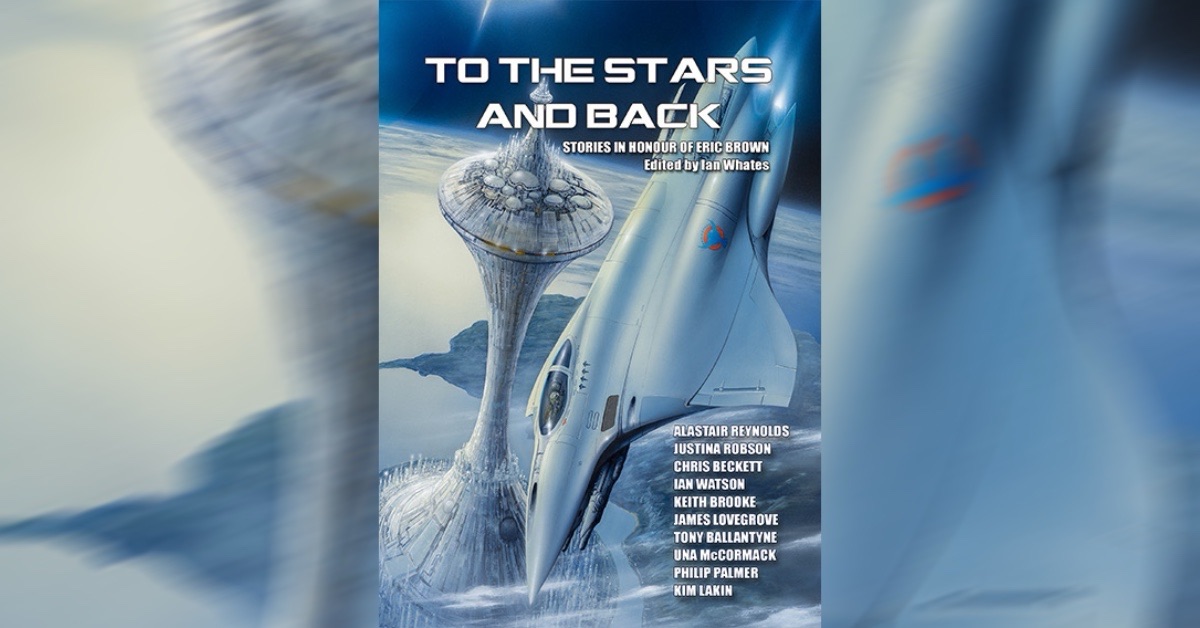
To the Stars and Back

Eric was a very good friend of mine. I’m proud to be part of this collection


Eric Brown was one of the UK’s finest SF authors. His work won him awards, his storytelling won him readers; more than that, though, he was a special person, and that won him many friends.

Containing all new stories from some of the UK’s finest genre writers, this volume, released to mark what would have been Eric’s 64th birthday, is dedicated to Eric and his family. It is our way of celebrating someone whose work inspired us and whose friendship made a difference.

Eric Brown: (24 May 1960 – 21 March 2023)

Follow this link to order the book

Future Proofing my Notes

As I mention last week, I’ve moved my notes to Obsidian. I’m going to talk about Obsidian another time, for the moment I want to talk about the notes themselves. Specifically, why I’ve converted all my notes to markdown.

A writer lives by their notes. Ideas; scenes; character sketches; dialogue; impressions, all carefully recorded and waiting to take on life someday in a story. I remember seeing Poul Anderson’s carefully typed list of story ideas in the science fiction museum in Seattle and feeling a warm glow of recognition. Not only that, but validation. I was doing this right.

I’ve got notes going back decades. Notes written in old exercise books, cheap reporter’s notebooks and expensive leather bound journals. I’ve experimented with devices such as Psion Organisers, Palm Pilots and even an iPod Touch.

The trouble with storing notes electronically used to be exporting them to a new device. Cross platform software like Evernote was a revelation as it meant you only needed to enter your notes once and then you could find them anywhere.

Evernote, Apple Notes, One Note and the like are fantastic. But what if you want to change to a new application? That’s where the problems arise.

The trouble is the way your notes look on the screen is not the same as the way your notes are stored on the computer.

Take this example


This is a Heading


Here’s how Evernote stores the above

 <note>
    <title>This is a Heading</title>
    <created>20230727T080748Z</created>
    <updated>20230727T080830Z</updated>
    <note-attributes>
      <author>Tony Ballantyne</author>
    </note-attributes>
    <content>
      <![CDATA[<?xml version="1.0" encoding="UTF-8" standalone="no"?>
<!DOCTYPE en-note SYSTEM "http://xml.evernote.com/pub/enml2.dtd"><en-note><ul><li><div><span style="color:rgb(0, 0, 0);">Here’s some text</span></div></li><li><div><a href="https://tonyballantyne.com" rev="en_rl_none"><span style="color:rgb(0, 0, 0);">Here’s a link to my website</span></a></div></li></ul><div><span style="color:rgb(0, 0, 0);"><span style="--en-markholder:true;"><br/></span></span></div></en-note>      ]]>
    </content>
  </note>

If you look carefully you can see the original text, along with metadata such as when the note was created, and formatting data such as the text colours. It’s hard to extract the relevant information from all that.

It’s worth noting, by the way, that Evernote is one of the good guys, they make it easy to export your data, they don’t go out of their way to obfuscate things and keep you in their system.

Here’s a better way of storing the above, this time using markdown.

# This is a Heading
- Here's some text
- [Here's a link to my website](https://tonyballantyne.com)

Looking at that you can understand why it would be sensible to store your notes in that format. It’s easy to read, it’s easy to transfer.

That’s why I’ve converted all my notes to markdown. They’re now stored on my devices, not in the cloud. I can invest the time in getting them just right without having to worry about having to convert them in the future.

So what about Obsidian? Obsidian has many fantastic features that I’ll talk about later, but the bottom line is that it functions as a markdown reader and editor.

In other words, if I decide I don’t like Obsidian in the future, I’ll simply choose another application that handles markdown.

Here’s what Stephan Ango, one of the guys behind Obsidian, has to say about this.