There’s a story that turns up every so often where one of the characters wonders what things would have been like if x hadn’t happened. If they’d never been born; if they’d never met their partner; if they’d never found the item that turned them into a superhero. Some films that spring to mind are It’s a Wonderful Life, Shrek 4 and Sliding Doors.
It’s something I occasionally think about when writing a story, or more usually, rewriting a story. Sometimes when I’m rewrite I think of a good idea and start to include it, only to find I’ve already done it a few pages later.
I feel as if I’m creating when I write, but how much creation is there? How much of the path of a book is fixed by my experience and personality? As my friend Eric Brown often says, writing is about letting your subconscious take over. Part of becoming a writer is learning how to do that…
This is in line with my philosophy that productivity systems are great procrastinators. Thinking of new tagging systems and states for tasks is very absorbing. You can spend hours moving notes around and not doing any work.
Calling org-agenda gives me a bird’s eye view of everything I’m working on. I can then filter down as appropriate.
For convenience, I wrote the following function to restrict the agenda to the current project. ou can see an example in my config.el file
(defun tb/agenda-restrict-this-project ()
    "Restrict agenda to current project"
    (interactive)
    (let ((org-agenda-files (list (projectile-project-root))))
      (org-agenda)))
I rely a lot on this function. When writing I hit SPC j p p (my keybinding: see my config.el file) to see the TODOs and IN PROGRESSes for the current project only.
The term “Cargo Cult Science” was first used by physicist Richard Feynman in 1974. It focuses on the superficial rather than the underlying causes.
Cargo Cult Science Fiction is SF built on Cargo Cult Science.
Now don’t get me wrong. Cargo Cult SF isn’t SF based on imaginary ideas. Some of the great SF novels contain no real science (a classic example is The Stars my Destination by Alfred Bester).
Cargo Cult SF is SF that doesn’t take the science seriously. In Cargo Cult SF it’s good enough to say something scientific sounding (quantum carburetor anyone?) without exploring the imaginary science further.
In Cargo Cult SF the hero gains superpowers by being bitten by a radioactive vampire bat and no one else in the story thinks to experiment with radioactive tigers, jellyfish or wombats.
In Cargo Cult SF people use time travel to change past events and no one ever thinks to use time travel to change them back again.
In Cargo Cult SF Gaia steps in to save the USA and no one asks what exactly had she been doing when people died in floods and famines in other parts of the world.
If you don’t follow the science, no matter how wild your idea is, you’re not writing SF.
Then she generated the light, and the sight of her room, flooded with radiance and studded with electric buttons, revived her. There were buttons and switches everywhere — buttons to call for food, for music, for clothing. There was the hot-bath button, by pressure of which a basin of (imitation) marble rose out of the floor, filled to the brim with a warm deodorized liquid. There was the cold-bath button. There was the button that produced literature. And there were of course the buttons by which she communicated with her friends. The room, though it contained nothing, was in touch with all that she cared for in the world.
The Machine Stops – E. M. Forster
I was reminded of the above story while looking at Wikiquotes. I was struck by just how much the quotation described me using my iPad at the time.
I don’t think it’s the purpose of SF to predict the future. I think that the majority of SF writers would agree with me on this. I think what we’re seeing here is a reflection of our world in Forster’s reflection of his world…
It’s a principle of both GTD and Zettelkasten (the two productivity systems I follow) that you keep your reference materials separate from your work. I’ve learned by experience that this is excellent advice.
I’ve had 8 novels and around 70 short stories published. Here’s how I use Evernote to keep track of my writing career.
Story
The basic unit of my writing is a story. I use Evernote to create two notes for every story I begin, one for recording ideas and one for the professional details.
Here’s what goes into a “professional” note.
The date I started and finished the story (this is for my own interest.)
Dates of revisions, submissions to beta readers
Beta readers comments
Submission details.
Evernote has recently introduced a tasks feature that is ideal for keeping track of submission deadlines.
Once a story has been placed I add the following to the note:
The contract (usually a pdf)
Galleys
Date of publication, magazine issue (if appropriate)
Cover image. This is handy for producing publicity materials.
Reviews, quotations
Reprint details.
If you’re just starting out as a writer, I’d advise you to begin doing the above with your first sale. If your work is resold, editors want to know these details. Having them to hand will save you a lot of time in the future.
One last thing.
Evernote now allows you to place filtered widgets on your home page. I’ve set up a widget with works in progress or stories currently on submission. I can now see at a glance just what I should be doing.
Bio
I keep several bios on Evernote. A very short one, (22 words), short (60 Words) and longer (over 200 words). They are then when needed, though I usually have to update them at the time. I also have several photos I can download as needed.
I keep a separate record of sales, payments and residuals on a spreadsheet and I refer to this when doing my tax return. I use tables on Evernote for keeping track of day to day expenses. I keep a note bookmarked for the current tax year so it’s easily accessible.
Markets
I have a note with a list of markets. Evernote tasks are an easy way to keep track of submission windows and deadlines.
Interviews, Panels and Workshops
I may not do as many appearances as I used to, but all my past notes and presentations are stored on Evernote for reference.
Disclosure
I’ve had changing opinions of Evernote over the years (see this post). The new direction the company is taking, plus the addition of a Linux client (currently in Beta) mean I’m once more fully committed to the system, so much so that I’ve recently taken the exams to become an Evernote Expert. I receive a free professional subscription to Evernote. The opinions here are my own.
Like any writer I’m always capturing ideas. I used to carry a notebook everywhere, now I capture ideas on my phone using either orgzly or Evernote.
When working in Emacs I use org-capture.
GTD means capturing ideas quickly. I used to have templates to capture to different locations, I realised that this was an unnecessary step. Now I either capture everything as a TODO, either directly to my gtd file, or directly to the story file I’m currently working on.
As org-capture requires you to select a template I wrote the following two functions. The first calls org-capture with the ’t’ template preselected, the second does the same but uses let* to change org-capture-templates to the current buffer for the current capture only.
(defun tb/capture ()
    "Capture to do without options"
    (interactive)
    (org-capture nil "t"))

  (defun tb/capture-to-this-buffer ()
    "Capture note to this buffer"
    (interactive)
    (cond  ((not  (eq major-mode 'org-mode))
            (message "Can't capture to non org-mode buffer"))
           (t
            (let* ((this-file buffer-file-name)
                   (org-capture-templates
                    `(("t" "Todo" entry (file+headline ,this-file "Captured")
                       "** TODO %?"))))
              (org-capture)))))
2. Refiling Notes
org-refile makes it easy to refile notes, particularly with a completion system like Vertico. On Doom Emacs this means hitting SPC m r r
Way back in September I posted about my new Emacs Writing Set Up: Productivity Overview
Things might have appeared to have gone a little quiet since then. Behind the scenes, however, I’ve been making changes. One of these is to begin the process of moving my Emacs Writing Setup across to GitHub: https://github.com/ballantony/emacs-writing.
I’ll continue to blog relevant content here. Here’s the first, explaining why I’ve adopted Doom Emacs.
Emacs is incredibly configurable. I can choose, for example, the shape and contents of my agenda, the completion engine I use and even such things as the colour of my Todos.
And that’s a problem. Emacs allows me to configure many things that, if I’m honest, I really don’t care about.
It’s very easy to fall into the Emacs trap of sending time configuring the system rather than doing any actual work. I don’t want to think about how many hours I’ve spent experimenting with new packages and thinking of the perfect key bindings when I could have been writing stories instead. GTD can be a powerful procrastinator.
That’s why I’m happy to let someone else do it for me.
Enter Doom Emacs. So what if the TODOs are a different colour to the ones I use, and the capture templates aren’t quite the ones I was using, they’re still good. The key bindings may be different, but they’re far more extensive than any I’ve ever set up and I could probably finish a short story in the time it would take me to replicate them (and I can always override the few I really care about: C-e for example).
Most of all, Henrik Lissner, the creator of Doom Emacs, knows so much more about Emacs than I. I’ve learned so much simply tracking through his code. I wasn’t aware of Vertico until it turned up in the Doom config. I don’t have the time or inclination to try out all new Emacs packages. It’s great that someone else is doing this, and if I don’t like their choices, well, Doom is flexible enough for me to change them.
One final observation. Doom Emacs is fast to load. This is important to me. I like to take notes or begin writing when inspiration strikes. I can open Doom Emacs (or Orgzly on my mobile phone) and take a note in the time it takes apps such as Evernote or Notion to load.
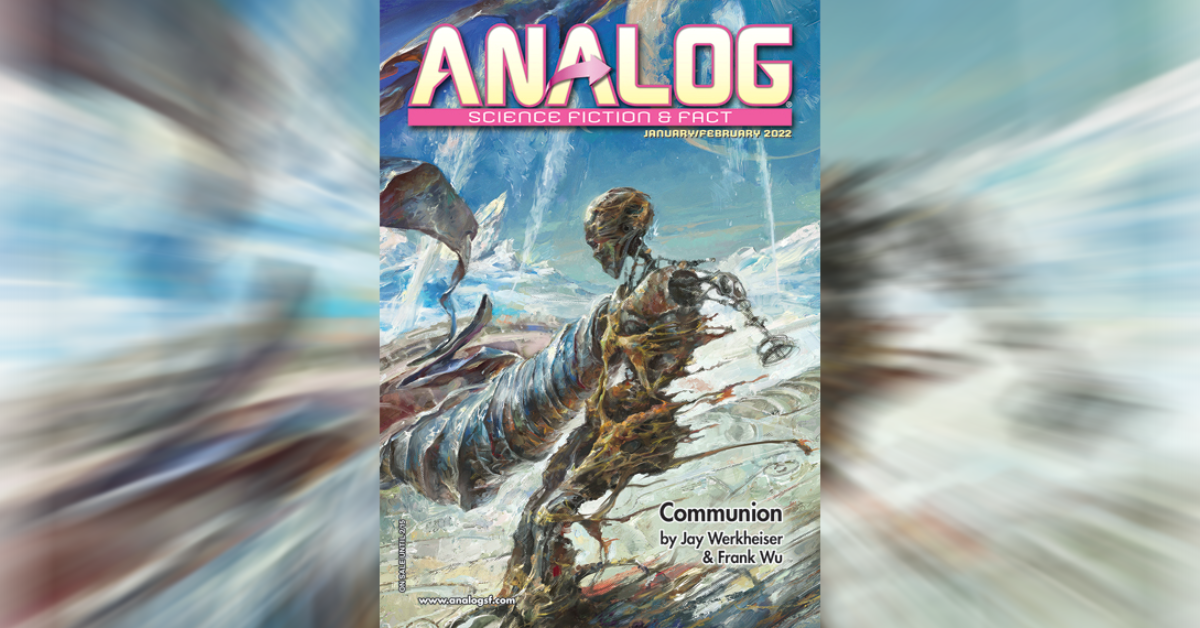
The Lobster Pot appears in the January/February 2022 Issue of Analog
The story continues the Human Way series that has been appearing in Analog over the past few years. It takes place in the Recursion universe around 12 years after the events depicted in the novels.
As anyone who has seen it will attest, the Muppet’s Christmas Carol is the definitive version of the story. Dickens’s version, whilst competent, fails in a number of rather obvious areas. These include only having one Marley and glossing over the role played by Rizzo the Rat. Worst of all, he neglected to write a number of songs that sound good being sung by Kermit the Frog; Statler and Waldorf; and, hardest of all, Michael Caine.
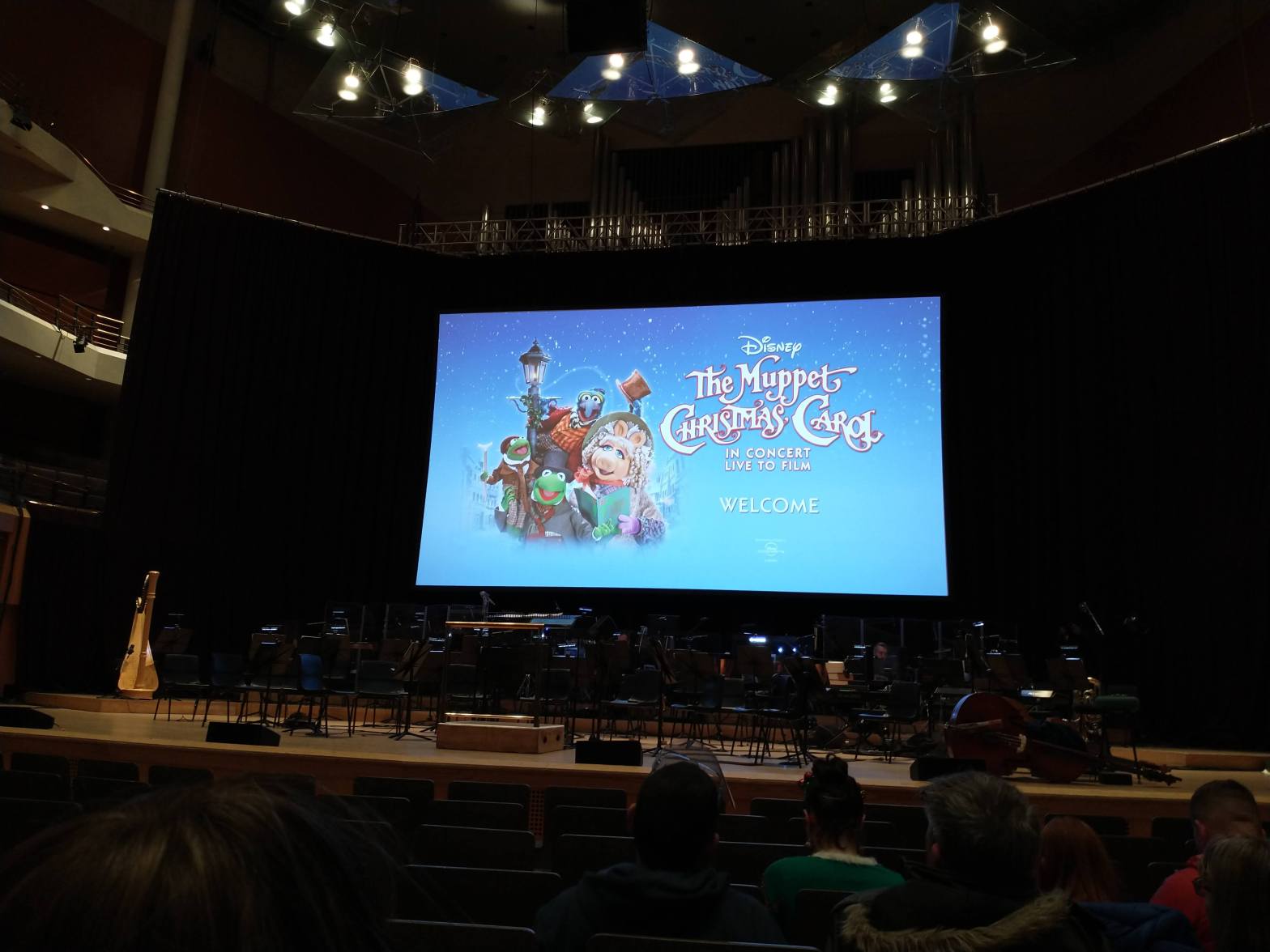
I’ve watched the film every Christmas practically since it came out. However, when I heard that the Bridgewater Hall in Manchester was screening the film accompanied by a live orchestra I must admit I was confused.
Who’s idea was that, I wondered? Who looked out the movie score? Who put together the click track for the conductor to play along with? Who thought people would pay money to see something that airs for free on TV every December.
Whoever they were, they knew what they were doing. The hall was packed with families. When I say families, I should point out I saw about three actual youngsters there. Most of the children in the families present were now adults, my own two included.
Did the addition of live music add anything to the film? If I’m honest, I kept forgetting there was an orchestra present until someone made a mistake. The music was too loud, it tended to drown the speaking.
But that didn’t matter. Everyone knew the dialog. Not only that, they sang along quite happily.
So it was a great show, though not for the reason I was expecting. When I booked the tickets part of my motivation was to support an orchestra, not out of any idea that orchestras need protecting, but because I like orchestras and if no one goes then they’ll stop playing.
But this wasn’t about the orchestra. It wasn’t about the music. It was all about the feeling of community.
The Muppets Christmas Carol accompanied by a live orchestra. Surely this must be the cultural event of the year.
I suppose Brian Eno is best known for his contribution to music; and a lot of it is great music. I always think of him though for a particular piece of advice: Use your accidents. As a producer, Eno encouraged bands to moderate or even ignore their instinct to produce polished music, in favour of that with the vitality of accidental input.
How does this fit with writing?
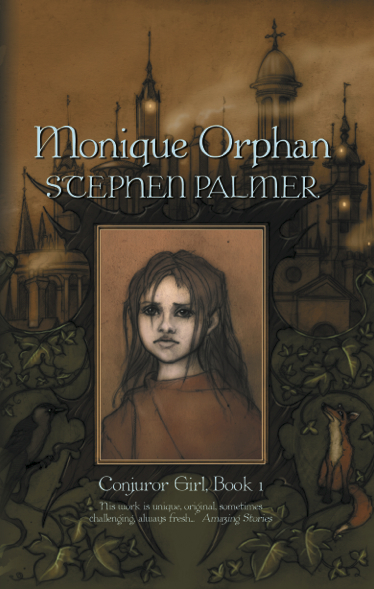
When I was putting together the scenario for my new Conjuror Girl trilogy – a steampunk work set in an alternate late Victorian version of my home town of Shrewsbury – I thought everything would be steam, carriages and horse power. Then, reading one day a book about carbon-based fuel, I was struck by a reference to the fractionating column, used by chemists to separate different compounds existing in the same solution. Such a contraption I’d not seen since my school days. I looked up from the book, wondering if I could use the thing for Conjuror Girl, but I thought… nah. Too modern.
Then I reconsidered. The mental image persisted. Chemists did all sorts of things in the late nineteenth century, so was there really a reason to ignore this accidental image? I jotted the idea down, then was suddenly struck with another idea. The dark side of these novels comes in the form of the Reifiers, men with the ability to make real – reify – the contents of their minds. As it is put early on, they can make real their whims and fancies. But to do this they have to impose their minds upon the world, an act of deep selfishness. The consequence of Reification is a black fluid which, lore has it, is composed of pure selfishness; and even Reifiers dare not come into contact with this stuff.
Now I was getting to the kernel of the idea. What if this oily black liquid was composed of different fractions which could be separated in a fractionating column? What if there was a character who did this – a madcap scientist, a petit-Reifier in fact. Suddenly I had a whole new part of the plot, previously blank.
It’s accidents like this which make sub-creation such fun. I usually leave many of a novel’s details vague so that, when I’m writing in the white heat of composition, I can use my imagination for fuel.
And there was another accident which I took advantage of. When I was at school I did history before taking other O-levels, and the first thing we studied was the Danelaw. While talking about school teachers to a friend one day I suddenly remembered history lessons, and the naïve, poorly drawn map I did in my history book of the border between England and the Danelaw, which my teacher wrote poor next to in red pen. Thinking on this, I wondered if I could perpetuate that border and have part of Britain inhabited by Danes…
A final accident, then. When looking at a map of south-east England one time I noticed Sussex, Middlesex and Essex, and their origins in Saxon regions. There was also a Wessex of course. At once I asked myself: why no Nossex? Well, there were no north Saxons to leave such a name. I knew at once that I had to invent the region. So I did. My fictitious Shrewsbury is in Nossex.



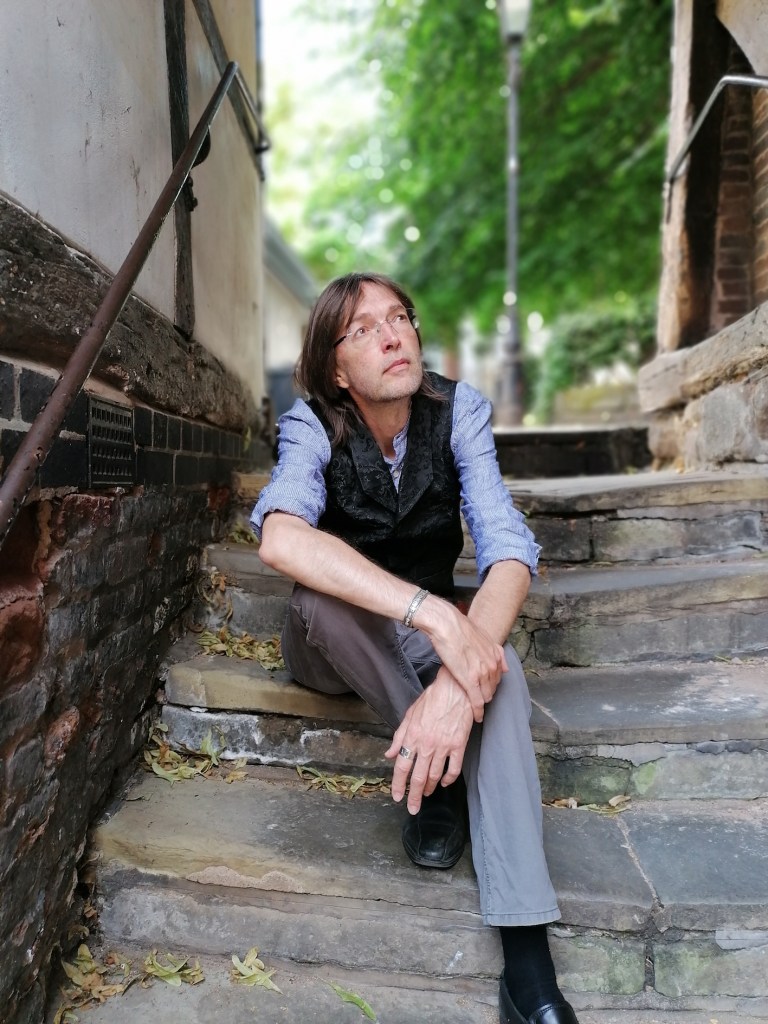
 Tony Ballantyne