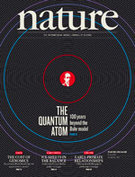
New short story, appearing in Nature 498, 6th June 2013
Read it here: http://www.nature.com/nature/journal/v498/n7452/full/498132a.html
SF and Fantasy Writer
New short story, appearing in Nature 498, 6th June 2013
Read it here: http://www.nature.com/nature/journal/v498/n7452/full/498132a.html
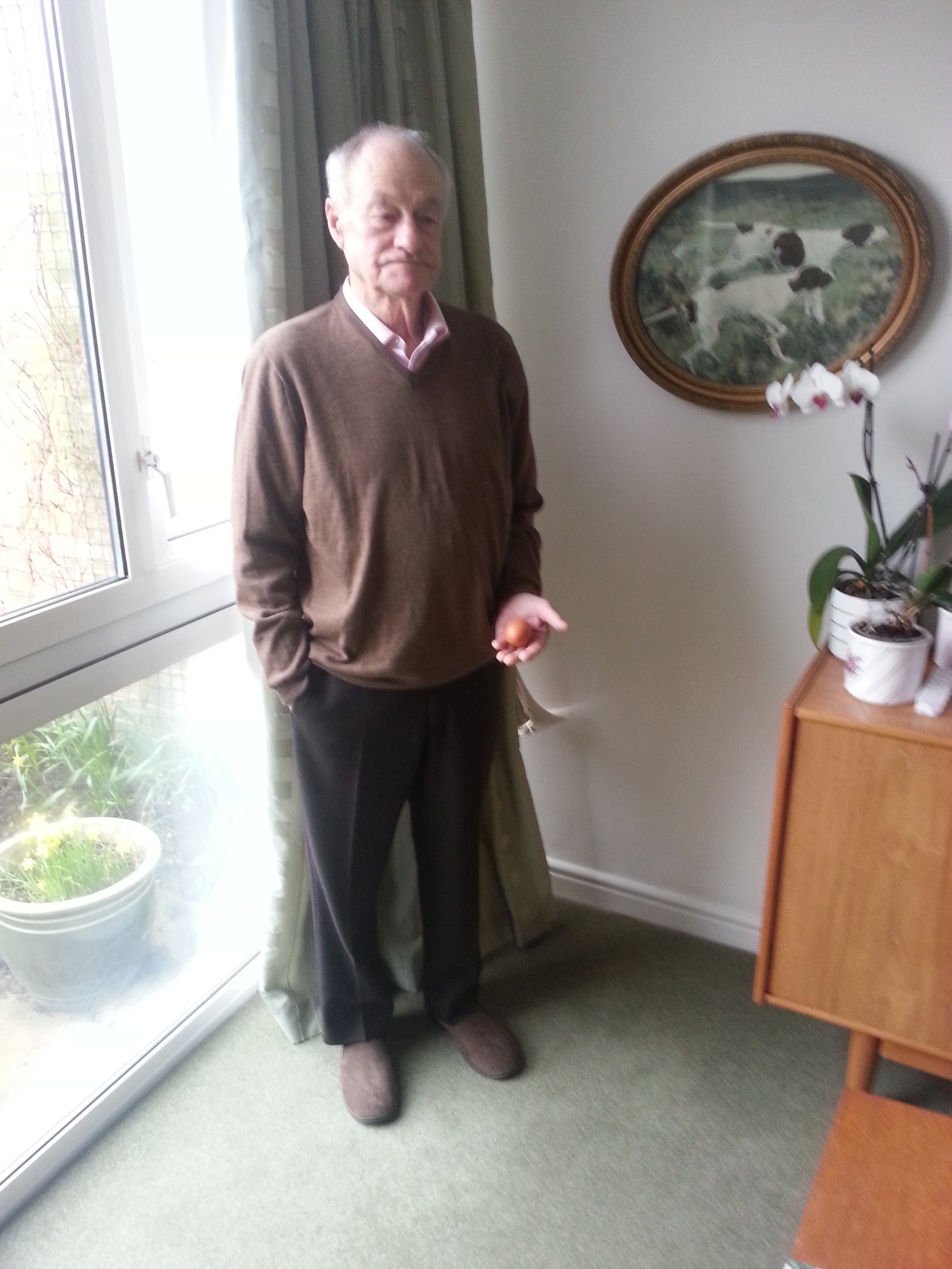
Hold an egg in your hand, just like this…
Time: October 2013
Muster: The Egg Market
Dress: Full Uniform
Crunch crunch crunch. Mmmmm, mmmmm. Crunch crunch crunch.
Date: October 2013
Muster: The Egg Market
Dress: Full Uniform
Crunch crunch crunch. Mmmmm, mmmmm. Crunch crunch crunch.
I have a picture here on my desk, drawn when I was 17.
I seemed to have spent my life up to the age of 40 accumulating stuff that I’m now going to spend the rest of my time sorting through and throwing away. One of the many things unearthed by the sorting process is a picture of a spaceship I seem to remember drawing when I should have been doing A level maths homework. It’s not a bad picture, in my opinion. I’m no artist, but when I found this picture I must admit I was quite impressed by my younger self – I’ve not thrown it away yet because I can’t decide if I want to hang onto it. The question I keep asking myself is how often do I really think I’ll look at it in the future? It’s not worth framing, so if I do stick it in a file, am I really going to take it out and look at it, or am I just delaying the inevitable and postponing throwing it away by a few years?
I could scan the picture, of course. If I do, the picture might live for ever. I back up all my files both locally and to the cloud, and because I backup to the cloud there may well be backups of my backups on servers around the world. There is a possibility that my backed up data will be around indefinitely.
If I don’t scan my picture, the paper will go brown, the picture will fade and eventually it will be lost or thrown away.
If I scan my picture, I’m giving it a chance to last forever, or at least for as long as there is someone maintaining the computers. I could do the same with everything I’ve written or drawn. No doubt in a few years everything we do will be recorded indefinitely. A few years ago we had no such opportunity. We may be the last people who understand this choice…
It’s a nice picture. Maybe I will frame it.
Just in case you haven’t seen the other posts, tweets, adverts or fliers…
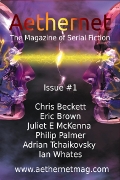
This Easter my wife and I launched a new magazine called Aethernet. Aethernet is intended to be the magazine of Serial Fiction.
But before you go, why Serial Fiction?
The idea for Aethernet came from a conversation Chris Beckett and I had at Eastercon 2012. We were discussing the pleasures of reading serial fiction. I grew up reading comics where the stories were presented over time. V for Vendetta had an extra excitement when I read it in its original form in Warrior as I spent a couple of years trying to guess who V actually was (there was also an element of frustration when the magazine took longer intervals to appear and then finally folded.) Now, if you’ve only ever read the graphic novel, the mystery would have lasted only a couple of hours. When you have to wait a month between episodes, there is more time to consider the story. Both Chris and I agreed that Serial Fiction afforded an extra dimension to the reader…
But then we began to think about writing Serial Fiction. When I write a novel I start roughly at the beginning and then work through roughly to the end. Roughly is the word. I jump backwards and forwards, constantly changing things when I write any story, whether it’s 1000 word short or 100 000 word novel. More than that, the story I end up writing is never the one I had planned. What would it be like to write a story in the way Dickens and rest used to? How would a story evolve if there was no going back, if you had to follow the characters where they went? Would it be difficult? Would it require a different way of writing? Would it be a new challenge? Mostly, would it be fun?
Well, we’ve tried it, and I can report that the short answer to all of the above is a resounding yes.
The long answer is available in Aethernet Magazine. Most of the stories in there are still being written. We’re about four episodes in front of you due to the editorial process, and the twists and turns continue to surprise and delight us.
I’ve been inspired. My own story, Cosmopolitan Predators! starts in issue 2, and I’ll talk more about that another time.
Finally, one last piece of serial fiction. The Loving Heart is a spin off from Cosmopolitan Predators! and will be told through tweets. Follow @aethernetmag to read it. It will be starting in a couple of weeks…
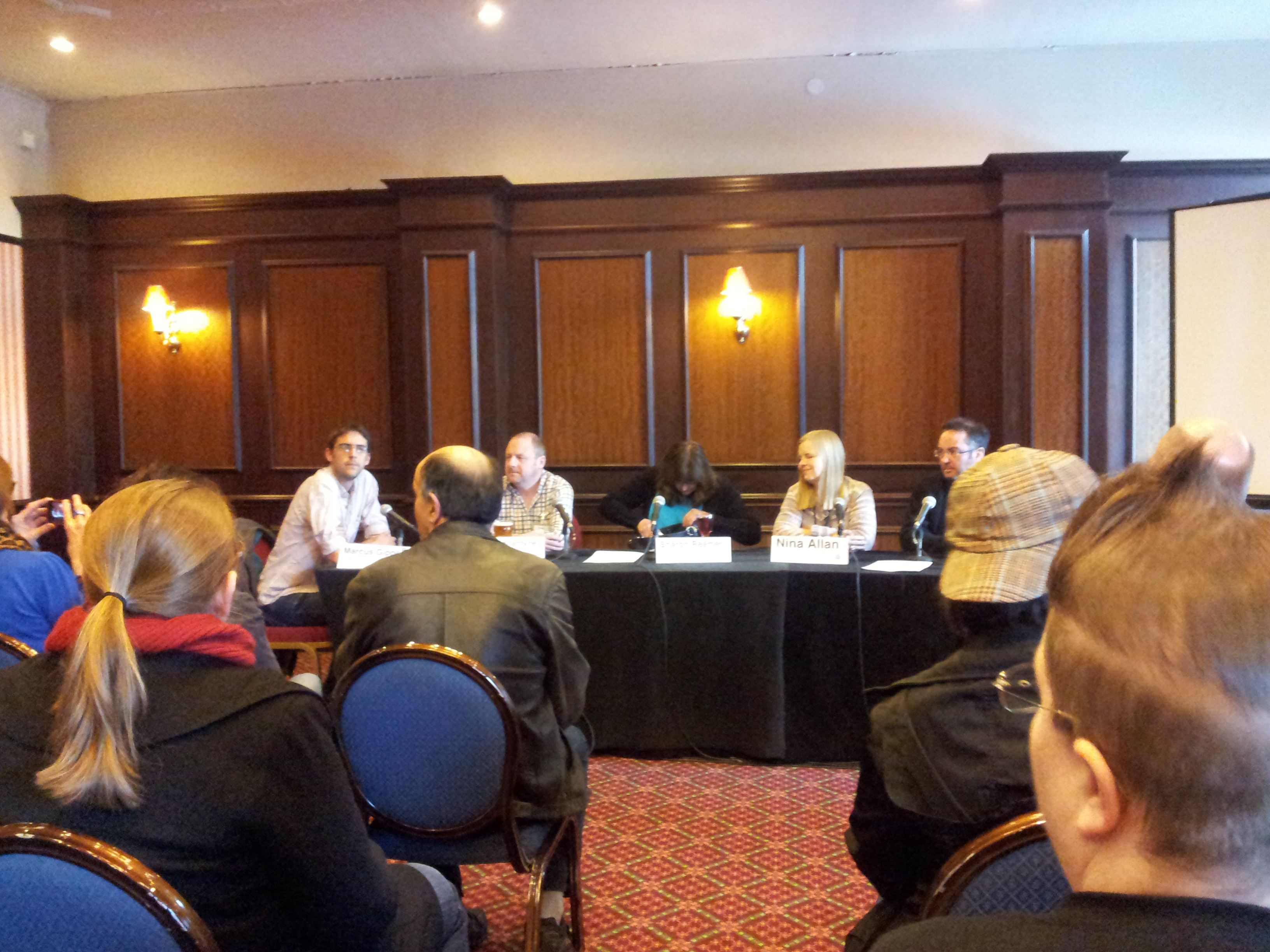 Marcus Gipps asked an interesting question on a panel at EightSquaredCon: do writers think of the plot first and then try to think of characters to go with it?
Since genres such as SF tend to be plot driven, I think there is a tendency for people to believe this to be the case, but it’s not the case. Plot and character drive each other.
Even the simplest of plots have characters, clichéd though they might be. If the hero is attacking the dark lord, you have two characters there right away, a good guy and a bad guy. You couldn’t have the plot without the characters: if the bad guy wasn’t bad, the good guy wouldn’t have a reason to attack. If someone just attacks someone else, the reader will just think why? If you take away the characters from a story, all you’re left with is machinery. You are, in effect, describing how a steam engine or a canal lock works. Both of these things are interesting, but they’re not a story.
Of course, just having a good guy and a bad guy doesn’t mean that you can tick the box marked character and then get on describing the world or the spaceships or the fighting. You may be writing a story but it won’t be a very interesting one, and this was what Marcus was really asking when he posed his question do writers think of the plot first and then try to think of characters to go with it? My answer? The plot suggests the characters, the characters suggest the plot. Listen to the characters, and they will tell you where the plot is going. Follow the plot, and the characters will react accordingly. If you don’t know what your characters will do, then you haven’t understood them properly, and neither will the reader.
EightSquaredCon was a great event, by the way. Superbly organised, there was a great atmosphere throughout the hotel. Well done to all involved!
I heard a radio program a while back about found poetry. My favourite example was the message you see written out on the buttons you use to operate some train doors. Written from top to bottom it says:
Open Doors Close
The title of this entry comes from a basic Android program (the operating system that makes most of the world’s smartphones run). That phrase makes me think of some sort of Japanese Anime wizard character, who enters the protected void to create an icicle bundle to use against his enemy.
SQL commands are used for getting information from databases. An example would beSELECT * FROM Customers WHERE Sex=’F’
which would find all your female customers. Seeing that always makes me want to write something like
SELECT integrity FROM life WHERE Hope IS NULL
Python programmers might write something like the followingclass Music:
def __init__(self):
Which sounds like something someone trying to be cool ten years ago might say.*
One of my favourites is the LISP command to add together two numbers, for no other reason than I like the look of it.(+ 2 2)
What I really like about all the above expressions, though, isn’t so much the poetical aspect, but rather the way these expressions inevitably arrive by applying the logic of the programming language in question.
But more on that another time…
* Any python programmers reading this – I know the def __init__ should be indented. Wordpress keeps stripping out my leading spaces. If you have a solution to this, I’d love to hear it.
Not what you’re looking for? Try Tony Ballantyne Tech for real coding.
A while ago I bought a USB turntable to transfer my records from vinyl to MP3. I copied a few across, but gave up in the end when I decided I would be better served by paying for a subscription to Spotify.
When I tell this story to my male friends, their typical reaction is that “Ah! But most of the records I own aren’t available on Spotify.” I can’t help thinking that what they are implying is that they have wider and more discerning taste than me. This may be true but there’s no need to rub it in.
Marian Keyes (don’t be misled by the chick-lit label, there’s a writer who really knows her craft) often makes jokes in her books about men and their record collections. I don’t know about men, but people do take pride in the breadth of their tastes. Ask someone what sort of books they like to read and they’ll usually reply something like “Mainly Detective Fiction, but I do like other things as well…” Well, yes, but nearly everyone would say the same. It’s rare to meet someone who only reads Detective Fiction, or Romances, or my own genre, SF. So why mention the fact that you like other things, too? Just say you like Ghost Stories and have done with it.
I don’t have a problem with being described as an SF writer, or an SF reader for that matter. There’s nothing wrong with being interested in a certain field. Eclecticism is great, but only up to a point. To take an example, every so often the BBC launches yet another radio program comes along which prides itself on its disparate play list. They never work. There needs to be some unifying theme or all you get is a lot of songs.
The human brain likes a just a little bit of order. Too much order and all you get is wallpaper patterns. Too little order and you all you have is randomness. The human brain is very good at picking up just the right amount of order when it looks at patterns. That’s how it can distinguish between a language and random collection of letters. That’s why it likes music which is at once familiar but with the occasional twist or quirk. The same goes for stories, by and large.
Of course, you will point out that there are many books and pieces of music out there which aren’t familiar at all, but people listen to and read them with great enjoyment. This is true, but I would wonder at the path by which people arrived at these books…

 Tony Ballantyne