Writers’ Retreat

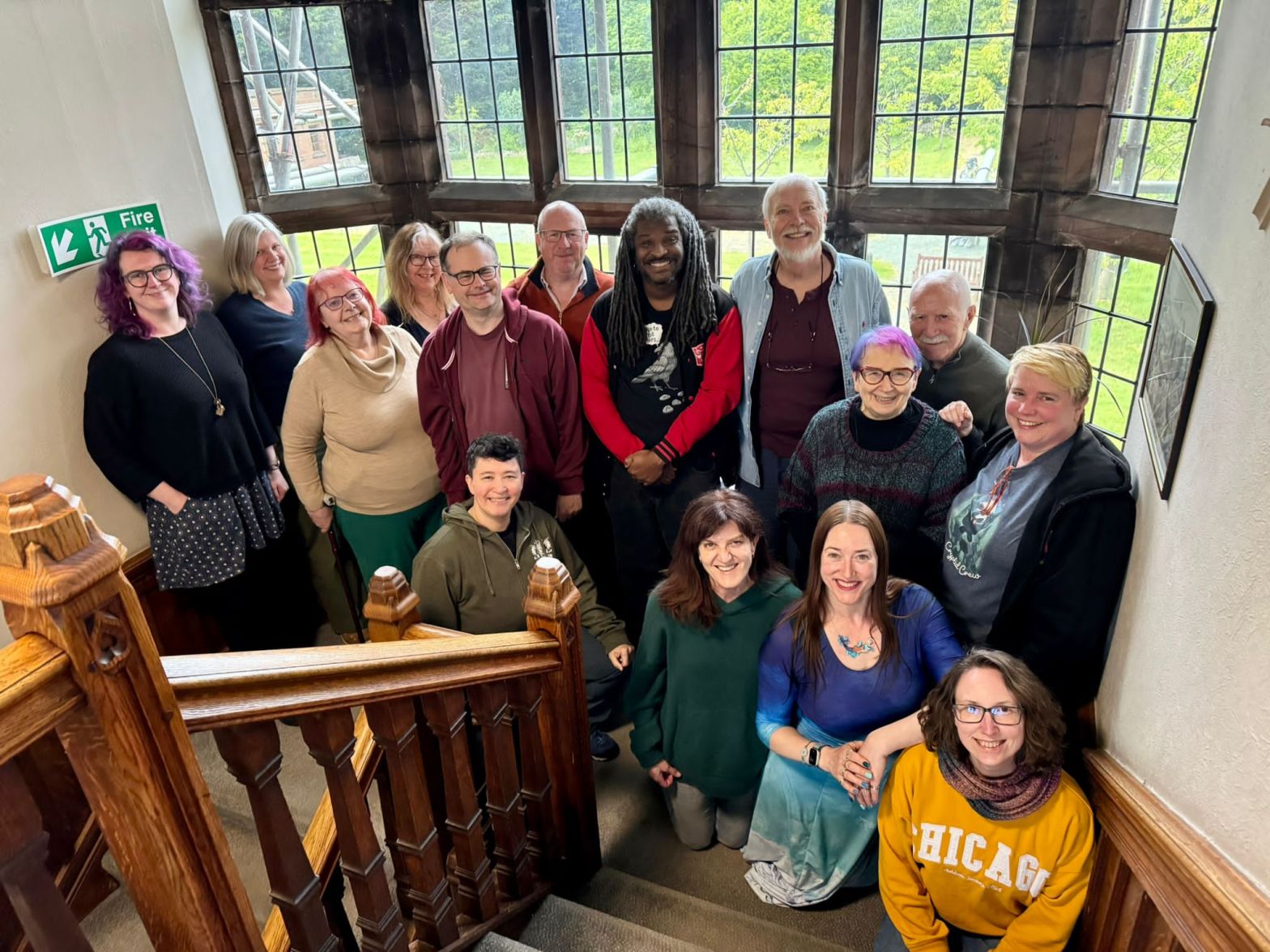
Last week I went to my first ever writing retreat.

It won’t be my last. Having a week with nothing to do but write or take inspirational walks turns out to be my idea of a wonderful time.

But what was even better was meeting up with the other writers. We had some come great chats over breakfast and dinner, read through some works in progress and even did jigsaw puzzles when the excitement got too much.

One thing I learned during the course of the week was how much publishing has changed since I started writing. There are far more ways into print. For example, I met writers taking a thoroughly professional approach to self publishing, hiring editors and designers to impressive effect. There are far more tools available to help writers thanks to computers and the internet. The field is also much wider than it used to be, with many more genres and subgenres. Far more diverse audiences can be reached.

But I don’t think getting published is any easier. Far from it. The market might be bigger, but it sounds like an empty, echoing place for someone just starting out.

My first sales were over thirty years ago: jokes and articles to magazines such as Private Eye and short romances to women’s magazines. As I’ve written elsewhere (many, many times), writing romances is a great way to learn your craft.

From there I made it into Interzone and other SFF publications, which encouraged me to write my first novel. Along the way I received many rejections and a lot of very good advice. I still maintain the importance of writers submitting work and learning from their rejections, however I am coming to realise how lucky I was to receive so much feedback when I started. There are still editors who offer constructive feedback, of course, and if you find one, value them!

Publishing may have changed but my advice hasn’t. Keep writing and submitting. Count your rejections, and if you get feedback, learn from it. If you’re not getting feedback, join a writers group where you critique each other’s work. If you are getting feedback, join a writers group anyway.

Writing is seen as a solitary occupation. That only goes for the part where you put down words on the page. I met some inspiring people on my writers retreat, and I was reminded that, as with everything else in life, you can’t do it on your own.
How we used to write: Part one

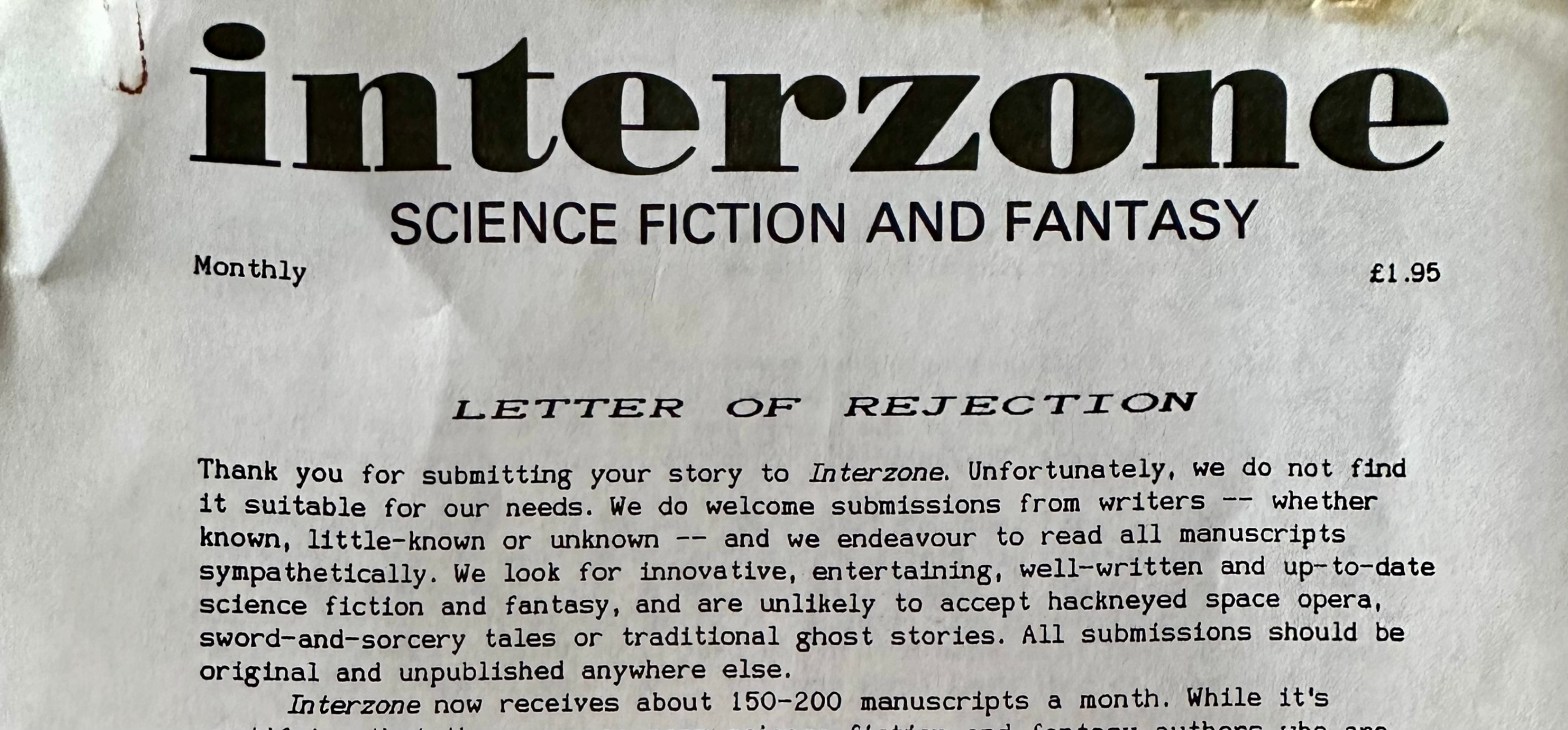
Who remembers this?

(The featured image for this post is an old Interzone rejection letter.)

I’ve been clearing out my study following my retirement from teaching. Amongst my files I found all my old unsuccessful submissions from the late 80s and early 90s to magazines like Interzone, FEAR and BBR.

I lost count of how many submissions I made. At least 40, probably more like 50.

Things have changed a lot since then. Nowadays most submissions are electronic. Back then the finished manuscript had to be printed off (my first MSS were printed out at work as I didn’t have a printer) and placed in an envelop containing a stamped address envelope (or an international reply coupon if I was sending it abroad) for the reply. I used to mark my manuscripts as disposable, meaning I didn’t want them returned. I would print a new copy each time so that editors didn’t know they were third or fourth in line for a submission. I’m sure they would have guessed. Who doesn’t send to the highest paying markets first?

After the MS was posted, there was the wait for the reply. Weeks writing a story, weeks waiting for a reply, opening the envelope and then the bitter knife in the guts feeling of disappointment when the story was rejected.

For a couple of years all I got were standard rejections. I couldn’t understand why my stories weren’t selling. Reading over those old MSS the reason is obvious. The stories weren’t very good. There were some good ideas there, if I say so myself, but the actual story itself was lacking if not non existent. I couldn’t see that at the time, but that’s what I had to learn, and it’s something that I only learned by practicing. By writing and submitting, writing and submitting.

After a while I stopped getting standard rejections, I started to receive nearlys and almosts, and comments on how to make the stories better. (It’s worth noting that Interzone in those days nearly always provided constructive feedback). That was progress, but it was still bitterly disappointing. The longer the wait, the more likely it seemed the story had finally been chosen, but then the gate would squeak, I’d hear the snap of the letter box and I’d run down to see the envelope and open it and… all that hope crushed in a few seconds.

Things are very different nowadays. There have been occasions when I’ve submitted something online and received a rejection (or acceptance) sometimes the very next day. Rejection still hurts. There seems to be something very unequal about the investment in time and the suddenness of the “No, thank you.”.

But that’s the nature of the profession. Rejection, like it says in the letter, means the story isn’t suitable for the publication’s needs.

That’s it. The story isn’t suitable. I’m very grateful to the people over the years who’ve told me exactly why my story wasn’t suitable. I’d like to thank them here.

I listened!