In case you’re wondering, an ek is an eyeball kick:
Vivid, telling details that create a kaleidoscopic effect of swarming visual imagery against a baroquely elaborate SF background. One ideal of cyberpunk SF was to create a “crammed prose” full of “eyeball kicks.” (Attr. Rudy Rucker)
I write SF so the alien tag should be no surprise. As my story worlds are all tagged, I can easily search for 5aliens in the 3recursion universe.
Possibly of more interest are my workflow tags.
I started out following GTD, labelling all my notes TODO NEXT or DONE. That worked out pretty well in my daily life, but not in my writing life. Over the years I’ve settled on the following
conceit -> idea -> story -> developing -> next/working -> staged -> published/used -> archived
What’s the difference between a conceit, an idea and a story?
The first two are explained in the Turkey City Lexicon. Here’s my thinking on the process by which a conceit becomes a story.
I get lots of ideas – I think most writers would say the same – however most of them are never used. Looking back through my notes I can see ideas that I’ve not had time to use, ideas that don’t go anywhere, ideas that just don’t seem that interesting now. Some ideas I don’t even remember what I was thinking when I wrote them down. But occasionally I will see an idea that joins with another idea and sparks something. When enough ideas join themselves together they become a story.
What’s the difference between next and working?
This is something I think many writers will experience. A story marked next is something that has to be done to a deadline, that’s why I’ve applied GTD to it. Something tagged as working is something that I’m ermmm… working on. I tend to work on stories over periods of months or even years so this tag indicates something I will keep coming back to. When inspiration fails, or when I’m looking for a next project, or simply because I want to move on, I bring up all the things I’m working on and decide what to concentrate on next.
When a story is completed it will be staged, ready to be submitted. Hopefully I will someday be able to tag it as published.
My friend, Chris Beckett, suggested writing down what I thought about whilst listening to a piece of music…
I’m writing this listening to Schubert’s String Quartet No. 14 in Dm, "Death and The Maiden"
The violence of the opening chords, the sense of impending doom that fills the first movement seems obvious to me, and a quick search on the internet suggests that others feel the same.
I often wonder where those emotions come from. Are they innate, part of the music itself, or are they associations gained through years of listening to music?
I believe the feelings generated by music are programmed into us at some basic level. It seems likely to me that we have a common operating system written into us by Western culture and conditioning and through this we interpret the music in the same way.
Extending the idea, if we were to play the music to someone from a different culture and then see that they feel the same emotions, could we deduce that the music is tapping into an operating system at a lower level?
Does it go even wider than that? I don’t think so. No one expects a dog to understand music. Like a book needs a reader, music needs a listener. I think that music and literature are both little parts of our intelligence that are extracted and replayed. Both need our intelligence to make them live.
But what if I’m wrong, that both are filled with some spirit that stands apart from us?
The second movement is playing now. I first heard this piece in my twenties, I think, and it didn’t move me then anywhere near as much as it does now. Has my ability to appreciate the music increased, does my life experience speak more to me, or is it a mixture of both?
It wouldn’t be true to say there was more sadness in my life at the moment, in fact I’d say I’m more content than I’ve ever been. I can, however, see the beginning of my decline in the distance. I’ve achieved nearly everything I set out to achieve in my life, and this too is an ending of sorts. Schubert died aged 31. Perhaps he saw more sadness than I did, or perhaps he crammed more emotion into that early part of his life. Or perhaps he was overly emotional, and I can tap into that better now I’m older.
I think Schubert was a genius, but I tend to think that an artistic genius is someone who was popular in a certain way at a certain time (perhaps that time was after their death, as is true for Schubert.) His music is very clever: the chromatic adeptness; the innovative use of the flattened submediant; the sudden modulations. I know all that intellectually, but that’s not why I’m listening. I’m sure the music wouldn’t have have been remembered if it didn’t have those melodies, that ability to touch emotions across 200 years.
Yesterday morning I walked to work listening to choral music. It made me think of autumn / winter; bare trees; cold stone buildings. Those feelings were not innate to the music. I know that the reverb sounds like empty churches, the voices remind me of carols sung by choirs when I was a child, they stir memories of Christmas, snow and frosty breath. Associations. A lot of music is like this: drums that beat military tattoos and trumpets that sound the charge.
I’m more interested in the emotions intrinsic to the music. I heard the seas rolling in the final movement of Rimsky-Korsakov’s Scheherazade before I knew the story behind the music, but this too is an association of sorts: the rise and fall of the strings imitate the waves.
I’m listening to final movement of Death and the Maiden now and as an experiment I’ve tried imagining disparate pictures against the music – bees in a hive, people arguing, two lovers having a picnic, an icy pond, a fairy in a bottle, the US flag on the moon. Some of the pictures fit, some of them clearly don’t.
I think that much of music is association, but these associations are built on something intrinsic. I’ve read that children aren’t frightened of spiders, they have the capacity to be frightened by them, they learn this fear from those around them. This doesn’t work for everything: children don’t have this innate capacity to be frightened by bottles, for example.
The music has finished, and I’m left wondering where the intrinsic part of the music lies. In it, or in me?
How Writers Write is a monthly series of guest posts where established writers invite you into their workspaces, reveal their work habits and share their experience.
I met Anne in a bar in Helsinki at Worldcon 75. We got chatting right away…
What do you use to write?
I handwrite only when I’m limbering up. As a first stab at a new writing project, I take a sheet of A2 paper and draw bubbles of characters/themes/plot. Next, I open a new hardback notebook and jot down my initial ideas, pose questions to myself so that I hone the central premise and my overall aims. At this early stage, I consider the connections between characters, draw approximate timelines and so on. None of this preliminary work is detailed. My outlines are minimal.
Before I draft a chapter, I dash off a few handwritten notes to set the scene. But I’m as likely to ignore these notes as I am to adhere to them.
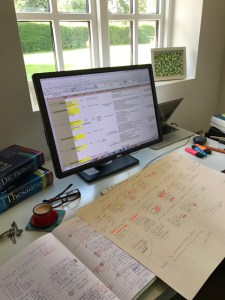
As for hardware, I work with a MacBook Air linked to a widescreen monitor and a full-size keyboard. I’ve used Macs since they were first launched and I’m not going to switch now!
I draft my novels in Scrivener, which is especially helpful for a story based on masses of research. Scrivener allows me to assemble my research into a set of folders. While I’m drafting my story, I can dip into the research material without opening other applications. Scrivener is also ideal for novels with a complex structure. I can re-order the chapters by click and drag, or temporarily reorder the chapters to check the flow of a particular storyline or character arc.
Once I begin the first draft, I create two Excel spreadsheets. (I love a good spreadsheet, with lots of colour coding). One is a simple log: dates in the left column and chapter titles in the top row. This allows me to record whether each working day is a drafting or editing day and which chapter I’m working on. If it’s a drafting day, I record my daily word count.
The second spreadsheet is more complex and this is the reason I have a widescreen monitor. It’s an on-the-go summary of the developing novel. I set up columns from left to right: chapter number/title, character list, point-of-view character, tense, settings, main plot points in that chapter, and a column in which I note how the chapter connects with the story’s overall themes, and finally a column for the chapter’s word count. In the midst of writing, if I suddenly realise that an edit or addition is needed in an earlier chapter, I’ll add a note in green type to the spreadsheet. It’s always open on my computer desktop.
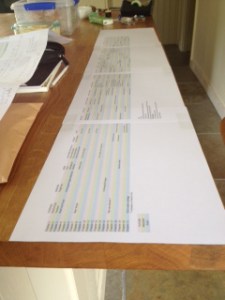
For my second novel, Sleeping Embers of an Ordinary Mind, I needed an additional monster spreadsheet to record, chapter-by-chapter, the occurrence of repeating motifs and themes. The printout stretched the length of my kitchen.
When I’m ready to send a manuscript to beta-readers, I ‘compile’ my Scrivener chapters as a Word document. From that point on, through to final draft, development edit and copy edit, I work in Word.
When do you write?
With my first novel, A Calculated Life, I wrote whenever I had time — over a period of several years. It was frustrating; I had to set aside the manuscript for as long as six months at a time. You know how it is, life intervenes. So I had no idea how long that novel took to write in terms of days/weeks/months. That’s why I now keep a daily log.
I’m fortunate that I’m writing full time and when I’m in a writing phase it’s pretty full on, especially if there’s a deadline. I’m definitely not an early morning person. I’m content to start about 9.30 or 10 am and work through until 6-ish with breaks for tea/coffee/lunch/tea and cake. Sometimes I’ll set a stopwatch and do a writing sprint for twenty five minutes, for variety! However, I do find that when I write quickly, I spend more time re-writing and editing. So I don’t beat myself up if my word count looks meagre.
Where do you write?
I kinda work in a white cube. White walls, white semi-transparent blinds (invariably closed) and a desk with a near-white formica top. The desk is a lovely 1950s Hans Gugelot desk, my pride and joy. This small room is built onto the end of our garage. It’s brilliant to have this space separate from the house. I’m not disturbed by anyone knocking on the door, or by unsolicited phone calls.
Where do you go for inspiration?
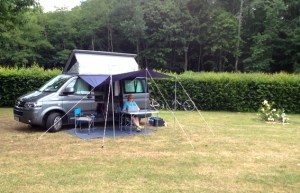
I look beyond literature. I go to exhibitions, take a cycle ride, travel to new places. Or I walk around the local playing field to catch the sunset. I’m not sure I’m ‘looking’ for inspiration. Basically, I’m switching off my writer’s brain and opening up to new experiences or living in the moment, as with travel and cycle rides. I try to get away with my husband in our campervan for a change of scene. Sometimes I write while we’re away — I sit under the van’s awning, write in the shade.
How do you write?
No music. I don’t understand how anyone can write with music in the background. Each to their own! I live in a rural area but that doesn’t mean it’s peaceful — raucous birdsong (magpies are the worst), hedge cutters, chainsaws. I keep noise-cancelling headphones on my desk, and I wear them by default.
First Person, Third person, present tense, past?
For my first novel, I wrote in third person limited (free indirect style) and past tense except for two epilogues, which I wrote in present tense. I’m not sure how many readers noticed the change in tense, but I believe it shifted the tone, the atmosphere. Third person limited was essential for this novel because I wanted the reader to see the world through only the main character’s eyes — to witness the world from her limited, almost innocent, perspective.
I now prefer present tense and I think this preference reflects the fact that I don’t outline my chapters in any detail. Therefore I’m discovering the story alongside my characters. It feels more natural. I dislike the contrivance of an omniscient narrator. I don’t think I could attempt that.
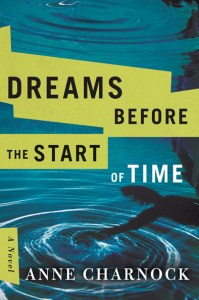
My latest novel, Dreams Before the Start of Time, comprises 19 chapters and each has a single POV character: 19 chapters, 16 points of view in total, 16 chapters in third person, 3 in first person. A series of linked vignettes, if you like.
I’ve developed a real liking for first person. But the story always determines my choice. So, for my novella The Enclave I felt two different points of view would be perfect, each written in first person, giving room for the reader to make inferences concerning the gaps between the two characters’ stories.
Follow the plot or the character or just go with it?
Characters come first for me. I often discover their personalities in the process of writing their dialogue.
When the first draft is done…
After working for many years in journalism, I can’t bring myself to blast through a first draft. I edit as I go along — editing as I draft a paragraph, editing the previous day’s work, editing at the end of a chapter, re-editing several chapters at the end of a section, and so on. As a result, the first draft represents an almost-complete novel. I feel I’m almost there. Of course, I may well decide to add a chapter, move a scene, refine a character’s voice, etc. I address all the notes/reminders I’ve made in green text on my summary spreadsheet. Then I embark on the line-edits, fact checking and proofing.
For my latest novel I corralled five beta-readers: three family members and two writers. I’m fortunate that my family readers are pretty damn good, each in his own way (Yes, my family readers are all men!)
For me, it’s hard to let go of a manuscript. I like to be involved up until to the last moment, until the pages are printed.
Lastly, self promotion:
I describe myself as a writer of near-future science fiction or speculative fiction. To be honest that doesn’t feel complete because I’ve also incorporated historical and contemporary fiction in my work. I haven’t totally abandoned my fine art practice — I’m exhibiting a piece of text-art this autumn in a public installation curated by Andrew Bracey. I still gravitate towards journalistic and non-fiction opportunities. For example, I’ve had a feature published this summer on the UK feminist website, The F-Word — Time to Cut the Cord with The Stone Age? — and I’ve been given the somewhat splendid title of ‘interviewer in residence’ for a collaboration between The Arthur C Clarke Award and Ada Lovelace Day. To date the main result of this collaboration is the “Ada Lovelace Conversations” with women science fiction writers. Quick links on my bio page on my website. More conversations are in the pipeline. These have been immense fun and a great learning experience in terms of discovering other writers’ approach to their craft.
I’m currently developing two writing projects, one is underway, the other is still in outline. I can’t talk about either; it’s simply too early.
GCSE results are out today in England and Wales, they include the new tougher examinations in English and Maths. There is a new 9 to 1 grading system for these exams, chosen so that more detail can be given about the highest achieving candidates.
A similar discussion was played out last week when the A level results were announced. That’s because politicians love to talk about identifying the "very best" students.
Don’t be taken in, it’s a misdirection. Here’s why.
The driving test is a good example of a criterion referenced examination. To pass the driving test you have to show you can do certain things: reverse into a parking space, drive through traffic lights and so on. If you can satisfy all the criteria, you pass. No one complains that too many people are passing the driving test. If you’re good enough, you get your driving licence.
Many professional examinations are criterion referenced. Gas Safe registration is a good example. If an engineer has shown they have the necessary skill, they’re registered.
In norm referenced examinations, all the exams are marked and then put into order. The top 10% say are given the highest grade, the next 10% the next highest grade and so on. This way, so the argument goes, you can find the best students. This is deemed appropriate when there are limited resources. If there are only 10 places available for a university course, they should go to the 10 best students.
That seems fair.
Or is it?
Why not say "this number of students have the necessary skills, let’s make extra university places available for them"? That’s not as unreasonable as it sounds. Most British universities are opening up centres around the world.
One of my jobs is helping potential Oxbridge students apply to Oxford and Cambridge. I’m regularly told by the colleges they have five times the number of capable applicants as they have places, and I believe them. So why not make the universities bigger? The population is increasing, so why not build new colleges at the same rate to accommodate the increasing number of the most able?
Talking about identifying the very best through examinations is a distraction. It allows politicians to ignore the students who would have been able to secure a place at a top college or university 20 years ago but can’t today because the supply of places isn’t keeping up with demand.
It’s in the nature of elites to restrict the number of people who can enter their ranks. Educational elites are no different. Keeping the discussion focused on the very best is a distraction from the fact that there are proportionally less places available today.
Tagging is straightforward on Simplenote. Add your tags on the tag bar, keep track of them using the tag dropdown. You can edit and delete tags using the phone or desktop app.
Click on a tag to search for it, or use the following syntax in the search bar to find all notes tagged with knife
tag:knife
Find notes tagged spoon and/or knife as follows
tag:spoon tag:knife
You can use the following trick on the webapp to find all the notes which haven’t been tagged.
tag:untagged
Evernote
Evernote has a very flexible tagging system with an excellent search facility. Searching for a single tag is a matter of simply clicking on the tag.
You can do more complex tag searches by using the following syntax:
Search for headings tagged spoon and knife
tag:spoon tag:knife
Search for headings tagged spoon but not knife
tag:spoon -tag:knife
Find all untagged notes
-tag:*
Evernote also allows you to save frequently used searches.
Do you keep notes? (I can’t believe there is writer who doesn’t keep notes.)
Do you keep your notes on a computer?
Do you tag your notes?
If you only answered yes to the first three questions, then I’m about to change your writing life for the better.
Tags have been around for years, they’re very simple to use, and yet few people seem to bother. I think this is mainly because many people don’t understand the power of tags.
The following series of posts attempt to explain how to use tags to organise your life. This post will give an overview of tags. The next post will give examples of applications you can use for tagging such as Evernote, Simplenote, Emacs and Tagspaces. Finally, there will be a post describing my personal tag system.
Tagging v Folders
Most people store their notes in folders. This is no surprise. When computers first rose in popularity, the folder was an easy to grasp analogy. Put all your stories in one folder, all your submission letters in another, all your personal letters in another. Folders are easy to use and easy to navigate. You want to find that fantasy story you wrote, go to the folder marked story and look in there for the fantasy folder.
There’s one problem with folders, however: a story can only be stored in one location. Suppose you have written a story that mixes fantasy and horror. Do you store it in the fantasy folder, or the horror folder? Or do you make a new folder marked fantasy horror?
Tagging solves this problem. Rather than thinking in terms of folders, you tag your stories #fantasy, #sf, #horror. If you write a story that mixes fantasy and horror you simply use two tags: #fantasy and #horror. When objects have more than one tag, they can appear in more than one place, a big advantage over folders.
Tagging is not difficult, people hashtag on Twitter all the time. There is, however, an understandable wariness about taking your carefully filed stories out of their folders and putting them in a big tagged pile. What if the tags were to get lost?
Well, tags don’t get lost any more than folders get mixed up. Even so, there’s nothing to stop you using both tags and folders while you get used to things.
A Simplified Tag System
It’s possible to spend more time thinking of tags to apply to a note than it takes to write the note in the first place. One way around this is to adopt a standard system (there are many of these listed on the internet). I use a 1,2,3,4 system as follows:
What area of my life does the note refer to: Personal, Writing, Work, Tech ?
What’s the form of the note: idea, letter, reference, blog, interview ?
What project does the note relate to: novel, how writers write, 99 java problems, emacs, six tips ?
What’s the note’s GTD status: TODO, NEXT, DONE, WORKING ?
To give an example, the note this blog post is based on is tagged as follows
1tech, 1writing, 2blog, 3onwriting, 3emacs, 4next
In other words, this note relates both to tech and writing, it’s for my blog, it’s to do with my onwriting and emacs projects, and it’s marked next according to GTD.
The following is the tag for a note regarding a panel I’m attending at an upcoming convention
1writing, 2panel, 3sf, 3helsinki, 4todo
You might be able to guess from the tags that the panel is regarding SF and the convention takes place in Helsinki
Note how each tag has a number at the front. Most tagging systems will filter your tags as you enter them, so when I type the number 1, only tags starting with 1 appear. Also, thinking 1,2,3,4 when I’m tagging my notes helps speed up the tagging process.
What’s the benefit of all this? This becomes apparent when you search your notes.
Suppose I want to find all the posts relating to my blog. I could search for
2blog
This would bring up all the posts regarding my writing blog, my tech blog and my personal blog.
I could refine this by searching as follows
1writing, 2blog
Now I will only see the posts relating to my writing blog. I could add a 4todo tag to see the posts I still have to write.
If I want to see the posts regarding Emacs that I’ve already published I could search as follows
2blog, 3emacs, 4published
Most tagging systems allow you to save searches. One saved search I often use is the following
1writing, 4next
In other words, the things I have to do next in my work as a writer.
I’ve spent the past week tweaking my latest novel following a rather excellent edit by my agent.
An excellent edit. What does that mean?
It’s not that he corrected the spelling or tidied up the word order, though he did that.
It’s not that he pointed out inconsistencies in the plot, though again these were flagged up.
It was an excellent edit because he showed how to make the story better. He highlighted the areas where characters acted inconsistently, where I’d withheld information unnecessarily, where I’d missed a trick on the story development.
Basically he pointed out where I could be a better writer.
Just to put the above in context, I’d already edited the novel myself several times, I’d had extensive feedback from my wife and two other well known and very experienced authors.
If I’m honest, when I hand my work across to others, I’m really hoping for unadulterated praise. I want them to say that they’ve just read a work of genius. Until that day arrives, I’m delighted to have such talented people offering me advice.
On holiday recently I found myself on a bus supposedly travelling from Verona to Lake Garda.
The heat was oppressive that day, the Veronese moved amongst the shadows, only we tourists spent time standing in the sun, gazing up at the architecture. The bus was hot and crowded, it smelled of sun tan cream and sweat. I was jammed into a space between someone’s rucksack and someone else’s shopping. My family were scattered around the bus, squeezed in where they could.
It was some time before it occurred to me that we weren’t moving, that we’d been standing at a bus stop for some time. I noticed the driver was speaking on his phone, he was becoming more and more agitated. He made one final angry remark and then hung up. Those of us towards the front of the bus waited to see what would happen next.
The driver turned and shouted something down the bus. Those who spoke Italian sighed or groaned or muttered angrily. Those of us who didn’t looked around in confusion. And then one of those lovely European moments that I’ve experienced only a few times before occurred: people helped each other to understand.
A woman translated the driver’s words into English. She let us know that the bus was too full, we all had to get off and wait for another bigger bus. There were still some confused faces, and then another woman translated the English into German. Someone corrected her. I heard someone haltingly translating into French for the benefit of the old couple opposite. Gradually, the message travelled the length of the bus.
I’ve seen this happen before, on camp sites in France and Germany, whilst walking around Mont Blanc, when I was Interrailing just after university: people helping each other out, helping each other to understand. I love being European, the differences and the commonalities.
I’m really, really sad that soon we’ll no longer be a part of this.
I’m delighted to say that I’ll be attending Worldcon 75 in Helsinki.
You can see my up to date program schedule on the con’s rather excellent website or read it below.
Look forward to seeing you there
Music and Magic
Wednesday, August 9 16:00 – 17:00
Tony Ballantyne, Leo Vladimirsky, Mrs Philippa Chapman
Music has been used as a tool for magic for a long time: the Finnish national epic Kalevala uses it extensively and Tolkien’s Middle-Earth was sung to existence! There is a clear connection between music and magic.
Evolution of the Image of the Robot
Friday, August 11 17:00 – 18:00
Tara Oakes, Tanja Sihvonen, Mary Turzillo, Tony Ballantyne
Robots are often made into the image of humans. In reality, however, robots have as many incarnations and images as there are robot creators. The panelists discuss how the image of the robot has changed and developed, both in fact and in fiction.
Signing
Saturday, August 12 14:00 – 15:00
Robot Morality
Sunday, August 13 13:00 – 14:00
Tara Oakes, Lilian Edwards, Tony Ballantyne, Su J. Sokol
With robot cars soon on our streets and with robots as caretakers questions of ethics and morals rise. How should a robot car choose to react in an accident (save passenger or save most lives)? What kinds of ethics and moral questions rise from using robots as caretakers of our children, elderly, disabled or ill. What about killer robots that are constructed by the armies of the world? Is it morally right to teach a robot to kill?
 Tony Ballantyne