Why I Write

I can tell when someone I’m teaching is going to be a programmer, I can tell it by the way they lose themselves when they stare at the screen. They’re not thinking of the syntax, they’re lost in the problem.

It’s like playing the piano. When I’m doing that, that’s all I’m doing. I should say, when I’m doing that well, that’s all I’m doing. I’m not reading a series of notes, I’m not trying to remember what the next chord is, I’m simply playing music.

And that’s what it’s like when a story is going well. Everything just flows, I’m listening in to a group of characters and writing down what they’re saying. I’m not making it up, I’m just writing down what it has to be.

That’s why I write. It’s not so I can read reviews of my books, or to blog about how hard those deadlines are, or to boast about my position on Amazon. I write because when I’m writing that’s what I’m doing.

Creativity 1: Groupthink

On a number of occasions, usually when I’ve been at work, I’ve been part of a group asked to think up a new slogan or tagline.

I’m never exactly sure what people mean when they talk about creativity, but I’ve never known these mindmelding exercises result in it.

First, someone comes up with a slogan, let’s say “Tony Ballantyne Blogs Better”. Then someone else comes up with another, let’s say “Tony Ballantyne Tells it Like it Is!”

So there we have it, two slogans, perhaps not the best ever, but at least they work. Then the group will take sides and argue for their favourite slogan, and it will look as if things are going nowhere…

And then the same thing always happens. Someone will look up with an inspired expression and, in excited tones, will announce they have solved the problem.

“I’ve got it!” they will say, “Why don’t we put the two things together? Why don’t we say Tony Ballantyne Blogs Better to Tell it Like it Is!

There will be a pause and then nearly everyone will nod and declare what a good idea it is. The only two people who won’t agree will be the ones who came up with the original slogans.

Combining the two slogans is not a good idea.

Firstly, the slogan is now too long.

Secondly, it now contains two ideas – one too many.

Now, I quite agree that creativity can sometimes arise through the process of combining two or more seemingly disparate ideas. But I would also argue that joining together two sentences without any thought for what they mean may result in something new, but that’s not the same as being creative.

Six Tips on Submitting a Story

  • If you don’t submit a story, it will never be accepted
  • Read the submission guidelines
  • The editor is always right. If they found your story boring, unconvincing or unoriginal, then that’s their opinion.
  • If you want to know what the editor finds interesting, convincing and original, then read the stuff they choose to publish. If you don’t like it, then you’re submitting to the wrong market.
  • Everyone hates having their work rejected. Every writer has their work rejected. Successful writers are the ones who learn from past rejections and keep submitting.
  • The best thing to soften the pain of a rejection is to be working on your next story

See Also

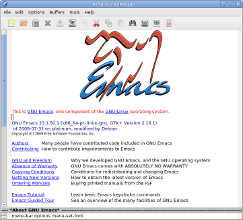
My Emacs Writing Setup

A few years ago, due to the interest in my post on Writing Tools, I published an HTML document on my Emacs writing setup. 

I continue to use Emacs to write, however I’ve now adopted Doom Emacs. You can read about my Doom Emacs Writing Set Up here.

If you want to know how I plan and plot stories, you may find the document interesting.  You’ll probably find it more interesting if you use Emacs yourself.

A Note on Emacs

I think of Emacs as a text editors’ tool. As I spend most of my life working with text, either programming or writing, I want to do it as efficiently as possible.

It first struck me when I was editing my novel Divergence just how inefficient I was being in pressing the arrow key and waiting for the cursor to get to where I wanted. That got me thinking about the time spent deleting text, transposing words, moving around paragraphs… I realised there must be a quicker way.

And then I remembered Emacs.

It makes sense for someone who spends most of their time manipulating text to learn a group of obscure key combinations. It saves time and increases productivity. Learning to use Emacs properly reminds me of playing Jazz on the piano. I’ve learnt all those chords and runs and fills so that I can use them without thinking when I’m improvising. Likewise, I’ve practiced using Emacs key strokes such as M-f, M–M-c and C-M-<Space> so often I use them without thinking when editing. I rely on M-/ to complete words, and I can’t do without M-h and C-e to select and move around text.

I practice using Emacs because it makes me a more productive writer. If you’re interested, I’ve written up some of those tips and exercises on my Emacs Workout.

Six Tips on Beating Writer’s Block

  1. Go for a walk
  2. This is the age of the word processor, you don’t have to write your story in a linear fashion. Write a later section, one that interests you.
  3. Always have two or three things on the go at once of different lengths. If you don’t feel like working on the novel, have a go at the short story. Don’t feel like fiction? Work on non-fiction
  4. Stop trying to get it right. Just follow a character and see where s/he goes. You don’t have to use everything you write.
  5. Change things around. What if a character was the opposite sex? What if they were younger/older?
  6. Still can’t write? Then take a break. If you’re not enjoying writing your story, then it’s unlikely that anyone’s going to enjoy reading it.

See Also

Six Tips on Showing not Telling

  1. Remember, the reader isn’t stupid; you don’t have to explain everything. They’ll probably understand what you’re getting at.
  2. Describe effects, not causes: she shivered not she was cold
  3. Unless you happen to be a Victorian novelist, there’s no need to describe everything in a scene.
  4. Writing about how characters react is often better than simply stating. The smell of the eggs made him feel sick is better than He didn’t like eggs
  5. If you don’t know the meaning of pragmatics, Google it. Now use that when writing conversations.
  6. Finally, don’t tie yourself in knots. Sometimes it’s okay just to tell.

See Also

Six tips for Writing Character

  1. Giving a character a colourful hat or a stammer does not make them into a character. It may fix them in the reader’s mind, which can be a good thing, but it won’t give them a character
  2. Don’t be arbitrary. Some people construct characters by putting together a list of contradictions. You end up with a character that is original, but it won’t seem authentic.
  3. Don’t fall into the trap of trying to capture every passing character in detail. Focus on what’s interesting.
  4. Some people accuse others of the faults they see in themselves. Do your characters do that?
  5. Characters come alive in their interactions with other characters. Does one character irritate another, annoy them, make them laugh, make them jealous… ?
  6. Even better: what do your characters think of each other? How do your characters talk about other characters currently off page?

See Also

Writing Tools

Charles Stross has written an interesting polemic about Why Microsoft Word must Die over on his blog.

I broadly agree with him.  But this post isn’t to dwell on what’s wrong with Word, but rather to look at the alternatives.

Replacing Word is easy.  I’ve used LibreOffice (and its predecessor, OpenOffice) Writer for around 7 years now with few problems. Neither my publisher nor my collaborators appear to be aware of the fact that I’m not using Word, which makes me wonder why people say that Word is essential.  The sort of demands placed on a Word Processor when producing text based manuscripts are not particularly heavy.  I suspect an unwillingness to move away from Word is down to fear of the unknown rather than any solid reason.

The advantages of LibreOffice are that it’s free, it’s Open Source (if that’s important to you), and it’s sufficiently similar to Word to make the transition quite straightforward.  As an added bonus is it doesn’t have the Microsoft ribbon toolbar which I find irritating to say the least.

Of course, as Charlie points out, Word and LibreOffice don’t lend themselves to extended pieces of writing.  More and more writers are switching to software that allows you to structure your writing, a common example being Scrivener.  I’m a great believer in such tools.

Emacs and org-mode is one such tool.  I discovered org-mode for Emacs in 2008. I wouldn’t recommend Emacs to everyone, but I find it the ideal application for planning, structuring, writing and editing.  I’ve written my last three novels using org-mode, exporting the finished products to odt (Libreoffice) format when I’ve finished. You can find out more about my Emacs writing set up by following this link.  Aethernet Magazine is also produced using org-mode.  The magazine is marked up using org-mode codes and then exported to html for conversion to mobi format using kindlegen.  There’s more about Emacs over on my tech blog.

Finally, I use the Evernote App on my phone to record notes and pictures.  I’m a great believer in getting ideas and dialogue down “fresh”. They’re never as good if you try to recreate them later.  I’m actually writing nearly fully realised scenes now on Evernote, line by line, as the mood hits me.

Take a look at my monthly series How Writers Write to see other writer’s setups

Writing Serial Fiction

I’m currently just over half way through Cosmopolitan Predators! and I can’t help thinking what a different story it is for being written as a serial.

The big thing that I’ve noticed is how much the serial form encourages plot. I’d originally intended the story to be much looser, a collection of characters who touched on each others lives to a greater or lesser extent. Yes, there was a back story to the founding of Eunomia, the asteroid where the action takes place, and yes, there was an ending in sight. What I hadn’t planned for is on just how intricate the plotting would become. There seems to be something about the serial form that encourages me to pick up old points and to explore them further a couple of episodes down the line. Perhaps its something to do with the urge to include a cliff hanger at the end of each part. After all, if you’ve set one up, you have to resolve it next time.

Is Cosmopolitan Predators! a better book for being written in this way? It’s hard to be objective about this. The book that it might have been will never be written now. I can’t compare the two different stories, as one of them doesn’t exist. Naturally, though, I think what I’ve done is a better story, I wouldn’t be writing it otherwise. Now, though, I’m too close to it to see all its faults. Maybe in a couple of years time I’ll have a better idea.

What I do know, however, is this: I’m very tempted to write my next novel as a serial. To commit myself to writing 12 parts over twelve months, and to give those parts to my first readers for comments. Yes, I’ll rewrite the whole thing at the end of the process, but my next novel will be heavy on plot, and I think this approach may well benefit it.

We shall see…