Under Siege

There are a lot of reports floating around on Social Media about Microsoft using customer data from Word and Excel to train its AI models. Microsoft say this isn’t true, and I suppose I believe them.

For the moment at least.

The trouble is, I worry that any data held by Microsoft will be too easy a target in a future.

Microsoft says that they consider data in the public domain fair game for scraping. I don’t think I agree with them – I wrote my blog posts to be read by humans and discussed, not to be blended into bland smoothies that are squirted in disposable cups at the push of a button. And I don’t remember being asked if they could take my data for their LLMs, either. I don’t see why I should make it any easier for Microsoft to steal my intellectual property, either now or in the future.

I’ve only recently started using Microsoft Word, and that was because it was convenient for the day job.

I’ve learned my lesson. I used LibreOffice Writer happily for years, I’ve gone back to it. It’s not as polished as Word, but it’s more than good enough. I don’t care about the fact that it’s free: I believe it’s worth paying for quality software, and I always donate to open source projects that I use.

What I care about is that when it’s on the computer, running on Ubuntu, it’s mine. At least for the moment.

I feel like I’m pulling up the drawbridge. Those tech companies are circling…

Why You Should Write Down Everything: The Power of GTD

My colleague recently noticed me updating my todo list.

“Have you really included walk the dog on your list?” he asked. “Even if you did forget, wouldn’t the dog remind you?”

The dog would remind, but that’s no reason for omitting the task.

I’ve followed GTD for years. One of the most useful bits of advice it gives is to capture everything, and I learned a long time ago this means EVERYTHING.

Yes, I wouldn’t forget to walk the dog, but walking the dog will take an hour of my time and this is time I can’t use for something else. Don’t get me wrong, I don’t want to use the time for anything else. I like walking. I like walking the dog. This is something I want to do.

It’s important to write everything down so I know how much time I have for things I want to do and things I have to do. That way I ensure I do both.

I wrote in some detail about my GTD process years ago. I’ve recently removed those posts from my website as part of the ongoing reorganisation.

The reason for removing the post is that Todoist explained it all far better than I did. If you’ve never seen GTD before I strongly suggest you follow this link. It might just change your life.

Speaking of Todoist, I’m planning a new section to discuss my current writing tools and how they’re evolving. Watch this space.

All Change!

You might notice that my websites are changing. There are a number of reasons for this, but the big one is I’ve been forced into changing hosting providers (again).

For years I’ve run my websites on WordPress, installing WordPress software on servers hosted by third party providers and maintaining the site myself. Doing things this way was cheaper and offered me a greater range of features. It was more work, but it was fun.

The trouble is the hosting providers I used always started out providing an excellent service, but were then bought out by larger companies. When that happened the price went up and the service level plummeted.

For small sites like mine, letting WordPress do the hosting has become the preferred choice. They may be a bit more expensive but they’ve been around for a long time and, in my experience, their support has been very good. I don’t care if they try and upsell when they’ve solved a problem, at least they solve the problem first.

So for the moment I have two WordPress sites:

TonyBallantyne.com will remain as it is. It needs tidying, due to the rushed import from my old host, but bear with me.

tech.tonyballantyne.com will be moving to my Obsidian site: notes.tonyballantyne.com.

Obsidian is easier to maintain for the sort posts that go on my tech site. Plus, with Obsidian, the notes are mine. I keep control over them when things change. And with constant enshittification, Obsidian is my escape hatch from whatever happens next…

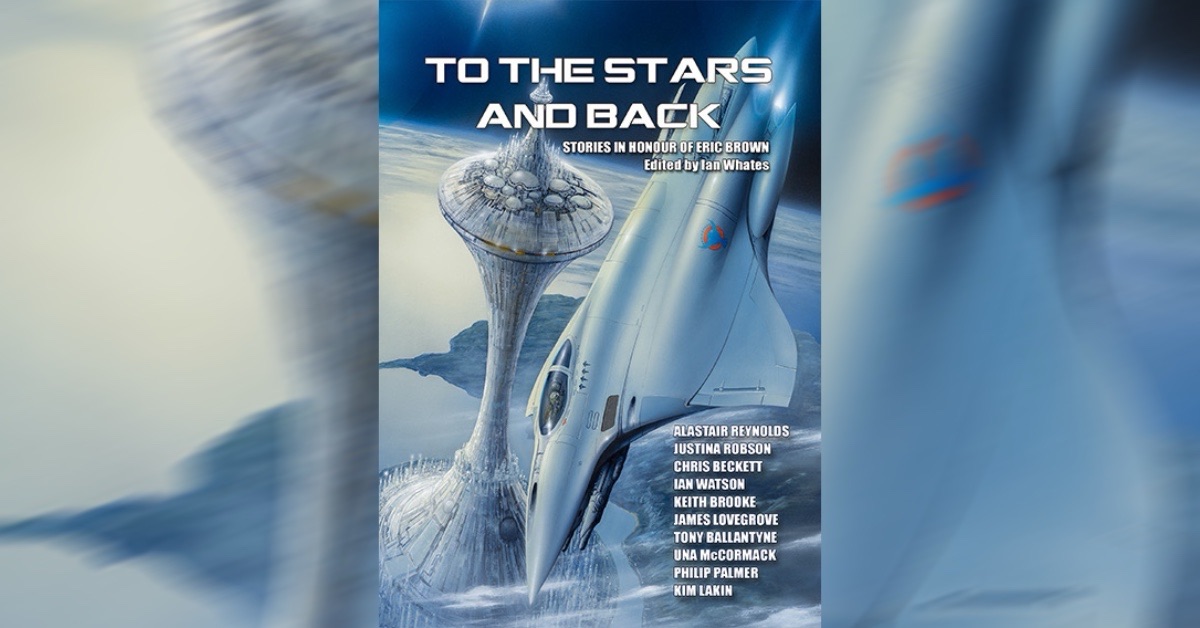
To the Stars and Back

Eric was a very good friend of mine. I’m proud to be part of this collection


Eric Brown was one of the UK’s finest SF authors. His work won him awards, his storytelling won him readers; more than that, though, he was a special person, and that won him many friends.

Containing all new stories from some of the UK’s finest genre writers, this volume, released to mark what would have been Eric’s 64th birthday, is dedicated to Eric and his family. It is our way of celebrating someone whose work inspired us and whose friendship made a difference.

Eric Brown: (24 May 1960 – 21 March 2023)

Follow this link to order the book

Future Proofing my Notes

As I mention last week, I’ve moved my notes to Obsidian. I’m going to talk about Obsidian another time, for the moment I want to talk about the notes themselves. Specifically, why I’ve converted all my notes to markdown.

A writer lives by their notes. Ideas; scenes; character sketches; dialogue; impressions, all carefully recorded and waiting to take on life someday in a story. I remember seeing Poul Anderson’s carefully typed list of story ideas in the science fiction museum in Seattle and feeling a warm glow of recognition. Not only that, but validation. I was doing this right.

I’ve got notes going back decades. Notes written in old exercise books, cheap reporter’s notebooks and expensive leather bound journals. I’ve experimented with devices such as Psion Organisers, Palm Pilots and even an iPod Touch.

The trouble with storing notes electronically used to be exporting them to a new device. Cross platform software like Evernote was a revelation as it meant you only needed to enter your notes once and then you could find them anywhere.

Evernote, Apple Notes, One Note and the like are fantastic. But what if you want to change to a new application? That’s where the problems arise.

The trouble is the way your notes look on the screen is not the same as the way your notes are stored on the computer.

Take this example


This is a Heading


Here’s how Evernote stores the above

 <note>
    <title>This is a Heading</title>
    <created>20230727T080748Z</created>
    <updated>20230727T080830Z</updated>
    <note-attributes>
      <author>Tony Ballantyne</author>
    </note-attributes>
    <content>
      <![CDATA[<?xml version="1.0" encoding="UTF-8" standalone="no"?>
<!DOCTYPE en-note SYSTEM "http://xml.evernote.com/pub/enml2.dtd"><en-note><ul><li><div><span style="color:rgb(0, 0, 0);">Here’s some text</span></div></li><li><div><a href="https://tonyballantyne.com" rev="en_rl_none"><span style="color:rgb(0, 0, 0);">Here’s a link to my website</span></a></div></li></ul><div><span style="color:rgb(0, 0, 0);"><span style="--en-markholder:true;"><br/></span></span></div></en-note>      ]]>
    </content>
  </note>

If you look carefully you can see the original text, along with metadata such as when the note was created, and formatting data such as the text colours. It’s hard to extract the relevant information from all that.

It’s worth noting, by the way, that Evernote is one of the good guys, they make it easy to export your data, they don’t go out of their way to obfuscate things and keep you in their system.

Here’s a better way of storing the above, this time using markdown.

# This is a Heading
- Here's some text
- [Here's a link to my website](https://tonyballantyne.com)

Looking at that you can understand why it would be sensible to store your notes in that format. It’s easy to read, it’s easy to transfer.

That’s why I’ve converted all my notes to markdown. They’re now stored on my devices, not in the cloud. I can invest the time in getting them just right without having to worry about having to convert them in the future.

So what about Obsidian? Obsidian has many fantastic features that I’ll talk about later, but the bottom line is that it functions as a markdown reader and editor.

In other words, if I decide I don’t like Obsidian in the future, I’ll simply choose another application that handles markdown.

Here’s what Stephan Ango, one of the guys behind Obsidian, has to say about this.

I am not an influencer

As the school holidays approach and I embark on my annual sorting of my notes and resources ready for the new school year, I’m going to take a moment to reflect on why I do this.

By this I mean maintaining three websites. That’s this blog, this site about my writing and this tech/education site. Sometimes the boundaries between the three blur which is why I’m in the process of migrating them across to Obsidian. I’ve started with my teaching notes (hence this post) and I’ll be moving on from there. Expect much more about that another time.

I began to blog about 15 years ago, principally to advertise my books, but it quickly became more than just that. After a couple of years I started my tech site. You can read why here: https://tech.tonyballantyne.com

But that’s not the full story.

I’ve written about blogging as way of getting started as a writer and way of maintaining enthusiasm as a writer, but that’s not the real reason why I blog.

I’m not an influencer. I don’t do product placements. I don’t charge for the resources on my sister sites. I don’t have adverts. I get a lot of requests from people asking if they can monetize my site and I always reply no. I don’t really do social media apart from for genuine social reasons: to keep in touch with old friends.

So why go to all this effort?

The reason why I write is because I enjoy writing. That’s why I’m a writer. And that’s why I do this. The reason why I wrote this post was because it made me happy. It also reminded my just how much I enjoy writing.

And now I’m going to make myself a cup of tea.

If you’re reading this in the northern hemisphere, have a good summer!

Au Revoir Evernote, Hello Obsidian

I know, I know. I’ve been in and out of love with Evernote for years now. You and I both know I’ll be probably writing a post in a year’s time saying how I’m using it again.

But not for now.

There are many, many positive things about Evernote. It’s the only app that does everything I need. The web app is superb, the web clipper and the facility to email notes are unequalled. You don’t realise just how thoroughly Evernote covers your needs until you try another app.

But there are problems too. Evernote’s direction of travel has diverged from mine. I don’t need RTE, I’m not really interested in AI support.

I want something that takes me to the right note straight away, that allows me to edit my notes quickly and effectively. I want to be able to get information into and out of the system without having to download it first. I want to be able to rearrange things without hassle. And that’s where Obsidian excels.

Obsidian isn’t perfect. Its not for casual users, the lack of a web app is a big problem, especially in a work environment with strict firewalls (I’ve bought an iPad to use at work to get round this). But the pluses are so much more than the minuses. Evernote seems to have lost interest in updating the note editor, the editing experience in Obsidian is fantastic, partly because it’s all based on Markdown, partly because it’s just so well thought out.

Even so, I would have probably remained with Evernote but for two things. First, they ceased development on the Linux client. This might be temporary, but no Linux support is always a deal breaker for me. I believe in paying for the software I use. I’m not paying for something that doesn’t support my preferred platform

But more importantly, it’s the realisation that it’s been five years since Ian Small acknowledged Evernote had stagnated and started to turn things around. Bending Spoons are making great strides in fixing things, in fact I wouldn’t be surprised if in three months it will be near perfect, but that will be too late for me. Six months ago I got fed up with notes not syncing, I downloaded Yarle and jumped ship to Obsidian and I’ve never looked back.

I still use Evernote. On those occasions when I want to share or collaborate its ideal. I still use the web app. I may yet be back, fully on board, in a year’s time, but for the moment I love Obsidian.

Pat Mills Iconoblast

I feel like I’ve spent too many posts recently talking about bad writing. It’s taken Pat Mills’ Iconoblast newsletter dropping into my mailbox to prompt me to comment on good writing instead.

As Wikipedia says, “Pat Mills is an English comics writer and editor who, along with John Wagner, revitalised British boys comics in the 1970s, and has remained a leading light in British comics ever since. He has been called “the godfather of British comics”.”

He’s certainly been a great influence on my writing. If you’ve not heard of him I’d recommend you take a look not just at Slaine, Charley’s War and Nemesis the Warlock, but his writing about writing. (paid links)

Pat Mills is a prolific writer both through natural talent and necessity (Comics don’t pay well).

Principally, he knows what makes a good story. Part of being a writer is developing a feel for this, and you do this by practicing your craft. But Mills has taken this much further. I remember the reader’s polls that used to appear in comics when I was a kid. I didn’t realise then how much the results of these polls shaped the stories that appeared. It’s fascinating and instructive to discover just how much Mills studied the feedback from these polls to tailor the stories to just what the readers wanted.

But rather than me telling you about this, take a look at his post on the stories in Girls Comics.

But what about your artistic vision? Surely it’s important to tell your own stories in your own way?

Well, that’s very true. As Charlie Parker said, learn the changes and then forget them. But you have to learn the changes first, and Pat Mills is a master.